Baseball by the Numbers: 14

Read about the Project
Checklist

14

Welcome back to Baseball by the Numbers. Today we are looking at uniform number 14. 755 players have worn number 14 at some point in their career. Two all-time greats wore this number for one season each. The amazing Willie Mays, who is 5th all-time for career WAR (156.2), had uniform number 14 his rookie season with the New York Giants in 1951. It was the only season he didn’t wear number 24. One of my all-time favorite players, the GOAT Rickey Henderson had uniform number 14 in 1993 while with the Toronto Blue Jays. Rickey is 19th all-time in career WAR at 111.2 and wore 6 different numbers throughout his career. Aside from those two legends, an additional thirty-two players who wore number 14 also had a career WAR of 40 or better and eighty-two players wore the number 14 for five years or more. Since Mays and Henderson only had this number 1 season each, there will be no “official” legend in this post, though the number 1 player is still a legend in my book. 

Number 1:

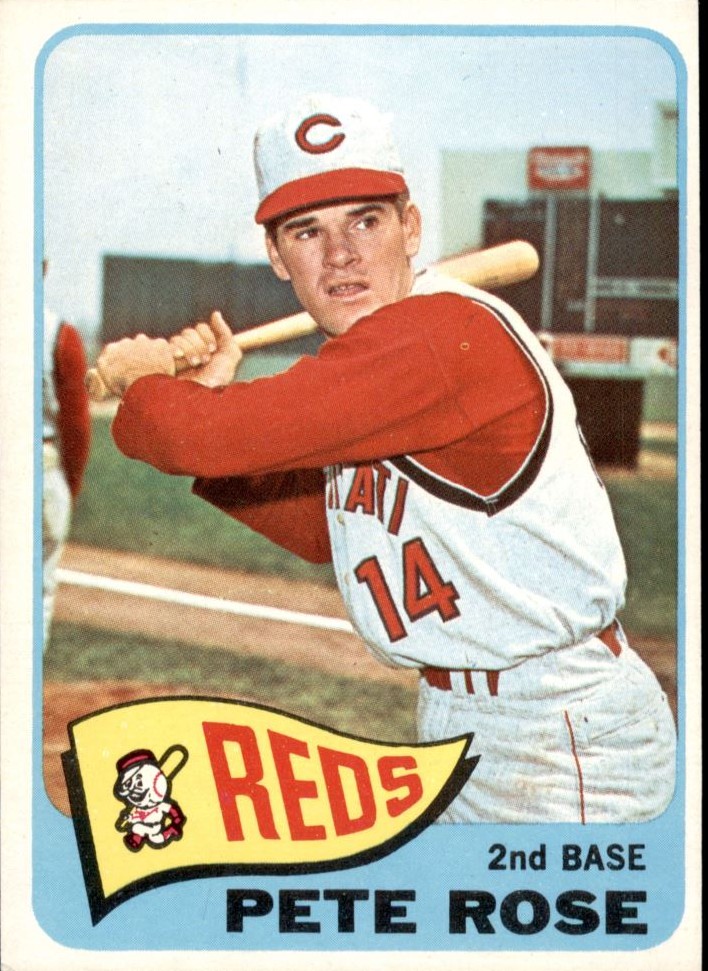
Pete Rose, 1965 Topps, #207

Mostly known as one of the best hitters in baseball history, Pete Rose was also a great defender. He is the only player with over 500 games played at five different positions (first base, second base, third base, right field and left field) and has also played games in center as well. There’s a help fact for your Immaculate Grid.

From 1963 to 1986, “Charlie Hustle” spent twenty-four seasons wowing fans with his defensive prowess and hitting and base running skills. Rose played for the Cincinnati Reds (1963-1978, 1984-1986), Philadelphia Phillies (1979-1983), and the Montreal Expos (1984). He wore uniform number 14 his entire career and had a career WAR of 79.6.

I love this 1965 Topps card of Pete Rose. It’s a great photo of him with the Reds and his number is visible on the front of the uniform. I really like the design of 1965 Topps, especially the banner at the bottom with the team’s name and logo displayed. Love that old school Reds logo!

Rose has the 9th most All-Star appearances in history with seventeen. He is the only player to have All-Star appearance at five different positions. Rose was the National League Rookie of the Year in 1963 and was the NL MVP in 1973. He has two Gold Glove awards, a Silver Slugger, and won the Roberto Clemente award in 1976. He hit .300 or better in fifteen seasons, leading the league three times. He led the league in hits seven times and had 200 or more hits in ten seasons, tied for the most with Ichiro Suzuki. He also led the league in doubles five times, runs four times and OBP twice.

Rose was a member of three World Series Championship teams. He won two (1975 and 1976) with the “Big Red Machine” Cincinnati Reds team which also featured manager Sparky Anderson, and Johnny Bench, Joe Morgan and Tony Perez. Rose was the MVP in the 1975 Series when he batted .370 with 10 hits, 3 runs, a double, a triple and 5 walks. He was won a ring as a member of the 1980 Phillies along with pitcher Steve Carlton and third baseman Mike Schmidt.

Rose played 95 games for the Expos in 1984 when he was traded back to the Reds. He would play his last few seasons with the Reds as a player/manager. He would retire as a player in 1986 but stay on as Reds manager through 1989.

Rose holds several MLB records. He is first in games played, at-bats, plate appearances and singles. His 4,256 hits is 1st all-time, and he had 100 or more hits in a record 23 straight seasons. He is also tied for first with ten seasons of 200 hits or more. He has a .303 career batting average and is 2nd all-time in doubles with 746 and 6th all-time in runs with 2,165. He has 135 triples, 160 home runs, 1,314 RBIs and 198 stolen bases. He ranks 14th in all-time walks (1,566) and 9th in Total Bases (5,752).

Rose is a member of the Cincinnati Reds Hall of Fame, and his uniform number 14 was retired by the Reds in 2016.

Despite all his achievements, Rose was banned from the National Baseball Hall of Fame in 1991 due to his inclusion on the permanently ineligible list in the aftermath of a gambling investigation in 1989.

Pete Rose passed away at the age of 83 in 2024.

In May of 2025, Rose became eligible for the Hall of Fame due to a change regarding permanent ineligibility after death. He will be eligible for Veterans Committee selection in 2027 and I hope he gets in.

Number 2:

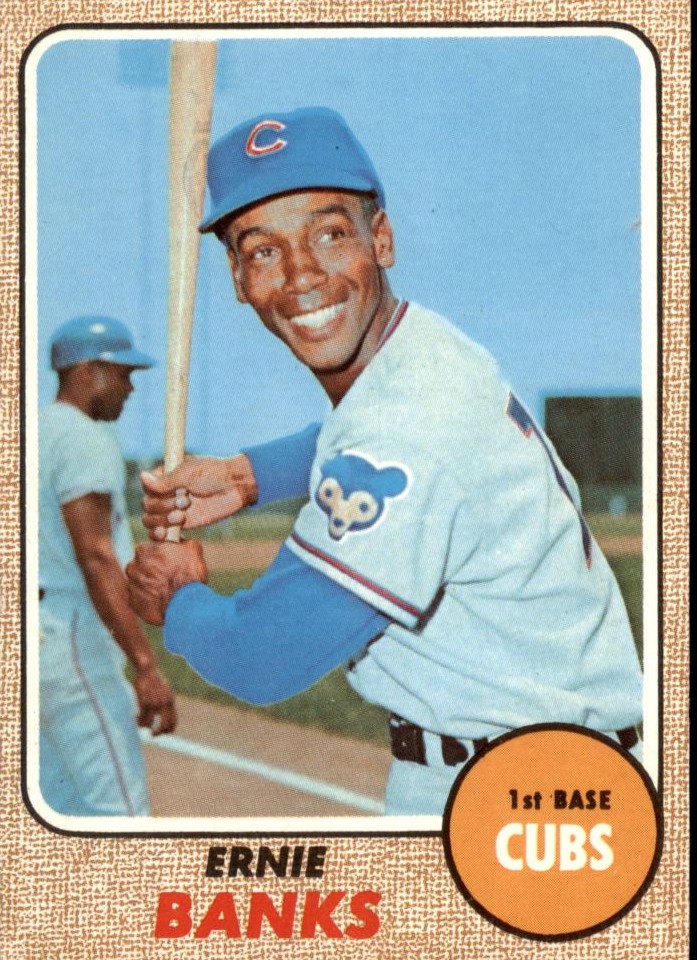
Ernie Banks, 1968 Topps, #355

Known as “Mr. Cub” for playing his entire nineteen-year career with the Chicago Cubs, Ernie Banks was a shortstop and first baseman from 1953 to 1971. Banks started his career in the Negro Leagues in 1950 and in 1953, became the first black player for the Chicago Cubs franchise. Banks wore uniform number 14 his entire career and had a career WAR of 67.8.

Look at that smile. This 1968 Topps card of Ernie Banks showcases his other nickname “Mr. Sunshine” given to him for his infectious smile and ever-present optimism and love of baseball. Aside from that smile, I really love the old Cubs uniforms and logo, and the design of these 1968 Topps is classic.

Banks was a phenomenal player. He placed 2nd in ROY voting in 1954 losing to Wally Moon. He was an All-Star fourteen times and won a Gold Glove in 1960. He was the National League MVP in 1958 and 1959. In 1958, he led the league in home runs (47), RBIs (129), SLG (.614) and TB (379) and in 1959 he had a league leading season WAR of 10.2 with 45 home runs and again led the league in RBIs with 143. Banks had over 40 home runs in five seasons and over 100 RBIs in eight. Banks was also a strong defensive player, and he led the National League in putouts five times and in fielding percentage four times.  

Banks won the Lou Gehrig Memorial Award in 1968 and retired in 1971. He was named to the MLB All-Century Team. He finished his career with a .274 batting average, 2,583 hits, 407 doubles, 512 home runs (23rd all-time), and 1,636 RBIs (33rd).

“Mr. Cub” is a member of the Chicago Cubs Hall of Fame and the Cubs retired his uniform number 14 in 1982.

Banks was inducted into the National Baseball Hall of Fame in 1977.

Ernie Banks passed away in 2015 at the age of 83.

Number 3:

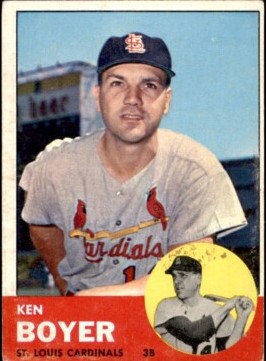
Ken Boyer, 1963 Topps, #375

Ken Boyer spent fifteen years in the Majors from 1955 to 1969. He was a third baseman whose best years were with the St. Louis Cardinals (1955-1965). He was traded to the Mets in 1965 and stayed with them until mid 1967 when he was traded to the Chicago White Sox for Sandy Alomar. He would eventually be released and spent the rest of his career with the Los Angeles Dodgers, playing his last game in August of 1969. Boyer had a career WAR of 62.8 and wore uniform number 14 for fourteen seasons, wearing 45 only with the Dodgers.

I like the 1963 Topps design with the little photo in the corner. I chose this card of Boyer because he is with the team he spent most of his career with and you can just about make out the uniform number 14 on the front of his jersey…just use your imagination and squint.

Boyer was a strong defensive third baseman. He earned 5 Gold Glove Awards and led the league in fielding percentage once and double-plays five times. He was an eleven-time All-Star who batted over .300 in five seasons and, in 1964, was voted National League MVP after hitting .295 with 185 hits, 30 doubles, 24 home runs and a league leading 119 RBIs. Playing alongside Lou Brock and pitcher Bob Gibson, Boyer’s MVP play in 1964 propelled the Cardinals to a World Series win.

Boyer ended his career with a .287 batting average, 2,143 hits, 318 doubles, 68 triples, 282 home runs and 1,141 RBIs. Defensively at third base he is ranked 32nd in putouts, 21st in assists and 14th in double plays turned all-time.

Boyer is a member of the St. Louis Cardinals Hall of Fame, and his uniform number 14 was retired by the Cardinals in 1984.

He was only 51 when he passed away from cancer in 1982.

Number 4:

Jim Bunning, 1963 Topps, #365

There have been over 238,000 games played in baseball over the course of roughly 154 years…and only 24 times has a pitcher pitched a perfect game. Jim Bunning accomplished that feat on June 21st, 1964.

Jim Bunning was a pitcher in the Majors for seventeen years from 1955 to 1971. He played for the Detroit Tigers (1955-1963), Philadelphia Phillies (1964-1967), Pittsburgh Pirates (1968-1969), Los Angeles Dodgers (1969) and finished back with the Phillies (1970-1971). He had a career WAR of 59.4 and wore uniform number 14 for sixteen seasons.

Like Boyer above, I used another 1963 Topps for Bunning since I had trouble finding a card with his number visible. In this card he is with the Tigers where he played for nine seasons.

Bunning was a nine-time All-Star. He had over 200 strikeouts in six seasons, leading the league three times and pitched over 200 innings in twelve (300+ twice). He led the league in season WAR twice, wins once and shutouts twice. Aside from his perfect game in 1964, mentioned above, he pitched a no-hitter on July 20th, 1958. He is one of only seven pitchers in history (along with Sandy Koufax, Addie Joss, Cy Young, Randy Johnson, Roy Halladay and Mark Buehrle) to pitch both a no-hitter and a perfect game in their career.

Bunning retired in 1971 with a career winning % of .549 with a 224-187 record. He has a career ERA of 3.27, WHIP 1.179 and ERA+ of 115. In 3,760.1 innings he is ranked 22nd in strikeouts with 2,855. He also has 151 complete games with 40 shutouts (44th all-time tied with 6 others) and he has 16 saves.

He is on the Phillies Wall of Fame, and his uniform number 14 was retired by Philly in 2001.

Bunning was elected to the National Baseball Hall of Fame in 1996.

After retirement Bunning was a politician and is the only baseball player in history to be elected to both the United States Senate and the National Baseball Hall of Fame.

Jim Bunning passed away in 2017 at the age of 85.

Number 5:

Larry Doby, 1949 Bowman, #233

Eleven weeks after Jackie Robinson broke the color barrier in Major League Baseball, centerfielder Larry Doby made his debut on July 5th, 1947. He was the first black player in the American League. Doby started with the Newark Eagles of the Negro Leagues and played four and a half years before joining the Majors. He played thirteen seasons in the Majors from 1947 to 1959 with Cleveland (1947-1955, 1958), Chicago White Sox (1956-1957, 1959) and the Detroit Tigers (1959). He had a career WAR of 56.7 and wore uniform number 14 for eleven seasons.

Doby was a Negro Leagues All-Star in 1946 and won the World Series with teammates Leon Day and Monte Irvin of the Newark Eagles that same year. In the Majors, Doby was a seven time All-Star. He led the league in runs once, home runs twice and RBIs once. He had over 100 RBIs in four seasons and hit over 20 home runs eight times. Doby was a part of the 1948 World Series Champion Cleveland Indians, a team that featured feature Hall of Famers Lou Boudreau, Bob Feller, Joe Gordon, Bob Lemon and Satchel Paige. “In Game 4 of the World Series against the Boston Braves, Doby became the first African-American player to homer in a World Series.” (Monagan, 2017)

Doby suffered from bone deterioration in his ankle and retired in 1959. He finished his career with a .283 batting average, 1,515 hits, 253 home runs and 970 RBIs.

Doby is a member of the Cleveland Guardians Hall of Fame. His uniform number 14 was retired by Cleveland in 1994, and he was elected to the National Baseball Hall of Fame in 1998.

Larry Doby passed away at age 79 in 2003.

Number 6:

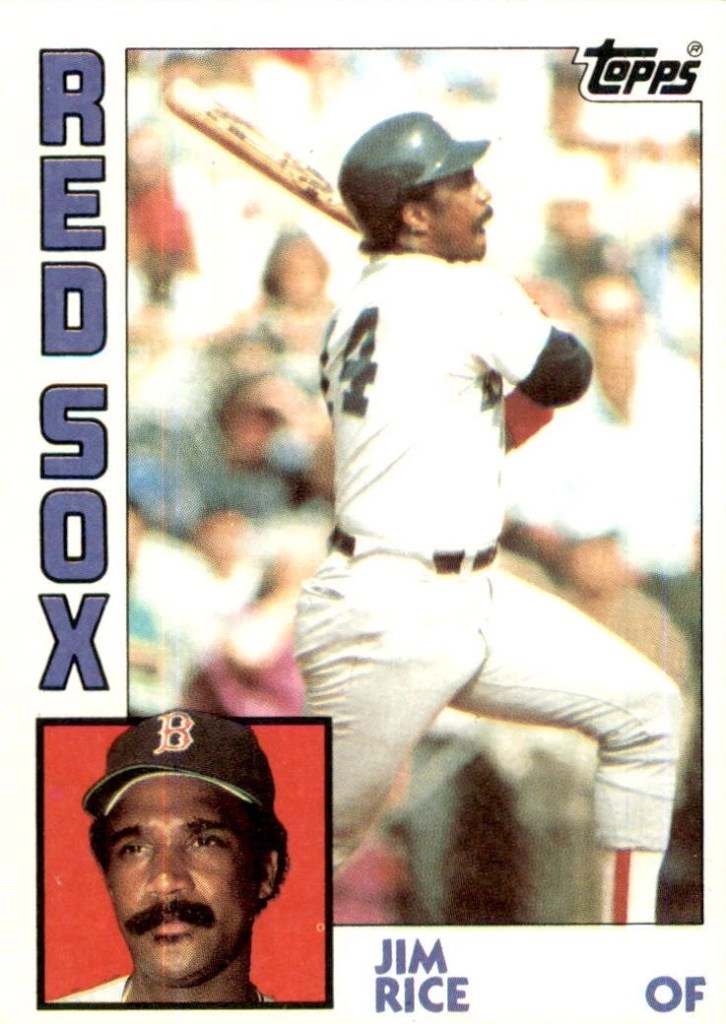
Jim Rice, 1984 Topps, #550

I’m always excited when I get to write about a Boston player, and Jim Rice is the quintessential Red Sox hero. Rice played from 1974 to 1989 and spent his entire sixteen-year career as a left fielder and later designated hitter for the Boston Red Sox. He wore uniform number 14 his entire career and had a career 47.7 WAR.

I’ve always been partial to the 1984 Topps design. I really like this card of Jim Rice. It’s a great example of the set, with the team’s name along the side and the portrait of Rice (and his great mustache) in the corner box. The main photo also works great for this post as you can see Rice’s number 14 on the back of his jersey as he completes his swing.

In 1975, Rice was second in Rookie of the Year voting, losing to teammate Fred Lynn. He won the American League MVP award in 1978 when he led the league in 14 categories including WAR (7.6), hits (213), triples (15), home runs (46) RBIs (139) and OPS (970). Rice is the only player in history to lead the league in home runs, RBIs, and triples in the same year. Blevins, David (2012)

He batted over .300 seven times with four 200+ hit seasons, hit over 30 home runs four-times and had over 100 RBIs eight times. He was an eight-time All-Star and won two Silver Sluggers. He was a member of two Red Sox World Series appearances (1975 and 1986). The Sox lost both 4 games to 3.  (ugg!)

Rice played his last game in August of 1989. He finished his career with a .298 batting average, 2,452 hits, 373 doubles, 79 triples, 382 home runs, 1,451 RBIs, 1,249 runs scored and 4,129 total bases.

Rice is a member of the Boston Red Sox Hall of Fame, and his uniform number 14 was retired by Boston in 2009.

He was inducted into the National Baseball Hall of Fame in 2009.

Rice is 72 years old and works as an analyst during Boston Red Sox pre and post-game shows for NESN (New England Sports Network).

Number 7:

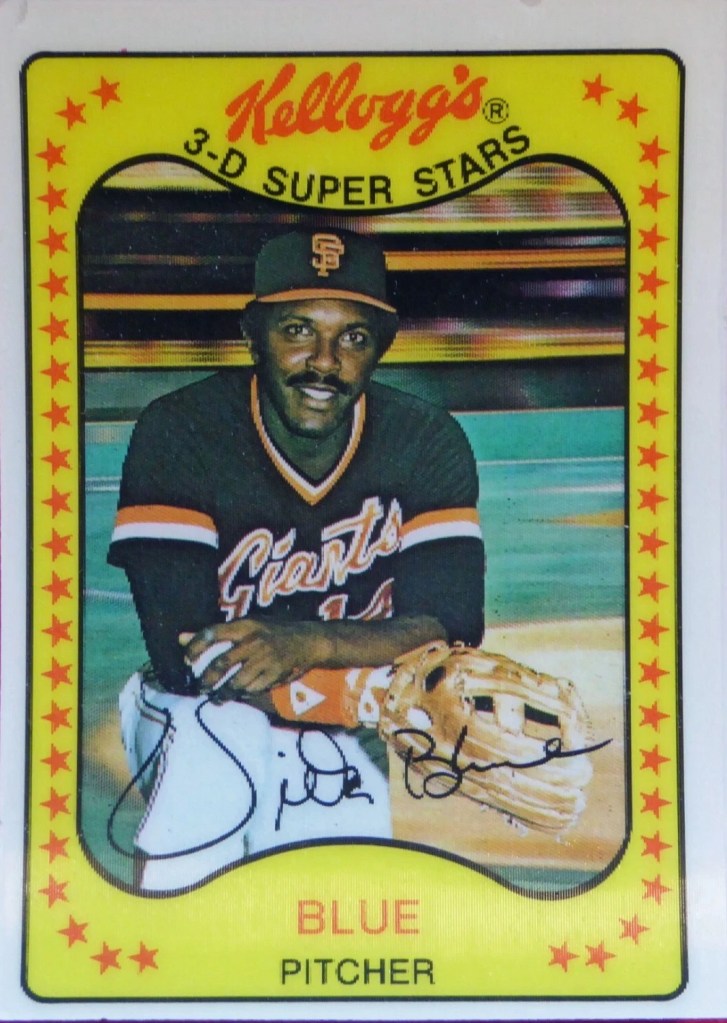
Vida Blue, 1981 Kellogg’s, #23

A left-handed fireballer, Vida Blue played for seventeen seasons from 1969 to 1986. Blue pitched for the Oakland Athletics (1969-1977), San Francisco Giants (1978-1981, 1985-1986) and Kansas City Royals (1982-1983). Originally wearing four different numbers while with the A’s (21,28,17,35), he switched to uniform number 14 in 1973 and wore it for most of the next twelve seasons (he also wore 33 while with Kansas City). Blue had a career WAR of 45.1.

I really wanted to pick a card with Vida Blue on the Oakland A’s, but the only cards I could find that had the number visible showed uniform number 35. Then I saw this beauty. I love Kellogg’s Brand 3-D baseball cards. This is from 1981 and you can see Blue’s number 14 right on the front of his Giants uniform.

Vida Blue won the Cy Young Award and was the American League MVP in 1971. In 39 starts, he went 24-8 with 24 complete games and led the league with 8 shutouts. He had 301 strikeouts in 312 innings for a league leading 8.7 SO9. He also led the league with a 1.82 ERA. He was also an All-Star, one of 6 seasons as an All-Star.

In his seventeen seasons, Blue had 20 or more wins three times and pitched for an under 3 ERA seven times. On September 21st, 1970, he pitched a no-hitter. Blue was a member of the Athletics three consecutive World Series Championships from 1972-1974 along with fellow pitchers Catfish Hunter and Rollie Fingers, and “Mr. October” Reggie Jackson.  

Blue played his last game in 1986. He would finish his career with a .565 W-L % on a 209-161 career record. He had a 3.27 ERA, 1.233 WHIP and an ERA+ of 108. In 3,343.1 innings he had 2,175 strikeouts with a SO9 of 5.9. He pitched 143 complete games and 37 shutouts.

He is a member of the Oakland Athletics Hall of Fame and the San Francisco Giants Wall of Fame.

Vida Blue passed away at the age of 73 in 2023.

Final Score:

It seemed that a lot of players like to keep number 14, so I wanted to highlight a few players who missed the cut but wore uniform number 14 for a long time. Hall of Famer Gil Hodges wore it for seventeen seasons, 3-time All-Star Julio Franco for 16 years, 6-time All-Star Paul Konerko wore it sixteen years while with he White Sox, the “Big Cat” Andrés Galarraga wore 14 for fifteen seasons, Minnesota Twins Legend Kent Hrbek wore it thirteen seasons, and 8-time All-Star Bill “Moose” Skowron wore uniform number 14 for twelve seasons. There are so many more, but they will have to wait for the next go through.

Thank you so much for reading. I hope you enjoy these posts. Please subscribe and share, like and comment, I’d love to hear from you! And stay tuned because uniform number 15 will be coming up soon!

Sources:

https://www.baseball-almanac.com/

https://www.baseball-reference.com/

Blevins, David (2012). The Sports Hall of Fame Encyclopedia: Baseball, Basketball, Football, Hockey, Soccer. Lanham, Maryland: The Scarecrow Press. p. 800. 

Coffey, Michael (2004). 27 Men Out: Baseball’s Perfect Games. New York: Atria Books. pp. 79–95

Monagan, Matt (2017). Nearly 70 years ago, Larry Doby became the first African-American player to hit a World Series HR, mlb.com

https://www.sabr.org

Shout out to all the cool cards and creative commons for my pictures! Thanks Topps and Fleer and Donruss and Upper Deck and all the rest.
 

Baseball by the Numbers: 12

Read about the Project
Checklist

12

Welcome back to Baseball by the Numbers. Today we are looking at uniform number 12. I found nearly 900 players in history who wore uniform number 12. Two players had a 100 plus WAR but only wore the number 12 for one season each. In 1999, the “Rocket” Roger Clemens (WAR 139.2) wore the number 12 for half a season after being traded to the Damn Yankees from the Blue Jays. He would switch to 22 midway through the season. Joe Morgan (WAR 100.6), who was the featured legend for uniform number 8, wore number 12  in his rookie season with the  Houston Colt .45s. Aside from these two, thirty-four other players with a career WAR of 40 or more wore uniform number 12 and 101 different players had the number for five years or more. There was no legend for this uniform number. Picking the first player was heartbreaking. He was one of my favorites for a long time growing up, but he wore a different number when he was a Red Sox hero, then he turned heel, joined the Evil Empire and took on the number 12. Luckly, another of my favorite players wore the number 12 while with the Sox, so that balanced things out.

Number 1:

Wade Boggs, 2000 Topps Highlights, #458

The “Chicken Man” was one of my favorite players growing up. From 1982 to 1999, Wade Boggs played third base for three teams. He began his eighteen-year career with the Red Sox (1982-1992) where he was a Fenway hero. Then in a move out of the WWE playbook, he turned heel and signed with the Evil Empire, the New York Yankees (1993-1997). He would finish his career with the Tampa Bay Rays (1998-1999). He wore uniform number 12 while with the Yankees and the Rays and had a career WAR of 91.4.

When Wade Boggs smacked a home run off Cleveland pitcher Chris Haney in the 6th inning of a Rays home game on August 7th, 1999, he made history. It was the first time a player would obtain his 3,000th hit on a home run. What’s crazy to me is the fact that two more players actually accomplished the same feat, Derek Jeter in 2011 and Alex Rodriguez in 2015. It’s these types of facts that make baseball so fascinating to me. This 2000 Topps Highlights card commemorates Bogg’s historic hit, and since it featured him in the number 12 uniform number, it was perfect for the post…plus he’s with Tampa, so it takes away some of the sting.

Boggs was an All-Star in twelve straight seasons and won the Silver Slugger 8-times. He was a prolific hitter, batting .300 or more in fifteen of his eighteen seasons, winning the American League batting title 5-times. He had over 200 hits in seven seasons, leading the league with 240 in 1985. He also led the league in OBP 6 times. He has 2 Gold Gloves at the hot corner. Boggs was a member of the World Series Champion Yankees in 1996 (uggg). A great team managed by Joe Torre, and featuring Hall of Famers Derek Jeter, Tim Raines and closer Mariano Rivera.

In 1999, 20 days after his historic 3,000th hit, Boggs would sustain an injury and never play again. He finished his career 31st all-time with 3,010 hits. His .328 career batting average is ranked 39th all-time. He also had 578 doubles (24th all-time), 61 triples, 118 home runs, 1,014 RBIs and 1,513 runs. His .415 career OBP is ranked 27th all-time.

There are only a handful of players who have multiple retired numbers for different teams, and Boggs in one of them. Boggs is a member of the Red Sox Hall of Fame and his number 26 while with the Boston was retired in 2016.

He is a member of the Tampa Bay Rays Hall of Fame, and his uniform number 12 was retired by the Rays in 2000, the only player with a retired number for the franchise. The other two retired numbers are coach Don Zimmer (66) and Jackie Robinson’s number 42, which is retired throughout the entire MLB.

Boggs was inducted into the National Baseball Hall of Fame in 2005.

Number 2:

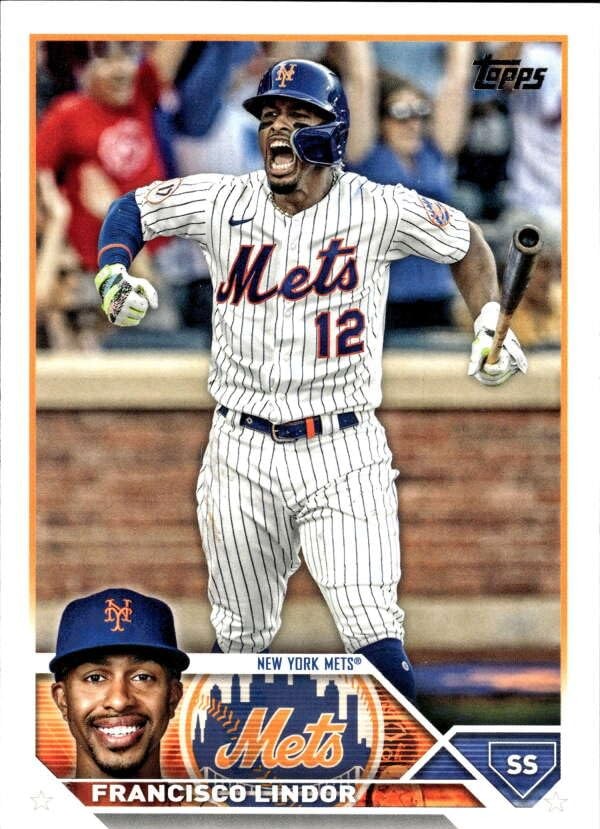
Francisco Lindor, 2023 Topps, #450

This is the second time that I have featured a currently active player. Francisco Lindor is a shortstop currently playing with the New York Mets. He will be entering his twelfth season in the league. Lindor has played since 2015 when he began his career with Cleveland. He was traded to the Mets in 2020 and signed a 10-year deal that runs through 2031. He has worn uniform number 12 for his entire career and currently has a 55.7 career WAR.

I used his 2023 Topps card because it features him with his current team and shows his uniform number on the front. Lindor had a great 2023 season with 31 home runs and 31 stolen bases.

Lindor was second in ROY voting in 2015 and has been selected to 5 All-Star games. He’s won 4 Silver Slugger awards and is a 2-time member of the 30-30 club (2023 and 2025). He also has 2 Gold Glove awards.

Lindor is currently 32 years old. In 2025, Lindor played 160 games, batting .267 with 31 home runs, 31 stolen bases, and 86 RBI for his 2nd career 30-30 season.  He had minor surgery in the off-season but is expected to be a key contributor for the Mets in 2026.

Number 3:

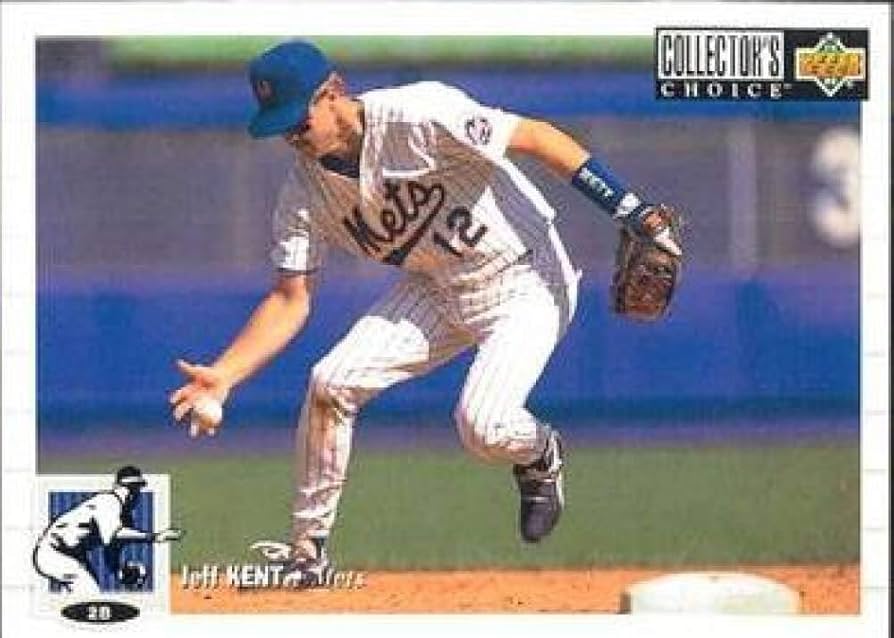
Jeff Kent, 1994 Upper Deck Collector’s Choice, #159

As I write this, Jeff Kent was just elected as the newest member of the National Baseball Hall of Fame. He played 17 seasons from 1992 to 2008. He started his career with the Blue Jays for one season, then played for the New York Mets, Cleveland Indians, San Francisco Giants, Houston Astros and Los Angeles Dodgers. He wore uniform number 12 for ten seasons and had a career WAR of 55.4.

This 1994 Upper Deck Collector’s Choice has a great photo of Kent in the field, his uniform number clearly visible in the photo. Kent played for the Mets for four and a half years.

Jeff Kent was an All-Star five times and won 4 Silver Slugger awards. Kent was the National League MVP in 2000 when he had 196 hits for a .334 batting average with 41 doubles, 33 home runs and 125 RBIs. A great clutch hitter, Kent had over 100 RBIs in eight seasons and had six seasons with over 25 home runs.

Jeff Kent retired in 2009. He had a career batting average of .290 with 2,461 hits, 560 doubles (30th all-time), 377 home runs (the most by any second baseman), 1,320 runs and 1,518 RBIs.

On December 7th, 2025, it was announced the Kent was elected to the National Baseball Hall of Fame through the Contemporary Era Committee. He will be inducted in 2026.

Number 4:

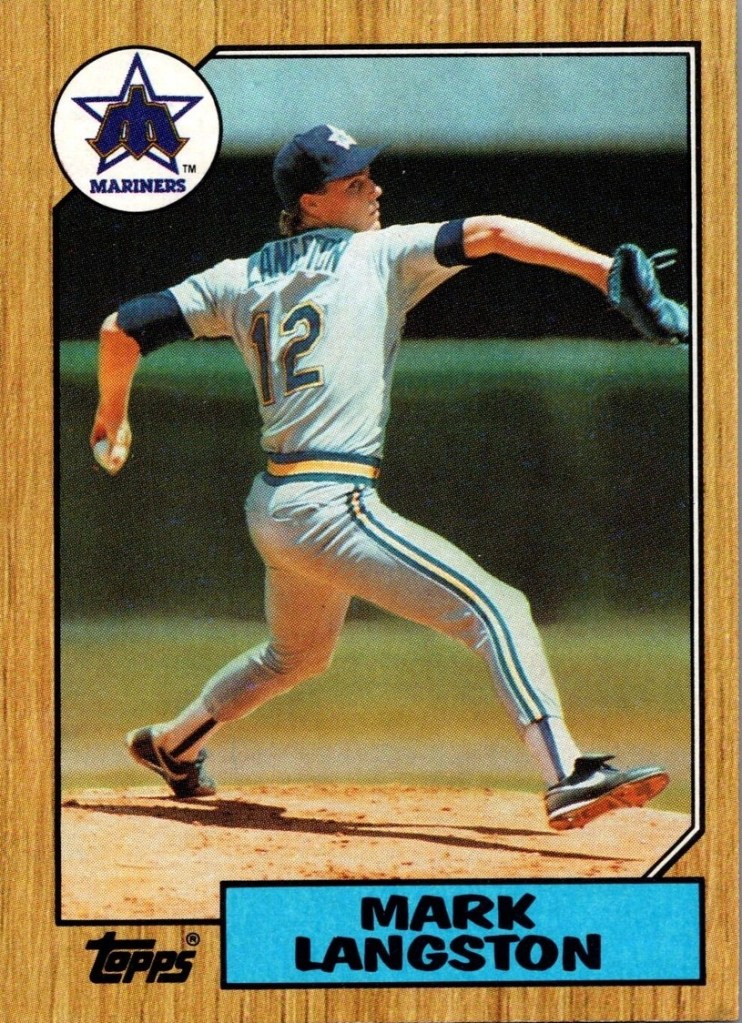
Mark Langston, 1987 Topps, #215

Left-handed pitcher Mark Langston played sixteen seasons in the Majors from 1984 to 1999. He started his career with the Seattle Mariners where he played until 1989. He was traded to the Expos in May of 1989 in a trade that brought future Hall of Famer Randy Johnson to the Mariners. Langston played only 24 games in Montreal when he signed with the California Angels on a five-year, $16 million contract starting the 1990 season, the highest contract of any player at the time. He stayed with the Angels until 1997. He then played two more seasons, with San Diego (1998) and Cleveland (1999), before hanging up the cleats. He wore uniform number 12 for his first fourteen seasons and had a career WAR of 50.1.

I love this 1987 Topps card of Langston. The 1987 Topps set holds a special place in my heart, and this card is near perfect; the action shot with Langston’s number 12 showing, the blue background color in the name box, and the Mariners logo at the top. It’s one of those cards that I just love.

Langston started off his career strong. He was runner up for American League Rookie of the Year in 1984 losing to teammate Alvin Davis. He had 204 strikeouts that season, the first of five seasons with 200 or more K’s. He was a 4-time All-Star, who led the league in strikeouts 3 times. He was also a terrific fielder on the mound, he led the league in assists 3 times and won seven Gold Gloves. He was a part of a combined no-hitter in 1990, pitching the first 7 innings before Mike Witt would complete the game. He was great at pickoffs and once had three in a game, one of only eight players known to have accomplished this feat.

When he retired from baseball, he had a career record of 179-158, a .531 w/l %. He is 44th all-time with 2,464 strikeouts in 2,962.2 innings, with a 7.9 career SO9. He had 81 complete games, 18 shutouts, a 3.97 ERA and 1.354 WHIP. He also had an ERA+ of 107.

Langston is 65 years old and serves as the radio color-commentator for the Los Angeles Angels.

Number 5:

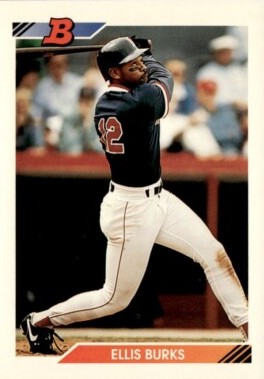
Ellis Burks, 1992 Bowman, #570

Yes! One of my favorite players growing up, Ellis Burks, played outfield for eighteen seasons from 1987 to 2004. He started off with the Boston Red Sox for six seasons and wore number 12 during that time. He would go on to wear three other numbers while bouncing around a bit. After leaving Boston, he played with the Chicago White Sox (1993), Colorado Rockies (1994 -1998), the San Francisco Giants (1998-2000) and the Cleveland Indians (2001-2003). He would finish his career back with Boston for the 2004 season. He wore uniform number 12 his first six seasons with the Red Sox and had a career WAR of 49.8.

This 1992 Bowman is beautiful. I remember the 1992 Bowman as having nice photos and a clean design. They are missing the team logo on the front, which is a pet peeve of mine, but overall, the cards look great and this one of Burks in his Red Sox uniform, taking a big swing, his number 12 clear in the photo was a perfect pick for the post.

Burks was a two-time All-Star and won two Silver Slugger awards. He hit .290 or better in seven seasons, with two seasons hitting .344, He led the league once each in runs, SLG and total bases. Burks was honored with a World Series ring as a part of the 2004 Boston Red Sox team that won their first World Series in 86 years, breaking the “Curse of the Bambino”. Although he only played 11 games during the season, and was not on the roster for the playoffs, Burks was considered a mentor to the young players during the season and the playoffs.

Burks retired after 2004 with a career batting average of .291 with 2,107 hits, 402 doubles, 63 Triples, 352 home runs, 1,206 RBIs, 1,253 runs, and 181 stolen bases.

Ellis Burks is currently an analyst and commentator for the Boston Red Sox at NESN (New England Sports Network).

Number 6:

Steve Finley, 2000 Topps Stadium Club, #133

From 1989 to 2007, Steve Finley played centerfield for eight different teams during his nineteen-year career. He started his career in Baltimore (1989-1990). In 1991, he was traded to the Houston Astros, along with pitchers Curt Schilling and Pete Harnisch for Glenn Davis. He stayed in Houston for 4 seasons until he was traded to the Padres (1995-1998). He then signed with the Arizona Diamondbacks (1999-2004), was traded to the Dodgers (2004), signed with the Angels (2005), the Giants (2006) and finally the Colorado Rockies (2007). His 43 games in Colorado made him one of only two players to play for all five National League West teams. He wore uniform number 12 for seventeen seasons and had a career WAR of 44.2.

Finley was a two-time All-Star. Known for his speed and stellar defense, he had 20 or more stolen bases and 100 or more runs in five seasons and led the league in triples twice. He also won five Gold Gloves. He won a World Series ring with the Arizona Diamondbacks in 2001, which I why I featured this nice 2000 Topps Stadium Club card for Finley. Not only is he with Arizona, but he’s mid slide with his uniform number 12 facing the camera.

By 2006 Finley was the oldest player to play 100 or more games in center field at age 41, but his skills began to decline. His last game would come in June of 2007. He was released by Colorado after 43 games. Finley had a career batting average of .271 with 2,548 hits, 449 doubles, 124 triples, 304 home runs, 1,443 runs, 1,167 RBIs and 320 stolen bases.

Since 1945 only four players have had 300 home runs and 100 triples. Finley is in good company with the other three, George Brett, Willie Mays and Stan Musial. He also joins Mays and Ken Griffey Jr. as the only three center fielders to have 2,500 or more hits and 5 Gold Glove Awards.

Number 7:

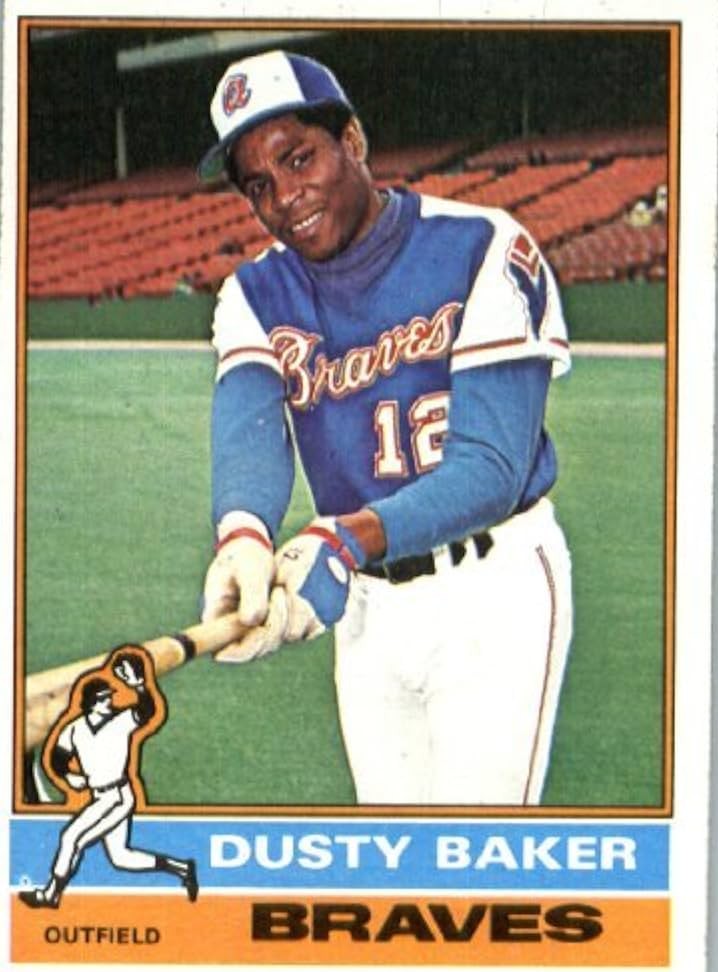
Dusty Baker, 1976 Topps, #28

A highly respected coach and manager, Dusty Baker has been involved in the MLB for over 56 years. He played for nineteen seasons from 1968 to 1986 as an outfielder for the Atlanta Braves (1968-1975), Los Angeles Dodgers (1976-1983), San Francisco Giants (1984) and the Oakland Athletics (1986-1987). He wore uniform number 12 for his entire playing career and had a career WAR of 37.

I loved this 1976 Topps from the moment I saw it, the design is great and the photo is perfect for this post, with Dusty’s uniform number right on the front and his infectious smile toward the camera. I used the 1976 Topps in my last post for Darrell Evans who was also on the Braves. The pictures are very similar, and I realized that Dusty is in the background of Evan’s picture. My guess is that the team did the pictures on the same day and perhaps went by uniform number. Evan’s was 11 then Dusty was next. That’s just my theory, but either way it’s a cool coincidence.

Baker was a two-time All-Star who won a Gold Glove in 1981 and won two Silver Slugger awards. He was the MVP of the 1977 NLCS while with the Dodgers when he hit .357 with 2 home runs (one was a grand slam) and had 8 RBIs. The Dodgers would lose that World Series, but Baker was a member of two World Series Champion teams. As a player, he was a member of the 1981 World Series Champion Dodgers, who were managed by Tommy Lasorda and featured rookie pitcher Fernando Valenzuela along with All-Stars Steve Garvey, Davey Lopes, Ron Cey and Pedro Guerrero. His second ring would come as a manager.

Baker played his final game in 1986. He finished his career with a .278 batting average, 1,981 hits, 320 doubles, 242 home runs, 1,013 RBIs and 137 stolen bases.

A year after retiring, Baker became a coach for the San Francisco Giants, this led to the next step as a manager. Baker has managed five different teams, all of which won division titles. He was the first manager in major league history to lead five different teams to division titles. He did so with the Giants 1993-2002, Cubs 2003-2006, Reds 2008-2013, Nationals 2016-2017, and Astros 2020-2023. His 2,183 wins put him at 8th all-time, and his .540 winning percentage is 14th. Baker was a three-time National League manager of the year and won the World Series in 2022 with the Houston Astros.

He is currently a Special Advisor for the San Francisco Giants front office.  

Final Score:

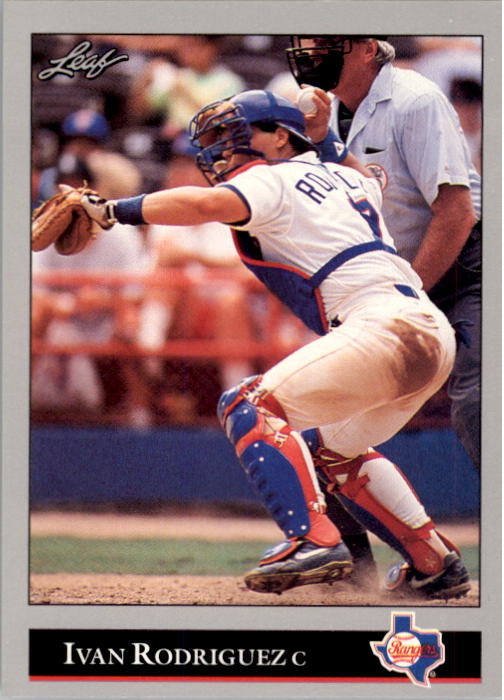
Quite a few good players wore uniform number 12 for short periods of time. In the beginning of this post, I mentioned Clemens and Morgan. Others include, Pudge Rodriguez (2 years), Kenny Lofton (1) Graig Nettles (3), Harmon Killebrew (2) Joe Medwick (1) Will Clark (1), and Lance Berkman (2). Bobo Newsome, who I featured in the very first Baseball by the Numbers post, wore 12 for eight seasons (He wore twelve different numbers in his career!).

Choosing the last pick was difficult. I originally had Roberto Alomar (67 WAR, 17 years worn), but due to his number being unretired, I skipped him. There were also a couple of other good players Eddie Stanky (WAR 41.6) and Gil McDougald (WAR 40.9) who could have taken the spot, but I just felt that Dusty Baker was the best choice. I’m sure that I will have plenty of time to include others in the future.

Thank you for reading. If you’re enjoying these posts, hit the like, subscribe to the email list, or send me a comment, I’d love to hear from you. And get ready for lucky number 13, coming soon!

Sources:

https://www.baseball-almanac.com/

https://www.baseball-reference.com/

https://www.sabr.org

 Shout out to all the cool cards and creative commons for my pictures! Thanks Topps and Fleer and Donruss and Upper Deck and all the rest.
 

Baseball by the Numbers: 11

Read about the Project
Checklist

11

Welcome back to Baseball by the Numbers. Today we are looking at uniform number 11. I found 708 players in history who wore uniform number 11. Rogers Hornsby wore it for 2 seasons with the St. Louis Browns in 1934 and 1935. He was already featured with his uniform number 4 here. Aside from Hornsby (WAR 127.3), no other player who wore number 11 had a WAR of 100 or more. Eddie Mathews, who wore the number in 1967 with the Astros, had a career WAR of 96, but only wore it for one season. After Mathews, the next highest career WAR is 74.7. Not counting Hornsby and Mathews, thirty-six players who wore uniform number 11 had career WAR over 40 and ninety-one players wore the number for 5 years or more. Gary Sheffield wore number 11 for seven seasons but he was already featured in the last post (uniform number 10), so this is his shout out. This list has one pitcher and is the first list that will feature a currently active player. Here are my top seven players for uniform number 11!

Number 1:

Paul Waner, 1936 Diamond Stars, #83

Paul Waner played in the Majors for twenty years from 1926 to 1945. He was a rightfielder for the Pittsburgh Pirates until 1940, then he jumped around a bit, playing for the Brooklyn Dodgers, Boston Braves, Brooklyn Dodgers again and finally the New York Yankees. Waner has one of my favorite nicknames, “Big Poison” and wore uniform number 11 for his first eight seasons. He had a career WAR of 74.7

This is one of the busiest Diamond Stars cards I’ve seen. The 1936 Paul Waner features “Big Poison” (I’m going to be using that a lot!), in the front with another player in the background. It looks like that player has uniform number 26 which would make it Pep Young who played second for the Pirates in the 1930s. The card also shows a catcher and umpire, so it seems Waner is about to be at bat maybe. Just an interesting addition to the Diamond Stars collection.

Paul Waner was a 4-time All-Star, having also played seven great seasons before the All-Star game was formed. He was the National League MVP in 1927 when he batted a league leading .380 and led the league in hits (237), triples (18), RBIs (131) and total bases (342). “Big Poison” batted over .300 fourteen times, leading the league in batting average 3-times. He had 200 or more hits in eight seasons and led the league in doubles twice (including 62 in 1932) and triples twice.

By 1941 he started to jump around from team to team and retired in 1945 with only one at bat. Waner ended his career with only 113 home runs but was 30th all-time with a .333 batting average. His 3,152 hits ranked him 20th all-time. He had 605 doubles (16th), 191 Triples (10th), 1,627 runs (41st) and 1,309 RBIs. “Big Poison” is ranked the 9th greatest right fielder in history in “The New Bill James Historical Baseball Abstract.” (2003).

Waner is a member of the Pittsburgh Pirates Hall of Fame, and his uniform number 11 was retired in 2007.

Waner was inducted into the National Baseball Hall of Fame in 1952.

Paul Waner passed away in 1965 at the age of 62.  

Number 2:

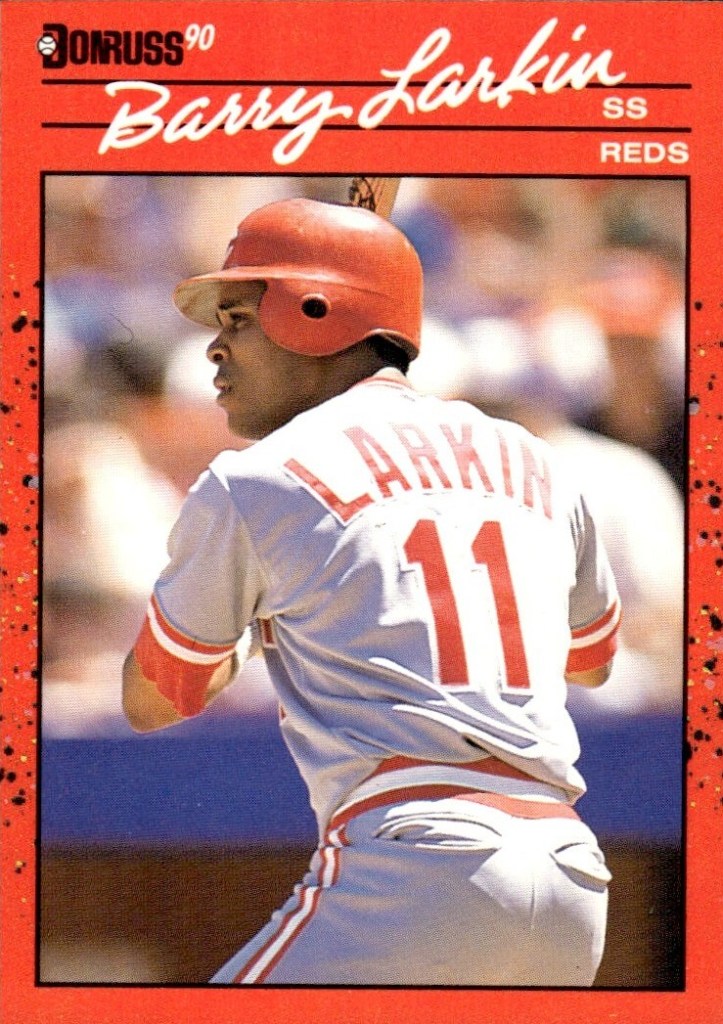
Barry Larkin, 1990 Donruss, #71

Barry Larkin played from 1986 to 2004 and spent his entire nineteen-year career exclusively with the Cincinnati Reds. He was one of the premier shortstops in the league during my youth and a player who I remember well. I have quite a few of his cards. He started his career with uniform number 15 but quickly switched to 11 and wore it for seventeen seasons. He had a career WAR of 70.5.

1990 Donruss is such an important set from my young collector days. Anyone who collected during the junk wax error will remember this set. It wasn’t beautiful, but at the time, the 1990 Donruss was highly sought after for its poor-quality control. There were dozens of errors to search for. Opening a pack was like looking for that 1 of 1 card today. Some errors were as simple as a missing trademark or period, others were lines through the All-Star symbol, or a reverse negative photo of the Juan Gonzales rated rookie card, or a photo of John Smoltz on a Tom Glavine card, it was endless. They are all pretty worthless now,m but the chase was fun. I chose this Larkin mainly due to his uniform number being prominently visible in the photo, but this set will always be a classic to me.

Larkin was a 12-time All Star who won nine Silver Slugger awards and 3 Gold Gloves. He was the National League MVP in 1995 with a .319 batting average, 15 home runs, 66 RBIs and 51 Stolen Bases. He hit .300 or better nine times and had 25 or more stolen bases in seven seasons. In 1990, he was a member of the World Series Champion Reds whose bullpen, known as “the Nasty Boys” (very 90s nickname), consisted of Norm Charlton, Rob Dibble and Randy Myers.

By 1997, Larkin began to suffer several injuries. While still productive during the next few years, he would eventually retire after a strong All-Star season in 2004.

Larkin had a career batting average of .295 with 2,340 hits, 441 doubles, 76 triples, 198 home runs, 1,329 runs, 960 RBIs and 379 stolen bases. He also won the Roberto Clemente Award in 1993.

Larkin is a member of the Cincinnati Reds Hall of Fame with the Reds retiring his uniform number 11 in 2012.

He was inducted into the Baseball Hall of Fame in 2012.

Number 3:

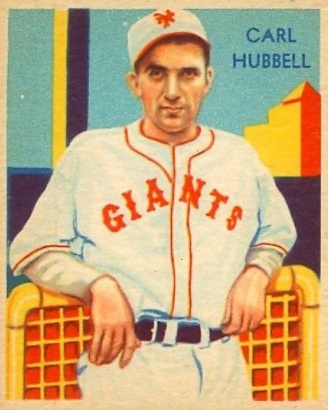
Carl Hubbell, 1935 Diamond Stars, #39

From 1928 to 1943, batters were plagued by lefthanded screwball specialist Carl Hubbell. Hubbell played his entire sixteen-year career for the New York Giants. He wore uniform number 11 for eleven seasons and had a career WAR of 68.5.

“King Carl” as he was often called, is just chilling in this 1935 Diamond Stars card. The relaxed pose, confident smirk and tilted hat bring his personality to life. And the Giants uniform is fantastic. Love these Diamond Stars!

Aside from “King Carl”, Hubbell was also known as “the Meal Ticket” for his ability to nearly guarantee a win. He was a 9-time All-Star who led the league in wins and ERA three times each. He had five straight seasons of 20 or more wins and set the Major League record for consecutive wins with 24 in a row between 1936 and 1937. He had an under 3 ERA in seven seasons, his best being a 1.66 ERA over 308 innings (amazing!). He pitched over 200 innings ten times with four of those being 300 or more. He was also the National League MVP in 1933 and 1936.

In 1933, Hubbell pitched for the World Series winning New York Giants, a team that included Hall of Famers, Mel Ott, Travis Jackson, Bill Terry and Lefty O’Doul. He pitched a no-hitter on May 8, 1929, and is known for his amazing All-Star appearance in 1934 when he struck out Babe Ruth, Lou Gehrig, Jimmie Foxx, Al Simmons and Joe Cronin in order.

Hubbell’s last game came in 1943. He had a .622 win/loss percentage with 253 wins good for 46th all-time. His career ERA is 2.98, WHIP is 1.166 and he has 1,677 strikeouts. He’s tied for 48th in adjusted ERA plus with a 130.

His uniform number 11 was retired in 1944 by the Giants, and Hubbell was inducted into the Baseball Hall of Fame in 1947.

After his release in 1943, Hubbell continued with the Giants organization in player development for the rest of his life.

Carl Hubbell passed away at the age of 85 in 1988.

Number 4:

Edgar Martinez, 1990 Topps, #148

Edgar Martínez was a third baseman and designated hitter for eighteen seasons from 1987 to 2004. He played exclusively for the Seattle Mariners and wore uniform number 11 for his entire career. He had a career WAR of 68.4.

I think this might be the first time I’ve used a card in which the player in the photo is not wearing his uniform. In this 1990 Topps, Martínez is wearing his warmup jacket, but his number 11 is on the front which made this a perfect choice. I also fondly remember the 1990 Topps set, and this card brings back that nostalgic feeling. 1990 was his first season as a full-time player.

Martínez was a 7-time All-Star who won five Silver Slugger awards. A prolific hitter, Martínez batted .300 or better in ten seasons, leading the league twice. He also had an OBP of .400 or better in eleven seasons (leading three times) and led the league in doubles twice. He received the Roberto Clemente award in 2004.

Martínez retired after the 2004 season. He finished his career with a .312 batting average. He had 2,247 hits, 1,219 runs, 514 doubles, 309 home runs and 1,261 RBIs. He is 22nd all-time in OBP with a .418 and 37th in OPS with a career .933 percentage.

Martínez is a member of the Seattle Mariners Hall of Fame, and his uniform number 11 was retired by them in 2017.

He was inducted into the National Baseball Hall of Fame in 2019.

Edgar Martínez continues to be a successful hitting coach and advisor with the Seattle Mariners.

Number 5:

Darrell Evans, 1976 Topps, #81

Darrell Evans was a third and first baseman for twenty-one seasons from 1969 to 1989 who played with the Atlanta Braves, San Francisco Giants, Detroit Tigers and finished his career with one more year in Atlanta. He wore uniform number 11 for nine seasons, all while on the Braves, and had a career WAR of 58.7.

I chose this 1976 Topps because Evans is on the Braves, the team he played for while wearing the number 11 and if you look closely you can see the uniform number peeking out from under his arms on the front of his jersey. 1976 Topps has a nice design; I love the color bands on the bottom that match his uniform. 1976 was his last with Atlanta (until 1989) as he was traded to the Giants in June of that season.

Evans was an All-Star twice. He had over 30 home runs in four seasons, leading the league in 1985 with 40. I remember Darrell Evans well for his time with the Detroit Tigers (1984 to 1988). I was just a nine-year-old, newly minted baseball fan, and chose the Tigers as my team because their logo was a cool animal, but they also won the 1984 World Series, so they may have been highly televised at the time. Evans was a pivotal part of that team, a team managed by the great Sparky Anderson, anchored by pitcher Jack Morris and powered by hitters Kirk Gibson, Alan Trammell, Lou Whitaker, Chet Lemon and one of my personal favorite players at the time, Lance Parrish.

Evans would retire after the 1989 season after signing a 1-year contract and playing in 109 games with the Atlanta Braves.

He finished his career with 2,223 hits and a .248 batting average, with 1,344 runs, 329 doubles, 1,354 RBIs, and 414 home runs.

Darrell Evans would go on to become a manager and coach in the minors leagues and the Golden Baseball League.

Number 6:

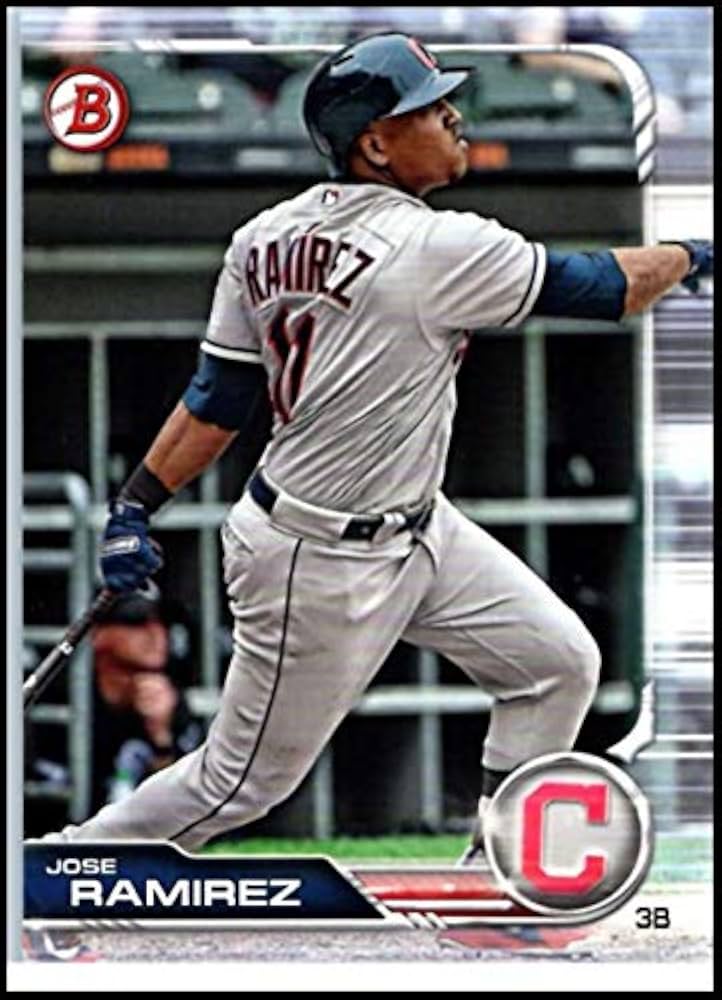
Jose Ramirez, 2019 Bowman, #66

José Ramírez is the first currently active player to make any of these lists. He began his career in 2013 with the Cleveland Guardians as an infielder, primarily playing third base. 2025 was his thirteenth season in the Majors and he has remained in Cleveland his entire career so far. Ramírez has worn uniform number 11 for twelve years and currently has a career WAR of 57.6.

 I used this 2019 Bowman because his number is partially visible on his back. I am not a fan of the more recent card sets, and this Bowman is rather plain. The photo is cool, but in my opinion the design is poor.

Ramírez is a 7-time All-Star who has won six Silver Slugger awards. The switch hitter is a 3-time member of the 30-30 club, having accomplished the feat in 2018, 2024, and 2025. He currently has a .283 batting average with 1,668 hits, 398 doubles (he’s led the league twice), 285 home runs, 949 RBI’s (he’s had over 100 in four seasons), 1,001 runs (over 100 in five seasons), and 287 stolen bases. He’s been named the Bob Feller Man of the Year 3-times.

Ramírez is currently 33 years old, his last two seasons have been great (both 30-30 seasons) and he has 3 years left on a seven-year fully guaranteed contract with Cleveland.

Number 7:

Luis Aparicio, 1973 Topps, #165

From 1956 to 1973, Luis Aparicio played exceptional defense at shortstop for the Chicago White Sox (1956-1962, 1968-1970), Baltimore Orioles (1963-1967) and the Boston Red Sox (1971-1973). He wore uniform number 11 his entire eighteen-year career. He had a career WAR of 55.9.

I found it hard to find a card that showed Aparicio’s uniform number, so I went with this 1973 Topps. Not only do I love the design of this card, but it features Aparicio while on my Red Sox!

In 1956, Aparicio made an immediate impact in the Majors winning the Rookie of the Year award, the first Latin American to do so. Aparicio was a 13-time All-Star whose stellar defense garnered him 9 Gold Gloves. He led the leagues shortstops in putouts four times, assists seven times, and fielding percentage eight times. He was also fast and led the league in stolen bases a record nine straight seasons, stealing over 50 bases four times. He was a member of the 1966 World Series Champion Baltimore Orioles team that featured Jim Palmer, Brooks Robinson and Frank Robinson.  

Aparicio retired at the end of 1973. He finished his career with a .262 batting average, 2,677 hits, 394 doubles, 92 triples, 83 home runs, 791 RBI’s and 1,335 runs. His 506 career stolen bases are 38th all-time.

He is a member of the Baltimore Orioles Hall of Fame.

In 1984 the Chicago White Sox retired his uniform number 11, and he was inducted into the Baseball Hall of Fame that same year.

As of this post, Aparicio is the oldest living Baseball Hall of Famer at age 91.

Final Score:

Uniform number 11 was interesting. We had our first currently active player. We also had another pitcher. A few shout outs are in order. Ron Cey, who was featured in the last post, wore uniform number 11 for five seasons from 1983 to 1987. 3-time All-Star Hal McRae (WAR 27.9) wore uniform number 11 his entire nineteen-year career from 1968 to 1987 with the Reds and Royals, 1991 Rookie of the Year Chuck Knoblauch (WAR 44.6) wore it his entire twelve season career, Toby Harrah (WAR 51.6) had the number 11 for sixteen seasons and 2007 MVP Jimmy Rollins (WAR 47.9) wore it for fourteen years.

There are many more players to write about on the next go around, but for now, it’s time to check out uniform number 12. Number 12 had close to 900 players wear it in their careers, so read on to see who will make the list!

Sources:

https://www.baseball-almanac.com/

https://www.baseball-reference.com/

Haft, Chris (19 June 2024). “Willie Mays, a baseball giant, dies at 93”MLB.com.

Newhan, Ross (November 22, 1988). “Carl Hubbell, 85, Dies of Injuries Suffered in an Auto Accident”Los Angeles Times.

https://www.sabr.org

 Shout out to all the cool cards and creative commons for my pictures! Thanks Topps and Fleer and Donruss and Upper Deck and all the rest.
Baseball by the Numbers: 9

Read about the Project

Checklist

9

Welcome back to Baseball by the Numbers. Today we are looking at uniform number 9. I found that around 715 players in history wore the number 9. Out of that group there were two who had a career WAR of over 100. Rogers Hornsby, who was featured in the uniform number 4 post, wore it with the Chicago Cubs in 1934. The other player will be our Legend in this post. After those two, twenty-one additional players who wore uniform number 9 had a career WAR of 40+ and 103 players wore the number for 5 years plus.

The Legend:

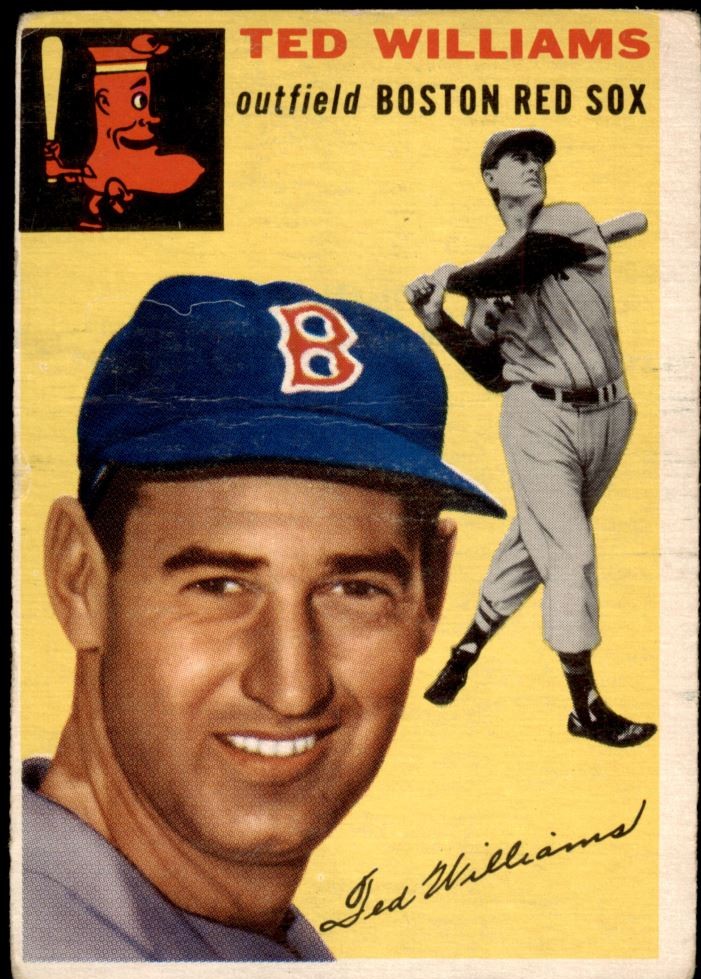
Ted Williams, 1954 Topps, #250

One of the greatest hitters in history, Ted Williams went by many names, “Teddy Ballgame”, “The Thumper”, “the Splendid Splinter, “the Kid”, but to Red Sox fans he was the hero of Boston. One of the greatest players to wear the Red Sox uniform, Williams patrolled the left field of Fenway Park for his entire 19-year career. Williams played from 1939 to 1960, missing 1943-1945 and parts of 1952 and 1953 for military service. He wore uniform number 9 all nineteen seasons and had a career WAR of 121.8, good for 14th all-time.

This 1954 Topps card of Williams is a favorite of mine. I love that old Red Sox logo and the dual pictures, the portrait and the action shot. In 1954, Williams was an All-Star. He batted .345 and led the league in walks (136), OBP (.513), SLG (.635), and OPS (1.148).

Williams was an All-Star nineteen times. He was the American League MVP in 1946 and 1949. He won the Triple Crown twice. In 1942, when he batted .356 with 36 home runs and 137 RBIs and in 1947 when he batted .343 with 32 home runs and 114 RBIs. Interestingly, he didn’t win the MVP in his Triple Crown seasons, he was the runner up for MVP in both, losing to Joe Gordon in 1942 and Joe DiMaggio in 1947. Williams batted over .300 in almost every season he played, hitting .406 in 1941, the last time any player has accomplished this feat. Williams also led the league in season WAR (6x), runs (6x), doubles twice, home runs (4x), RBIs (3x), he led the league in walks 8-times, OBP an insane 12-times, SLG 9-times and OPS 10-times. He was one of the best all-around hitters to ever play the game.

Williams retired in 1960 after batting .316 in his final season. He ended his career 11th all-time with a .344 batting average. His career .482 OBP is 1st all-time. He also finished with 2654 hits, 525 doubles, 521 home runs (22nd all-time), 1839 RBIs (16th all-time). He is 4th all-time in walks (2021), 2nd in SLG (.634) and 2nd in OPS (1.116).

He is a member of the Boston Red Sox Hall of Fame and although he never played for anyone other than Boston, he is a member of the San Diego Hall of Fame as he was from that city.

He was voted for the MLB All-Century team and the MLB All-Time Team and he was inducted into the National Baseball Hall of Fame in 1966.

His number 9 was retired by the Boston Red Sox in 1984.

Ted Williams passed away at the age of 83 in 2002.

Number 1:

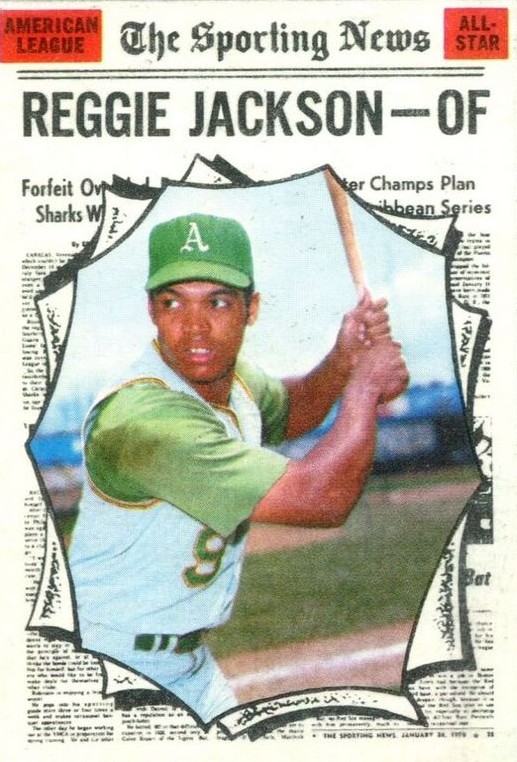
Reggie Jackson, 1970 Topps, #459

Reggie Jackson played right field for twenty-one seasons from 1967 to 1987 for four teams. He started and ended his career with the Athletics for ten total seasons, and played one season in Baltimore, five with the Yankees and five with the California Angels. He was with the Angels when I was collecting. I have a lot of his cards from the 80s and a lot of memories of Jackson in that uniform. He wore uniform number 9 for nine different seasons and had a career WAR of 74.

I choose this 1970 Topps for two reasons, he was on the A’s his main team, and you can see his number on the front. These 1970 Topps All-Star cards have a great design, with the photo of the player ripping through the newspaper background. They need to bring these back.

Jackson was a 14-time All-Star. He won the American League MVP in 1973, led the league in home runs four times and RBIs once, and won two Silver Slugger Awards.

Known as “Mr. October” for his post season heroics, Jackson was a member of five World Series Championship teams, three with the Athletics (1972-1974) and two with the Yankees (1977 and 1978). He was the World Series MVP in both 1973 and 1977.

In 1987, Jackson signed with the Athletics for his final season. He wore number 44 that year, which Jackson was more known for by then.

Jackson finished his career with a .262 batting average with 2584 hits, 463 doubles, 563 home runs (14th all-time), 1702 RBIs (27th all-time) and 228 stolen bases. Jackson also struck out a lot and leads all batters in history with 2597, probably not the best stat to be 1st in, but it’s a testament to how good he was that even with all those strikeouts, he was so clutch.  

Jackson is a member of the Athletics Hall of Fame, and his uniform number 9 was retired by them in 2004.

He was inducted into the Baseball Hall of Fame in 1993

Number 2:

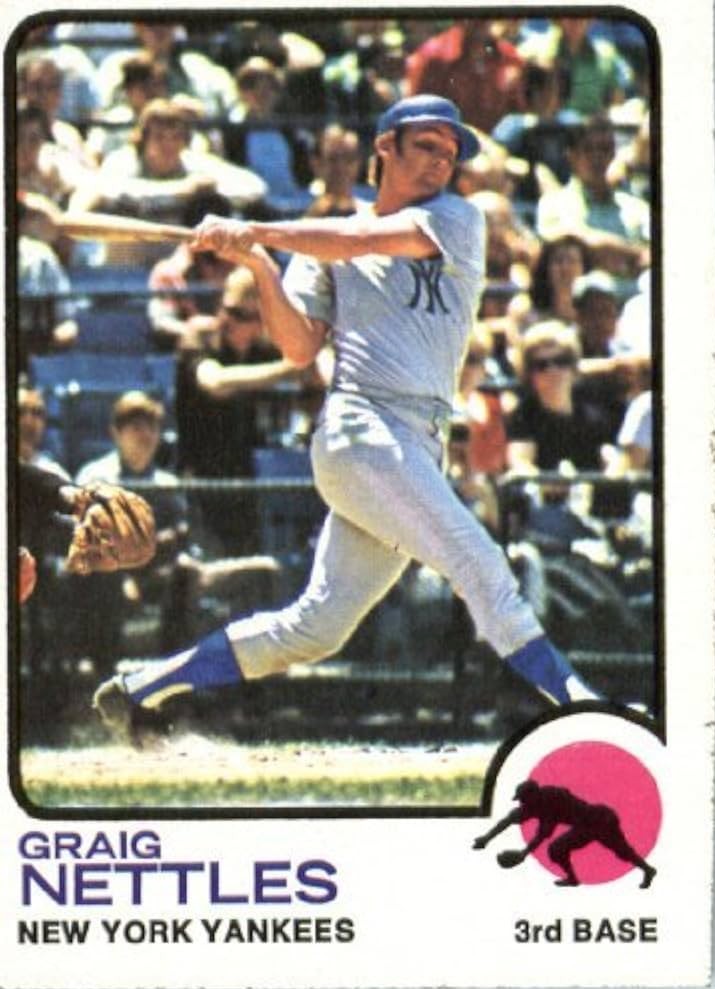
Graig Nettles, 1973 Topps, #498

Graig Nettles played third base for twenty-two seasons in the MLB from 1967 to 1988. During his career, “Puff” (yes that was his nickname) played for the Minnesota Twins, Cleveland Indians, New York Yankees (ten seasons), San Diego Padres, Atlanta Braves and the Montreal Expos. He wore uniform number 9 for fifteen seasons and had a career WAR of 68.

I picked this 1973 Topps card to represent Nettles because I love the design and the photo. I also wanted to choose a card with Nettles on the Yankees since that was the team where he spent his best years. In 1973, Nettles had 22 home runs and 81 RBIs.

Nettles was a 6-time All-Star who won 2 Gold Glove awards. He led the league in home runs with 32 in 1976, his best overall season. Nettles was on two World Series Championships with the Yankees, 1977 and 1978. His was teammates with the number 1 player on this post, Reggie Jackson, though at that time Jackson wore number 44 and Nettles 9.

Nettles retired after the 1988 season with a career batting average of .248, 390 home runs and 1,314 RBI. He also had a .964 fielding percentage at third.

The 81-year-old Nettles is not in the Hall of Fame though he has the highest career WAR of all third basemen who are not in the Hall.

Number 3:

John Olerud, 1994 Fleer, #340

Another player that I really enjoyed collecting as a kid was John Olerud. Olerud played for seventeen seasons from 1989 to 2005. He was a first baseman, known for his signature batting helmet, which he wore while batting and fielding. He wore the helmet due to brain surgery while in college and was recommended to always wear it. Olerud began his career with the Blue Jays for 8 seasons, then played for the Mets, Mariners, Yankees and finished with the Red Sox. He wore uniform number 9 for all eight seasons with the Blue Jays and finished his career with a 58.1 career WAR.

1994 Fleer is one of my least favorite sets. I’m not a fan of the design, especially the difficult to read name and position up top. Also, if you ever open 1994 Fleer packs now, 30 years later, the cards tend to stick together. Still, this card works because this is during one of his Blue Jays seasons and his number 9 is visible, as well as that helmet.

Olerud was an All-Star twice and won three Gold Gloves. His best season was 1993 when he led the league in doubles (54), batting average (.363), OBP (.473) and OPS (1.072). He was on two World Series Championship teams with the Blues Jays in 1992 and 1993.

Olerud retired in 2005 with a career batting average of .295, 2239 hits, 500 double, 225 home runs and 1230 RBIs.

Olerud was inducted into the Canadian Baseball Hall of Fame in 2020.

Number 4:

Joe Torre, 1972 Topps, #500

When I think of Joe Torre, I think of him as the manager of the “Damn” Yankees, but Torre has been a staple in Major League Baseball since 1960. For this post we are focusing on his playing career, which spanned eighteen years from 1960 to 1977. At different points, Torre was a catcher, first baseman and third baseman who played for three teams: the Milwaukee/Atlanta Braves till 1968, the St. Louis Cardinals from 1969 to 1974 and the New York Mets 1975 to 1977. He wore uniform number 9 for his nine seasons with the Cardinals and Mets.

This 1972 Topps is a perfect fit. He’s with the Cardinals, the uniform number is visible on the front, and those sideburns are epic! I love the 1972 Topps design too.

Torre was a 9-time All-Star. He won the National League MVP in 1971 leading the league in hits (230), RBIs (137) and batting average (.363). Torre had two seasons with 200+ hits. He also batted .290 or more seven times. He won the Gold Glove in 1971.

Torre finished his career with 2342 hits for a .297 career batting average. He had 344 doubles, 252 home runs, and 1185 RBIs.

After Torre retired as a player he went on to manage for twenty-nine seasons. He won 4 World Series Championships as the Yankees manager in 1996 and 1998-2000. He is 5th all-time in managerial wins with 2326 and was a 2-time Manager of the year. He has continued in baseball in several key roles including color commentator and special assistant to the Commissioner. 

He is a member of the Braves and the Cardinals Hall of Fame.

Torres was inducted into the National Baseball Hall of Fame in 2014.

Number 5:

Enos Slaughter, Red Heart Dog Food, #28

Enos Slaughter (don’t you love his last name), played right field in the Majors for nineteen seasons from 1938 to 1959 (military service 1943-1945). He played for the St. Louis Cardinals from 1938 -1950 and played for the New York Yankees twice and the Kansas City Athletics and Milwaukee Braves once each. He wore uniform number 9 for thirteen seasons with the Cardinals and had a career WAR of 57.5.

This is a 1954 Red Heart Dog Food card of Slaughter with the Cardinals. I feel like this is a sharp looking card. According to Cardboard Connection, these cards could be received from Red Heart Dog Food as a mail-in offer in which you would receive a group of 11 cards featuring either red, blue, or green backgrounds with the red being the rarest. The full set includes 33 cards.

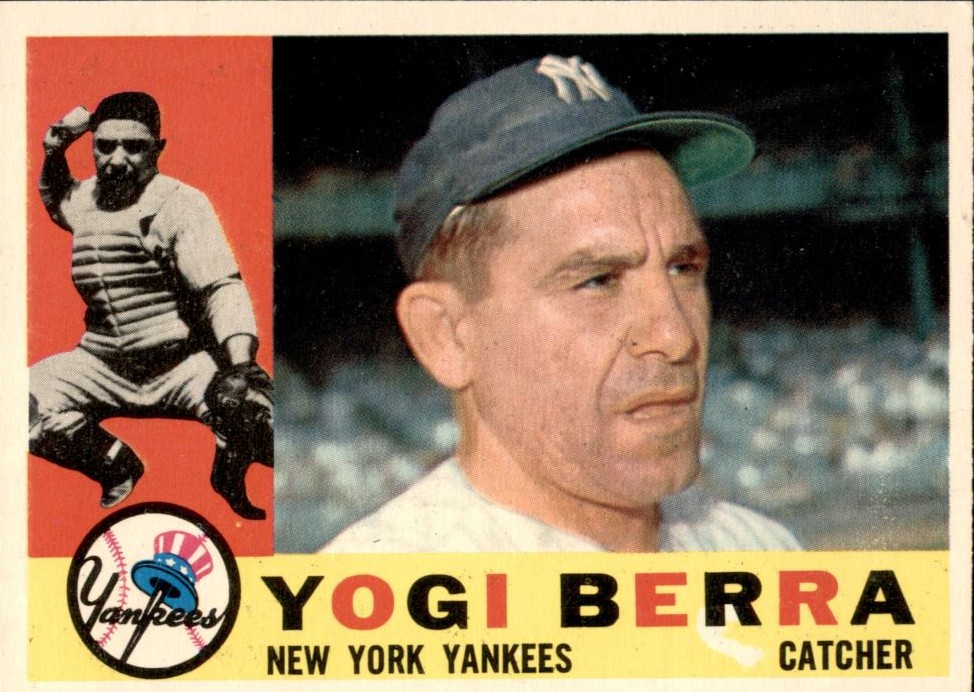
Born in North Carolina, Enos Slaughter was nicknamed “Country”. He was a 10-time All-Star who batted over .300 nine times. He was a member of four World Series Championship teams, 1942 and 1946 with teammate Stan Musial while on the Cardinals and in 1956 and 1958 with Mickey Mantle, Whitey Ford, and Yogi Berra on the Yankees.

After a progressive decline in playing time, Slaughter ended his career in 1959. He had a career .300 batting average with 2383 hits, 413 doubles, 148 triples, 169 home runs and 1304 RBI.

Slaughter is a member of the St. Louis Cardinals Hall of Fame, and his uniform number 9 was retired by them in 1996.

He was inducted into the Baseball Hall of Fame in 1985.

Enos Slaughter passed away in 2002 at the age of 86.

Number 6:

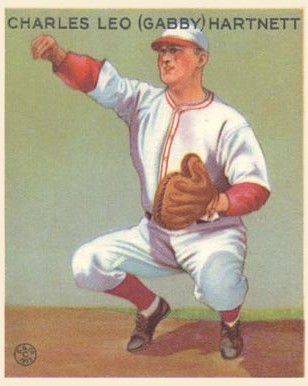
Gabby Hartnett, 1933 Goudey, #202

Okay, this may be my favorite nickname yet! Gabby Hartnett played catcher for twenty years in the Majors from 1922 to 1941. He played for the Chicago Cubs almost his entire career, finishing with one last year on the New York Giants. Hartnett wore uniform number 9 for six seasons and had a career WAR of 55.5. His nickname…” Old Tomato Face”!

1933 Goudey is such a classic card, and this one of Hartnett is perfect. I love that the photo has him in his catcher’s stance, but he just has a giant glove for protection. That’s how they rolled back then.

Hartnett was a 6-time All-Star and was the National League MVP in 1935 when he batted .344. He batted .290 or better in eight seasons. Not only was Hartnett a great hitting catcher, but he was also strong on the defensive end, leading the National League in putouts four times and in assists and fielding percentage six times. Hartnett also led the league seven times in double plays.

Harnett retired in 1941 with a .297 career batting average along with 1,912 hits, 867 runs, 396 doubles, 64 triples, 236 home runs, and 1,179 RBIs, with a .984 career fielding percentage. Hartnett  set the National League record at catcher with 163 career double plays, 4th all-time.

Hartnett is a member of the Chicago Cubs Hall of Fame.

“Old Tomato Face” was inducted into the National Baseball Hall of Fame in 1955.

Gabby Hartnett passed away at 72 years old in 1972.

Number 7:

Minnie Minoso, 1964 Topps, #538

Minnie Miñoso played baseball for twenty years from 1946 to 1964. He started in the Negro Leagues with the New York Cubans until 1949 when he played with Cleveland. He only stayed with Cleveland a short time, then played for the White Sox, back to Cleveland then back to the White Sox again, then St. Louis and Washington Senators for a season each and finally ending with the White Sox again. He wore uniform number 9 for sixteen seasons and had a career WAR of 53.2.

I love this 1964 Topps card of Miñoso. The card design is cool, and I love that uniform number on the sleeve. It’s perfect for the purposes of these posts!

Known as “the Cuban Comet”, Miñoso was a 2-time All-Star in the Negro League and a 9-time All-Star in the Majors. He won 3 Gold Glove Awards and, true to his nickname, led the league in stolen bases three times.

In 1947, he was a member of the Negro League World Series Champion New York Cubans along with future Major Leaguers Pat Scantlebury, Ray Noble and Lino Donoso.

Miñoso retired in 1964 but played in Mexico for eight more years until he was 47. He eventually became a coach for the White Sox and made three game appearances with the White Sox in 1976 when he was 52! Four years later, in 1980, he would again be activated and pinch hit twice at age 57. In 1993, at the age of 67, Miñoso appeared with the independent St. Paul Saints, he then returned to the Saints and drew a walk in 2003 at 77 years old. He is the only player in history to appear professionally in seven different decades.

Miñoso finished his career with a .299 batting average, 1228 runs, 2113 hits, 365 doubles, 195 home runs, 1089 RBIs and 216 stolen bases.

“Mr. White Sox” uniform number 9 was retired by Chicago in 1983.

Minnie Miñoso passed away in 2015 at the age of 90.

I had the opportunity to attend Minnie Miñoso’s Hall of Fame induction in 2022. I was there for David Ortiz but hearing Miñoso’s widow’s speech was so emotional. It inspired me to was inducted along with another player who I have feature in a prior post, Tony Oliva.

Bonus:

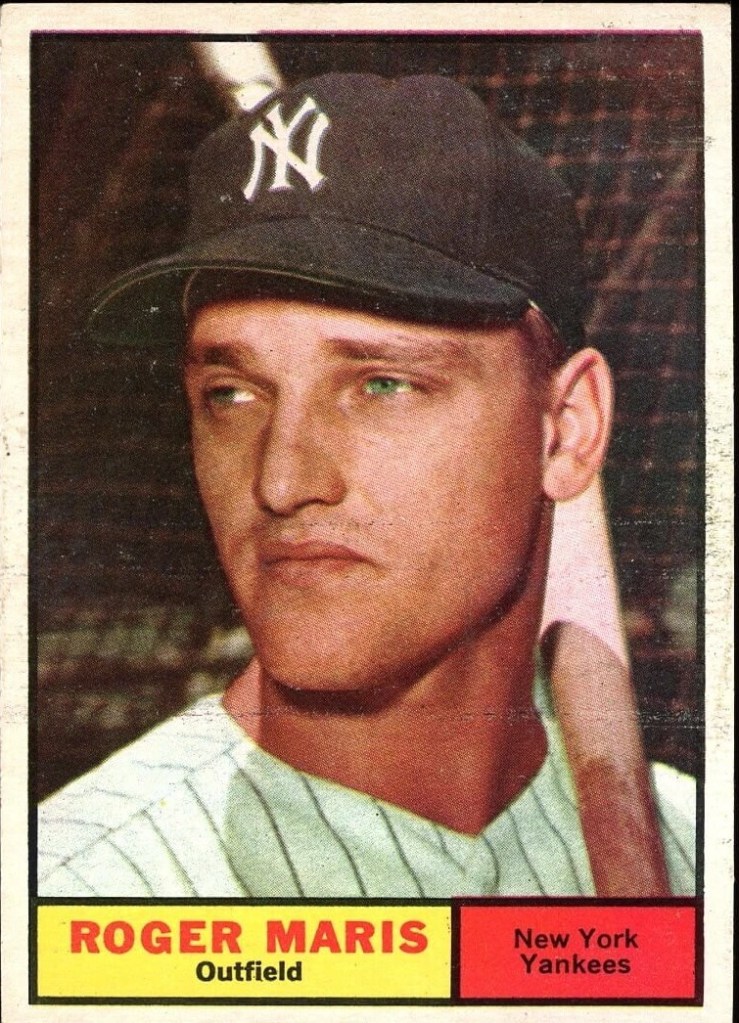
Roger Maris, 1961 Topps, #2

I just finished watching the movie “61” with Barry Pepper (Maris) and Thomas Jane (Mantle) and felt that despite his not meeting my WAR criteria (Maris had a 38.2), Maris deserved a little bonus mention.

Roger Maris played for only twelve years in the Majors from 1957 to 1968. He was a right fielder who played with the Cleveland Indians, Kansas City Athletics, New York Yankees and the St. Louis Cardinals. He wore uniform number 9 for nine seasons while with the Yankees and the Cardinals. His best years were with the Yankees where he would win the American League MVP 2-times (1960 and 1961) and broke Babe Ruth’s single season home run record in 1961 with 61 home runs. Maris is not in the Hall of Fame, but his uniform number 9 was retired by the Yankees in 1984.

Maris passed away at the young age of 51 in 1985 from non-Hodgkin lymphoma.

Final Score:

I had to add a quick spotlight on Roger Maris, but there were a few other notable players who wore uniform number 9. Matt Williams wore it for fifteen seasons and had a career WAR of 46.6, he played during my young collecting years and was a 5-time All-Star. A few other players of note; Bill Mazeroski (17 years, 36.5 WAR), Marquis Grissom (16 years, 29.6), Brady Anderson (14 years, 35 WAR), Terry Pendleton (14 years, 28.4 WAR) and Joe Adcock (10 years, 33.5 WAR). Of course there are many more, so once I finish with all the numbers, I may do a revisit to start spotlighting those I skipped.

I hope you’re enjoying the series, and I’m excited to now be working on uniform number 10! Double digits baby! Give me a follow or a like or leave a comment. I’m always happy to engage.

Sources:

https://www.baseball-almanac.com/

https://www.baseball-reference.com/

https://www.cardboardconnection.com/top-10-enos-slaughter-baseball-cards

https://sabr.org

 “White Sox legend Minnie Miñoso dies at age 90”. SBNation.com. Vox Media. March 2015.

 “Sarasota Herald-Tribune – Google News Archive Search”. Sarasota Herald-Tribune. Retrieved November 14, 2025 – via Google News Archive Search.

Shout out to all the cool cards and creative commons for my pictures! Thanks Topps and Upper Deck and Fleer and Donruss and all the rest!

Baseball by the Numbers: 8

Read about the Project

Checklist

8

Welcome back to Baseball by the Numbers. Today we are looking at uniform number 8, and I am so excited and I just can’t hide it! As I’ve mentioned previously, probably more than a few times, uniform number 8 holds a very special place in my heart. My favorite player of all-time wore this number, and I still have 100s of his cards and other memorabilia. Most of you can probably guess who it is, but if not, you’ll find out below. Number 8 is also special to my family since another player who wore that number is a family legend (not related, just idolized). Is the suspense killing you? I hope so, because it will keep you reading, and this may be my longest post yet.  

Uniform number 8 had 672 players who wore it in their career. There was one Legend (career WAR over 100) and thirty-nine players with a career WAR over 40. Ninety players wore uniform number 8 for five years or more.

There were a few players who wore number 8 for only one season. Three, Luke Appling, Al Simmons and Bobby Bonds, I have covered in past posts. Appling, featured in the 4 post, wore it for one season with the White Sox in 1932. Simmons, featured in the 7 post, wore it with the Red Sox in 1943. Go Sox! Bonds (featured in the 00 post and will be seen again) wore it in 1981 with the Chicago Cubs. Hall of Famer Paul Warner also wore number 8 for one seasons in 1942 with the Boston Braves.

Out of the 672 players who wore the number, only one player had a career WAR that exceeded 100 and will make the coveted Legends spot.

The Legend:

Joe Morgan, 1974 Topps, #85

For twenty-two seasons, Joe Morgan played perhaps some of the best baseball ever seen at second base. From 1963 to 1984, Morgan played on five teams. He started his career with the Houston Colt .45s/Astros for nine seasons before being traded during the 1971 Winter Meetings to the Cincinnati Reds, where he would become a pivotal cog in the “Big Red Machine”. After seven seasons with the Reds, he was back with the Astros for one season in 1980, then went to the San Francisco Giants (2 yrs), Philadelphia Phillies (1 yrs) and finished his career with one final season on the Oakland Athletics. He wore uniform number 8 for thirteen seasons and had a career WAR of 100.6 good for thirty-first all-time.

I used the 1974 Topps for this post because the card is fantastic. Morgan started wearing number 8 with the Reds, and the number is visible on the front of his uniform in this card’s photo.  The photo is a cool action shot of Morgan about to take off after a hit…and look at those epic sideburns! I like the style of these 1974 cards, with the team city and name in the banners around the border. Morgan was an All-Star in 1974. He batted .293, with 150 hits, 31 doubles, 22 home runs, 67 RBIs and 58 stolen bases. He had 120 walks to only 69 strikeouts and a league leading .427 OBP.

Morgan was a ten-time All-Star who won the National League MVP award twice (75, 76), both times with the Reds. In 1975, he led the league in season WAR (11), walks (132), OBP (.466), and OPS (.974) while hitting .327 with 67 stolen bases and winning the Gold Glove Award. In 1976, Morgan led the league in WAR (9.6) OBP (.444), SLG (.576), OPS (1.020) and sacrifice flies with 12.

He won five Gold Glove Awards and was a Silver Slugger in 1982. Morgan was known for his speed stealing over 40 bases in nine different seasons (with 60 or more three times). He was a tough player to strike out with 77 strikeouts being the most in any season. He also led the league in walks 4 separate times.

As a member of the “Big Red Machine”, Morgan was a two-time World Series Champion in 1975 and 1976 (his two MVP seasons) while playing alongside Pete Rose, Johnny Bench and Tony Perez with Sparky Anderson as the manager.  

He retired after the 1984 season with a .271 career batting average, 2517 hits, 449 doubles, 268 home runs, 1133 RBIs, 689 stolen bases (11th all-time), and 1865 walks (5th all-time). For second basemen he is 4th all-time with 5742 putouts, 3rd in assists with 6967 and 6th in double plays with 1505.

Morgan is a member of both the Houston Astros and the Cincinnati Reds Hall of fame with the Reds retiring his uniform number 8 in 1998.

He was inducted into the Baseball Hall of Fame in 1990.

Joe Morgan passed away at the age of 77 in 2020.

Number 1:

Cal Ripken Jr., 1996 Topps Chrome, #28

I’ve been looking forward to this post since I came up with the idea for this series. In the number one spot! Cal Ripken Jr.! the “Iron Man”.

Although I’ve lived in Massachusetts most of my life and am a Red Sox fan, Cal was my hero. When I first started collecting cards I really hadn’t caught full-on Red Sox fever. As a kid, I would float from team to team based on the silliest of things (like rooting for the Tigers because I liked the animal). As I started collecting cards and watching This Week in Baseball or Sportscenter and reading Sports Illustrated or Beckett I just fell in love with Cal’s game. I started collecting every Ripken card I could find, had his poster on my wall, and his Starting Lineup on my desk. As my love for the Red Sox grew, I made sure the games I went to were against the Orioles. There were plenty of opportunities to see Cal play. He was the standard in hard work and dedication.

When I got older and stopped collecting, I regretfully sold most of my cards, but I kept one binder and a box. Both were filled with Cal Ripken cards, and I still have them all. Cal will always be my favorite player of all-time.

Cal Ripken Jr. played for twenty-one years in the Majors from 1981 to 2001. He was a shortstop and third baseman for the Baltimore Orioles, where he played his entire career and wore uniform number 8 for all twenty-one seasons. He had a career WAR of 95.9 and is considered by many, me included, to be the best shortstop in history.

Ripken was an All-Star nineteen times. He was Rookie of the Year in 1982. He was the American League MVP twice (1983 and 1991) and won two Gold Glove Awards. He was an eight-time Silver Slugger. Ripken was a member of the Orioles 1983 World Series Championship team along with Hall of Famers Eddie Murray and Jim Palmer. During his career he played with his brother Billy for six seasons and was managed by his father, Cal Sr., for three.

I choose this 1996 Topps Chrome Ripken card because it commemorates his greatest achievement, one that is unlikely to ever be duplicated. On September 6th, 1995 Cal Ripken played in his 2131st consecutive game, breaking the streak set by Lou Gehrig 56 years earlier. The game was one of the most watched baseball games in ESPN history. Unfortunately, I could not watch it as I was in military training having joined earlier that year, but I still have a couple of VHS recordings that friends and family taped for me. He would continue to play in every game until September of 1998 when he decided to end his streak at 2632 consecutive games.

The wear and tear of his streak eventually took its toll and Ripken played in less than 100 games in 1999 and 2000 before he retired at the end of the 2001 season.

Aside from his consecutive games streak, he would end his career with a .276 batting average, he is 16th in history with 3184 hits, 17th in doubles with 603, 51st in home runs with 431 (the most of any shortstop in history), 29th in RBIs (1695), and 18th in total bases (5168).

Ripken is a member of the Orioles Hall of Fame, and his uniform number 8 was retired in 2001.

He was inducted into the National Baseball Hall of Fame in 2007.

Currently, Ripken is a best-selling author and is deeply involved in charitable organizations.

Number 2:

Carl Yastrzemski, 1975 Tops, #280

“Carl Yastrzemski, Carl Yastrzemski, Carl Yastrzemski, the man we call Yaz (We love him)”, Jess Cain, The Yaz song (1967)

I remember my uncle singing this song when I was young. I believe he still has the record, and I would bet he still sings it when he’s making his lunch. Carl Yastrzemski was a hero to me growing up. I never saw him play live but heard so many stories. As I became increasingly interested in baseball, my uncle, who is the biggest Red Sox fan in history, was perplexed by my love for Cal Ripken, a rival of the Boston Red Sox. My uncle would tell me stories of the greatest Red Sox teams and taught me all about the Curse of the Bambino (which was finally broken in 2004). Those stories made sure that as I grew up and finally stopped rooting for teams based on their logos, I would land with the best fans for the best team. The Boston Red Sox! They have been my favorite team for over thirty years and will always be.

“Yaz” primarily played left field with the Boston Red Sox for his entire twenty-three-year career (he also played a couple of stints at first and third). He is tied with Brooks Robinson for longest tenure with one team. From 1961 to 1983, Yastrzemski was the hero of Fenway Park, wearing uniform number 8 his entire career, while finishing with a career WAR of 96.4.

I love this 1975 Topps design. The colors along the border, with the team’s name shadowed up top and the player’s name below, just pops. The position in the little baseball is a nice touch, and I love this photo of Yaz, especially with his uniform number visible. Though 1975 was a down year (.269 batting average, 14 home runs, 60 RBIs), he still made an All-Star appearance.

Yaz was an eighteen-time All-Star. He led the league in season WAR three times, runs and hits twice, doubles and batting average three times, walks twice, OBP five times, SLG three and OPS four times. In 1967 he was the American League MVP and led the league in home runs (44), RBIs (121) and batting average (.326), winning the elusive Triple Crown. 

At the end of 1983 he retired from baseball at the age of 44. He finished his career with a .285 batting average. He is 9th all-time in hits (3419), 9th in doubles (646), 41st in home runs (452), and 15th all-time in RBIs (1844). Yaz is also 6th all-time in walks with 1845 and is 10th in Total Bases with 5539. He has a career OBP of .379, SLG of .462 and OPS of .841.

Yastrzemski was also an amazing defender, leading American League left fielders in assists seven times and winning seven Gold Glove Awards. Sabermetrics determines his placement as second all-time defensive left fielder, specifically Total Zone Runs, or as they abbreviate it on their site, “rtot.” Yastrzemski accumulated an rtot of 135 over his 23-year MLB career (Bonds finished with a 184 rtot). Perry, Jeff bosoxinjection.com

He is a member of the Red Sox Hall of Fame, and his uniform number 8 was retired in 1989.

He was inducted into the Baseball Hall of Fame in 1989.

Carl Yastrzemski is still loved by the Fenway Faithful and at 85 years old, threw out the first pitch at Fenway to start the 2025 season.

Number 3:

Gary Carter, 1985 Topps, #230

The original “Kid”, Gary Carter was known as an excellent defensive catcher who could hit well and motivate his teammates with his excitement for the game. Carter played nineteen seasons in the Majors from 1974 to 1992 as a catcher with the Montreal Expos for 10 seasons, then the New York Mets, San Francisco Giants, LA Dodgers and his last season back in Montreal. Carter wore uniform number 8 for eighteen seasons, having worn 57 his rookie year. He had a career WAR of 70.1.

I choose this awesome 1985 Topps for Carter. I love the 1985 Topps set, and this card is great. The colors blend perfectly with the Red, White and Blue Expos uniform, Carter’s uniform number visible on the front., and the team logo on the front. A perfect card for the post. Carter was an All-Star in 1985, having hit the most home runs of his career (32) to go along with a .281 batting average and 100 RBIs. He was a member of the 1986 World Series Champion Mets when they beat the Red Sox. The curse had struck again!

Carter was an All-Star in eleven seasons. He won five Silver Slugger awards and hit 100 or more RBIs in four seasons. He also won 3 Gold Gloves while leading the league’s catchers in putouts seven times, assists five times and double plays four times.

Carter finished his career in 1992 with a career batting average .262 and 2092 hits, 371 doubles, 324 home runs, and 1225 RBIs. For his career as a catcher he caught 127 shutouts, had 11785 putouts and 149 double plays.

He is a member of the Montreal Expos and New York Mets Hall of Fame, and his number 8 was retired by the Expos in 1993.

Carter was inducted into the National Baseball Hall of Fame in 2003.

Gary Carter passed away in 2012 at the age of 57 after a courageous battle with brain cancer.

Number 4:

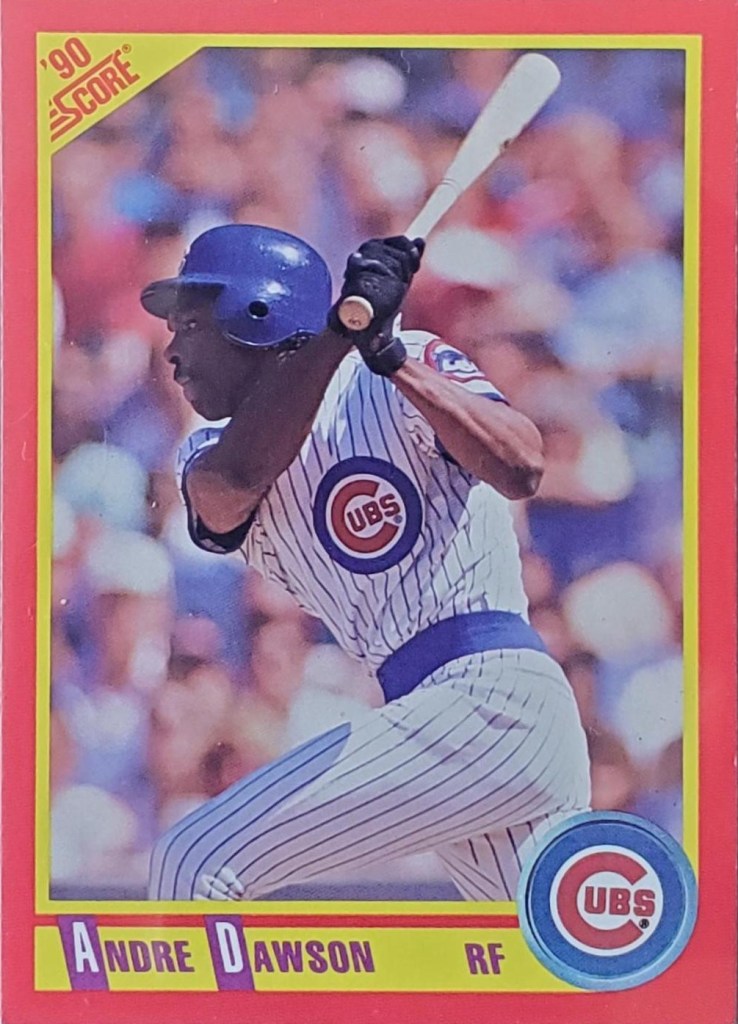
Andre Dawson, 1990 Score, #265

“the Hawk” is another player whose cards have a big place in my binder. He played for twenty-one seasons from 1976 to 1996 as an outfielder. Like Gary Carter above, Andre Dawson started his career with the Montreal Expos where he played for eleven seasons. In 1987, he joined the Cubs where he stayed until 1992. He finished his career with two-year stints on the Boston Red Sox and the Florida Marlins. He wore uniform number 8 for eight seasons and had a career WAR of 64.8.

I had trouble finding cards with Dawson’s number 8 showing. He wore the number while with the Cubs, and my memories of “the Hawk” are mostly during his Cubs tenure so I picked this 1990 Score. I liked collecting the Score cards and have a few of this card. I think it’s a nice action shot of Dawson. In 1990, he was an All-Star with a batting average of .310, 27 home runs, 100 RBIs, 16 stolen bases and led the league with 21 intentional walks.

Dawson was an eight-time All-Star. He was the National League ROY in 1977 and the MVP in 1987. He was also a great defender having won eight Gold Glove Awards. He was a four-time Silver Slugger who batted over .300 on five occasions. He was also fast on the bases and stole 25 or more in six seasons. By 1994 injuries began to reduce his playing time and he played less than 80 games in each of his last few seasons before retiring in 1996.

Dawson finished his career with a .279 career batting average. He had 2774 hits with 503 doubles. His 438 home runs are 47th all-time and his 1591 RBIs are 40th. He had 314 stolen bases and is 31st in Total Bases with 4787.

Dawson is a member of the Montreal Expos and Chicago Cubs Hall of Fames.

He was inducted into the National Baseball Hall of Fame in 2010.

Number 5:

Yogi Berra, 1960 Topps, #480

“Ninety percent of the game is half mental.” ~ Yogi Berra

Yogi Berra was a catcher for nineteen seasons in the Major Leagues. He was well known for his sense of humor and his “yogisms”. Berra played from 1946 to 1965 for the New York Yankees, with his last season for the crosstown New York Mets. He wore uniform number 8 for sixteen seasons and had a career WAR of 59.5.

I used this 1960 Topps card because I like the design and the photo of Berra in his catcher’s gear is great. In 1960 Berra was an All-Star…twice!

For his career, Berra was an All-Star eighteen times (twice from 59-61). He was the American League MVP three times (51, 54, 55). He batted .290 or better seven times, hit 25 or more home runs six times and had over 100 RBIs five times. On the defensive end, he led catchers in putouts eight times, assists three times, and double plays six times. He played with many Yankee greats throughout his career, including Joe DiMaggio, Phil Rizzuto, Johnny Mize, Whitey Ford, and Mickey Mantle.  Berra was a World Series Champion 10 times, the most of any player, and holds many series records.

He has a career .285 batting average with 2150 hits, 358 home runs, 1175 runs, 1430 RBIs and a career .989 fielding percentage at catcher. He holds the World Series records for the most games (75), hits (71), doubles (10), singles (49), games caught (63), and catcher putouts (457). Marcius, Chelsia Rose; McShane, Larry; Madden, Bill (September 2015)

His uniform number 8 was retired by the New York Yankees in 1972 along with his idol Bill Dickey (who will also be on this list). Aside from Jackie Robinson’s 42, I think this is the only instance where a number has been retired twice by one team. If anyone knows otherwise, drop a comment. 

Berra was inducted into the Baseball Hall of Fame in 1972.

Yogi passed away at age 90 in 2015.

Number 6:

Willie Stargell, 1968 Topps, #86

For twenty-one seasons, Wilver “Willie” Stargell, could be seen warming up with a sledgehammer during the Pirates batting practice. From 1962 to 1982, Stargell played left field and first base exclusively for Pittsburgh. He wore uniform number 8 his entire career and had a career 57.6 WAR.

I love this 1968 Topps card! It’s got a great photo of Stargell with his uniform number right on the front of the card. The only thing missing is the sledgehammer. 1968 wasn’t his best year, he batted only .237 with 24 home runs and 67 RBIs.

Stargell was a seven-time All-Star. He shared the 1979 National League MVP award with Keith Hernandez. Stargell batted .281 with 32 home runs and 82 RBIs that season. During his career, he led the league in home runs and OPS twice and in doubles, RBIs, WAR, and SLG once. Stargell had eight seasons with a .290 or better batting average. He was a member of two Pirates World Series Championships, 1971 with teammates Roberto Clemente and Bill Mazeroski and 1979 with teammates Bert Blyleven and Dave Parker. He was the MVP of the 1979 World Series after batting .400 with a .375 OBP, 12 hits, 4 doubles, 3 home runs and 7 RBIs.

Stargell earned the nickname “Pops” later in his career and was a mentor to young players in the Pirates organization until his last game in 1982. He ended his career with a .282 batting average accumulating 2232 hits, 423 doubles, 475 home runs (tied with Stan Musial for 32nd all-time), and 1540 RBIs (49th all-time).

Stargell is a member if the Pirates Hall of Fame and his uniform number 8 was retired by the Pirates in 1982.

He entered Cooperstown in 1988.

Wilver “Willie” Stargell passed away at 61 in 2001.

Number 7:

Bill Dickey, 1934 Diamond Stars, #11

Bill Dickey played catcher exclusively with the New York Yankees for seventeen seasons from 1928 to 1946 (missing the 44 and 45 seasons for military service). He would go on to become a coach and a mentor to the Yankees young catcher, Yogi Berra, who also made it on this list. Dickey wore uniform number 8 every season aside from his first, and had a career WAR of 56.4.

I’m always happy to include a Diamond Stars card! This 1934 Bill Dickey is a beautiful card. The portrait is one of the best I’ve seen, and the background colors are awesome. In 1934 Dickey batted .322 with 12 home runs and 72 RBIs making the All-Star team.

Dickey was an All-Star in eleven seasons. He batted over .300 eleven times and hit over 20 home runs and 100 RBIs in 4 straight seasons from 1936 to 1939, amazing accomplishments for a catcher, especially during the ‘30s. In 1936 he batted .362 which is tied with Mike Piazza for 2nd highest season average by a catcher in history. 

He won seven World Series Championships with the New York Yankees, in 1932 on a team that featured nine Yankees Hall of Famers, including Babe Ruth, and in 1936-1939, 1941 and 1943, all great Bronx Bombers teams.

He finished his career in 1946 as a player/manager. He had a career batting average of .313 with 1,969 hits, 202 home runs, 930 runs and 1,209 RBIs.

His uniform number 8 was retired by the New York Yankees along with the Yogi Berra in 1972. Aside from Jackie Robinson’s 42, I think this is the only instance where a number has been retired twice by one team. If anyone knows otherwise, drop a comment. 

Bill Dickey passed away in 1993 at the age of 86.

Final Score:

Thanks for sticking with me with this long post. I knew uniform number 8 would take a bit, but it was important to me to tell stories about two of my favorite players to wear the number. I only have a couple of shoutouts this time.

Reggie Smith (career WAR 64.8) wore number 8 for six seasons with the Dodgers and was previously featured in the uniform number 7 post.

A few players didn’t make the list but wore the number for a long time. Bob Boone (18 seasons), Gary Gaetti (15 seasons), Ryan Braun (14 seasons) and Javy Lopez (12 seasons). There were quite a few more, so someday I’ll do more posts with all these shoutouts!

Thanks again for reading and if you’re enjoying these posts, leave a like or a comment or subscribe to the newsletter. I’d love to hear from you!

 Sources:

https://www.baseball-almanac.com/

Berra, Yogi (1998) The Yogi Book. New York: Workman Publishing. p. 9. 

Berardino, Mike (2013). “Minnesota Twins: Joe Mauer takes Mike Piazza’s comments in stride”. Twincities.com

https://www.baseball-reference.com/

Marcius, Chelsia Rose; McShane, Larry; Madden, Bill. “Yogi Berra dead at 90: Yankees legend, Baseball Hall of Famer was lovable character, American hero”Daily News. (September 23, 2015 UPDATED: April 9, 2018)

Perry, Jeff (2024) “History: Carl Yastrzemski’s defense somehow rivaled his stellar offense”. bosoxinjection.com

https://www.sabr.org

Shout out to all the cool cards and creative commons for my pictures! Thanks Topps and Upper Deck and Fleer and Donruss and all the rest!

Baseball by the Numbers: 7

Read about the project

Checklist

7

Welcome back to Baseball by the Numbers. Today we are looking at uniform number 7. Uniform number 7 had 752 players who wore it during their career. There was one Legend (career WAR over 100) and thirty-two players with a career WAR over 40. 107 players wore uniform number 7 for five years or more. That is a lot to choose from!

Overall, the uniform number 7 list was much easier than I anticipated. The Legend was obvious and the other seven players all matched the criteria (5 yrs + worn and career 40+ WAR). There were two very good players who wore number 7 but only for a shorter duration.

Barry Bonds, who had a career WAR of 162.8, good for 4th all-time, wore number 7 during his rookie season with the Pirates. Eddie Mathews (career WAR of 96) also wore number 7, but only for two seasons with the Tigers at the end of his career. Both will make it onto later posts.

I wanted to add a little factoid about number 7. The reason I chose to feature seven players as part of my criteria was due to my love of number 7. 7 or 77 has always been the number of my players in games like MLB The Show and Madden, and I use it as part of my username in many computer games. I have always liked the number and felt it to be lucky. Most people have lucky numbers, and 7 or 17 or 77 is the one for me. I will literally go out of my way to park in a spot with a 7 or use a locker with a 7! I don’t know how this came to be, but it has always been like this since as long as I can remember. With that said, none of the players who wore uniform number 7 were exactly my favorite. In fact, two of my absolute favorite baseball players wore uniform number 8, so I’m really looking forward to that post. Still, there were quite a few on this list who played during my initial card collecting years, which is always great, and of course there is this Legend.

The Legend:

Mickey Mantle, 1952 Topps, #311

If ever a player fits the legend spot, “the Mick” is it, especially to the New York Yankees fans. Mickey Mantle played mainly outfield for eighteen seasons from 1951 to 1968. He played his entire career under the big city lights of New York City. He was a legend of the Big Apple. He wore uniform number 7 his entire eighteen-year career (he wore 6 for a few months as a rookie), and his career WAR of 110.3 ranks 21st in MLB history.

Iconic. That is the word that best describes this Mantle 1952 Topps card. It wouldn’t be a stretch to say that the 1952 Topps are the most popular cards in existence. And the Mantle is the Holy Grail. In 2022, a grade 9.5 of this card sold for a record 12.6 million dollars. 1952 Topps was the foundation on which modern trading cards was built. It’s a beautiful set, filled with stars and nostalgia. In 1952, Mantle was already becoming a superstar in only his sophomore season. He batted .311, led the league in OPS (.924), hit 23 home runs and had 87 RBIs and made his first All-Star game while placing 3rd in MVP voting.

Mantle would be an All-Star twenty times (this includes twice from 59-62). He was the American League MVP on three separate occasions, including 1956 when he led the league in season WAR (11.3), runs (132), batting average (.353), home runs (52) and RBIs (130) winning the elusive Triple Crown. (Spoiler! Another player in this very post is also a Triple Crown recipient!) He also led the league in SLG, OPS and Total Bases.

Mantle led the league in season WAR during six seasons, led in runs five seasons, home runs four times, walks five times and triples, batting average and RBIs one season each. He also had the highest OBP on three occasions, the highest SLG four times and the highest OPS six different times. He also won a Gold Glove in 1962.

Mantle was a member of 7 World Series Championships (51-53,56,58,61 and 62) with the Yankees, playing alongside other Yankees legends like Yogi Berra, Joe DiMaggio, Whitey Ford, Johnny Mize, Enos Slaughter and manager Casey Stengel. He holds World Series records in home runs (18), runs (42), and RBIs (40).

Mantle retired in 1969 with a career .298 batting average including 2415 hits and 344 doubles. He is 18th all-time with 536 home runs and has 1509 RBIs, he’s 8th all-time in walks with 1733, 19th in OBP (.420), 22nd in SLG (.557) and 14th in OPS (.977).

Mantle was inducted into the National Baseball Hall of Fame in 1974.

His number 7 was retired by the Yankees in 1969.

Mantle passed away at the age of 63 in 1995.

Number 1:

Ivan Rodriguez, 1992 Leaf, #194

Iván Rodríguez was a catcher for twenty-one seasons from 1991 to 2011. He played for the Texas Rangers until 2002 (and again in 2009), then moved around the league, playing for the Florida Marlins, Detroit Tigers, New York Yankees, Houston Astros and the Washington Nationals. He wore uniform number 7 for nineteen years and had a career WAR of 68.7.

1992 Leaf is a set that I remember well. When I was collecting cards, Leaf packs weren’t readily available, but if you went to a show or a card shop you could usually get a pack or two. I liked these cards, and I chose this Rodríguez card because I wanted to showcase him in his full catchers’ gear, showing off that defensive prowess that made him so great. Plus, if you look closely, you can see his uniform number on the back. In ’92 “Pudge” got his first All-Star nod and his first Gold Glove starting his career off strong, a precursor the great catcher he would become.

“Pudge” was a fourteen-time All-Star. He was the American League MVP in 1999 when he batted .332 with 199 hits, 35 home runs, 113 RBIs and 25 stolen bases, while winning a Gold Glove. Rodríguez won thirteen Gold Gloves during his career and seven Silver Slugger Awards. He hit .300 or better ten times.

In 2003 he won a World Series Championship with the Florida Marlins and was the MVP of the NLCS when he batted .321 with 2 home runs and 10 RBI.

He would retire in 2012 signing a one-day contract with the Texas Rangers.

He is first in history with 2427 defensive games played at catcher and had a 46% caught stealing percentage and .991 fielding percentage.

On the offensive end, he has a career batting average of .296 while leading all catchers in hits (2,844), runs (1,354), and doubles (572) to go along with 311 career home runs, 1,332 RBIs and 127 stolen bases. There are only six players in history to have a career .290 or batter batting average, with 2,500 or more hits, over 550 doubles, over 300 home runs and over 1,300 RBI’s, Babe Ruth, Hank Aaron, Stan Musial,  Barry Bonds, George Brett, and Iván “Pudge” Rodríguez.

He is a member of the Texas Rangers Hall of Fame, and his uniform number 7 was retired by the Rangers in 2017.

He was inducted into Cooperstown in 2017.

Number 2:

Craig Biggio, 1993 Topps, #680

From 1988 to 2007, Craig Biggio played catcher, second base and outfield for twenty seasons exclusively with the Houston Astros. Aside from his first season and half, he wore uniform number 7 for the rest of his career, nineteen seasons. He had a career WAR of 65.5

Along with his teammates Jeff Bagwell, Lance Berkman and Roy Oswalt, I loved collecting Biggio cards and have a bunch. Highlighting these late ‘80s and early ‘90s players is such a joy for me!

1993 was a down season in the middle of some of Biggio’s most productive years, but I had to use this card. Not only is it a great action shot of Biggio fielding the ball, but it also features another player, Joe Girardi, sliding into second as Biggio tags the base and throws to first. Girardi, a fellow catcher, wore uniform number 7 for seven seasons, and it is shown on this card. While Girardi didn’t make the list (his career WAR was only 5.6) it was evidence that a lot of catchers wore the number (like Rodríguez above, and Biggio). I also thought it was cool to have a photo of two players with the same uniform number interacting, and wonder if this photo was taken on purpose or is it just a crazy synchronicity. Anyone know?

Biggio was a seven-time All-Star with five Silver Slugger awards. He was also a great defender and won the Gold Glove Award four times. Along with Jeff Bagwell and Lance Berkman, he was a member of the Astros “Killer Bees” from 1994 to 2003 when the Astros made it to six postseasons. In 2007, he joined the 3000 hits club, becoming the first player in Astros’ history to do so. He would retire at the end of that season.

Biggio is the only player in the history of baseball with 3,000 hits, 600 doubles, 400 stolen bases, and 250 home runs. He finished his career with a .281 batting average, 3,060 hits (26th all-time), 668 doubles (6th all-time), 291 home runs, 1,175 RBIs and 414 stolen bases.

His uniform number 7 was retired by the Astros in 2008, and he is a member of the Astros Hall of Fame.

He was elected to the National Baseball Hall of Fame in 2015 alongside three great pitchers, John Smoltz, Randy Johnson and one of my favorite all-time players, Pedro Martinez.

Number 3:

Joe Medwick, 1935 Diamond Stars, #66

Joe Medwick played left field for twenty years from 1932 to 1948 with four teams. He started off with the St. Louis Cardinals for his first eight and a half seasons but was traded to the Brooklyn Dodgers in 1940. He played for the Dodgers 4 seasons, then played for the New York Giants, Boston Braves, back to Brooklyn, and finished his final two seasons back with St. Louis.

I got to use another Diamond Stars card! This 1935 Medwick card has his nickname “Ducky” on the front. He was also sometimes called “Muscles”. I love it! This is another beautiful Diamond Stars card. The vibrant colors look great and the photo of Medwick swinging the bat in his Cardinals uniform is perfect. I love the background with the players behind him. Medwick was an All-Star in 1935, he led the league in Total Bases with 365, and batted .353 with 224 hits, 46 doubles, 23 home runs, 126 RBIs and was 5th in MVP voting. And this wasn’t even his best season.

Medwick was a ten-time All-Star who had over 200 hits four times and had 190 and 198 hits in two more seasons. He also hit over .300 fourteen times. He led the league in WAR once, runs once, hits twice, doubles three times, triples once, home runs once and RBIs three times.

In 1937 he won the Triple Crown and was the National League MVP when he batted .374 with 31 home runs and 154 RBIs, while also leading the league with an 8.5 season WAR, 237 hits, 56 doubles and in SLG (.641), OPS (1.056) and Total Bases (406).

He was a member of the 1934 World Series Champion St. Louis Cardinals, the team known as the “Gashouse Gang”,  who were managed by Hall of Famer, Frankie Frisch (who also played), and featured Dizzy Dean, Dazzy Vance, Leo Durocher, and Jessie Haines. 

He retired after the 1948 seasons with a career batting average of .324 (50th all-time), 2,473 hits, 540 doubles, 113 triples, 205 home runs and 1,383 RBIs. He also hit .326 in his 12 World Series games.

He is in the St. Louis Cardinals Hall of Fame.

Medwick was elected to the National Baseball Hall of Fame in 1968.

Joe Medwick passed away at the age of 63 in 1975.

Number 4:

Kenny Lofton, 2008 Topps, #93

Kenny Lofton was an outfielder for seventeen seasons and played on eleven teams, including the Cleveland Indians who he played for on three different occasions. He played from 1991 to 2007, right in the middle of some of my biggest collecting years. I remember him being a fun player to watch. He wore uniform number 7 thirteen seasons and had a career WAR of 68.4.

This 2008 Topps would be Lofton’s final Topps during his career. He left baseball in 2007 after one final season with Cleveland. I chose this card for two reasons: it shows his number and he’s with Cleveland. While switching teams often, he spent ten years at different points with Cleveland, most of his career. In 2008 he was no longer playing after becoming a free agent after the 2007 season.

Loften was an All-Star six times and won four Gold Gloves. He led the AL in stolen bases five years in a row from ’92 to ’96. He was fast, having over 30 stolen bases in nine seasons with six of those seasons over 50 stolen bases. Known to provide a spark for playoff bound teams, Lofton played in 95 postseason games.

He has a career .299 batting average with 2,428 hits, 383 doubles, 116 triples and 130 home runs. His 622 stolen bases is 15th in history. He’s tied for 5th for most postseason triples and is first in postseason stolen bases with 34.

He is a member of the Cleveland Guardians Hall of Fame.

Number 5:

Joe Mauer, 2014 Topps, #125

For fifteen seasons Joe Mauer was behind the plate in Minnesota. He played exclusively for the Twins from 2004 to 2018. He wore uniform number 7 his entire career and had a career WAR of 55.6.

This 2014 Topps Joe Mauer not only showcases his beautiful swing but has the uniform number in the photo. 2014 Topps is not my favorite set, but it’s a nice-looking card overall. I do like the team logo on the front and the black trim, which is nice, and I really like the photo. Mauer didn’t have a great season in 2014, but this card makes up for it.

The first overall draft pick in 2001, Mauer was a six-time All-Star who earned 3 Gold Glove Awards and 5 Silver Slugger awards. He was the American League MVP in 2009 when he batted .365 and led the league in OBP (.444), SLG (.587), OPS (1.031), and had 191 hits, 30 doubles, 28 home runs and won a Gold Glove. He led the league in batting two other seasons (2006 and 2008). His three league leading batting titles are a record for catchers, and his 2009 .365 average and .444 OBP are the highest for any catcher in history in a single season. He batted over .300 in eight different seasons.

Mauer left baseball in 2018 with a career .306 batting average, 2,123 hits, 428 doubles and 143 home runs. He had a career .995 fielding percentage at catcher.

He’s a member of the Twins Hall of Fame and his number 7 was retired in 2019.

He was elected to the Baseball Hall of Fame in the class of 2024. Only three other players who were picked first in the draft are in the Hall of Fame, Ken Griffey Jr., Chipper Jones and Harold Baines.

Number 6:

Al Simmons, 1934 Diamond Stars, #2

Al Simmons played twenty seasons in the Majors as an outfielder from 1924 to 1944 for nine separate teams. “Bucketfoot Al” played his first nine seasons with the Philadelphia Athletics, he then played for the Chicago White Sox, Detroit Tigers, Washington Senators, Boston Bees, Cincinnati Reds, Philly again, the Boston Red Sox and finished with Philly for one more season. Playing a half dozen seasons before uniform numbers were widely used, he wore uniform number 7 for five seasons with the Athletics (2 seasons), White Sox (2 Seasons) and the Senators (one season). His career WAR is 68.5. His nickname, “Bucketfoot” is an old baseball term for a flawed batting stance, one that Simmons used to great success.

As you have all figured out by now, I love to use these old Diamond Stars cards. This 1934 Al Simmons is great. The card is another nice-looking vintage photo, and Simmons is on the White Sox, where he wore the number 7 for two of his five seasons worn. 1934 was an All-Star season for Simmons. He batted .344 with a .403 OBP and .530 slugging. He had 102 runs, 192 hits, 36 doubles, 18 home runs, and 104 RBIs.

Simmons started his career prior to the All-Star game and from 1924 to 1932 he was in the top 5 for MVP voting 6 times. Once the All-Star game started, he made it to the roster 3 times. He batted over .300 fourteen times, leading the league twice in 1930 and 1931 when he batted .381 and .390. He also had 200 or more hits six times, leading the league with 253 in 1925. He drove in 100 or more RBIs in twelve seasons, including the 157 in 1929.

Simmons was a member of two World Series Championship teams with the Connie Mack led Philadelphia Athletics in 1929 and 1930.  Both teams won over 100 games each season and featured Hall of Famers Mickey Cochrane, Jimmie Foxx, Lefty Grove and Eddie Collins.

He would finish his career with The Athletics in 1944 with a career batting average of .334 (27th all time), 2,927 hits, 539 doubles, 149 triples, 307 home runs and 1,828 RBIs (21st all-time). He was also spectacular in the World Series having batted .329 with 6 home runs, 17 RBIs and a .658 SLG in 19 games.

Simmons is a member of the Athletics Hall of Fame.

He was elected to Cooperstown in 1953.

He would pass away a few years later at the young age of 54 in 1956.

Number 7:

Reggie Smith, 1975 Topps, #490

From 1966 to 1982 Reggie Smith played seventeen seasons in the Majors, primarily in the outfield. He was a switch-hitter, who played on 4 different teams throughout his career. Starting with the Boston Red Sox where he played for eight seasons, he would move to the St. Louis Cardinals for two and a half, the Los Angeles Dodgers for five and a half and finish with the San Francisco Giants for one last season. He wore uniform number 7 for ten seasons and had a career WAR of 64.6.

I love when I get to feature players from the Boston Red Sox, it’s always nice to learn about my favorite team. Smith played before I was into baseball and collecting, but this 1975 Topps card is awesome. Although I would have liked to showcase a card when Smith was with Boston, this one had his uniform number in the photo.  I do like the 1975 Topps design, with the cool color blending border. In 1975 Smith was an All-Star. He batted .302 with 144 hits, 19 home runs and 76 RBIs.

Smith was a seven-time All-Star who hit .300 or better seven times and over 20 home runs eight times. He won a Gold Glove Award in 1968 and was a member of the World Series Champion 1981 Dodgers who were managed by the great Tommy Lasorda.

He left the Majors in 1982 and went on to play in Japan for the Yomiuri Giants in 1982 and 1983.

He ended his career with .287 batting average, 2,020 hits, 363 doubles, 314 home runs, 1,092 RBIs and a career .978 fielding percentage.

He would later go on to coach for the Dodgers and Team USA.

Smith is a member of the Boston Red Sox Hall of Fame.

Final Score:

There were a few players left off who deserve a mention for uniform number 7. Hall of Famers Hank Greenberg, Gabby Hartnet, Tony Lazzeri, Heinie Manush and Red Schoendienst all wore uniform number 7 one season. 8x Gold Glove winner Mark Belanger wore it for sixteen seasons, Mets legend Jose Reyes wore it for his entire sixteen-year career, and All-Star J.D. Drew wore it for thirteen years.

This was a fun number, with a lot of interesting players to choose from, but I’m really looking forward to the next post. Even though the number 7 is my favorite number, when it comes to baseball uniform numbers 8 was worn by two of my all-time favorite players. One while collecting and growing up, the other is a family legend. I hope you will check out the next post!

Box Score:

Legend Mickey Mantle: 18 yrs worn | Career WAR 110.3 | Number retired by Yankees (69) | 20x All-Star | 3x AL MVP | Triple Crown (56) | Gold Glove | World Series Champ (51-53, 56, 58, 61 and 62) | HOF (74)

 Iván Rodríguez: 19 yrs worn |Career WAR 68.7 | Number Retired Rangers (2017) | 14x All-Star | AL MVP (99) | 7x Silver Slugger | 13x Gold Glove | World Series Champ (2003) | HOF (2017)

Craig Biggio: 19 yrs worn | Career WAR 65.5 |Number Retired Astros (2008) | 7x All-Star | 4x Gold Glove | 5x Silver Slugger | HOF (2015)

Joe Medwick: 9 yrs worn | Career WAR 54.4 | 10x All-Star | NL MVP (37) | Triple Crown (37) | World Series Champion (34) | HOF (68)

Kenny Lofton: 13 yrs worn | Career WAR 68.4 | 6x All-Star | 4x Gold Glove | 5x AL stolen base leader

Joe Mauer: 15 yrs worn | Career WAR 55.6 | Number Retired Twins (2019) | 6x All-Star | 3x Gold Glove | 5x Silver Slugger | AL MVP (2009) | HOF (2024)

Al Simmons: 5 yrs worn | Career WAR 68.5 | 3x All-Star | World Series Champion (29, 30) | HOF (53)

Reggie Smith: 10 yrs worn | Career WAR 64.6 | 7x All-Star | 1x Gold Glove | World Series Champion (81)

Sources:

https://www.baseball-almanac.com/

https://www.baseball-reference.com/

https://www.sabr.org

Shout out to all the cool cards and creative commons for my pictures! Thanks Topps and Upper Deck and Fleer and Donruss and all the rest!

Baseball by the Numbers: 6

Read about the project

Checklist

6

Welcome back to Baseball by the Numbers. Today we are looking at uniform number 6. Uniform number 6 had almost 700 players who wore it in their career. There was one Legend (career WAR over 100). There were thirty-nine players who wore uniform number 6 with a career WAR over 40 and ninety-four players who had the number for five years or more.  

Aside from my one Legend, two other Legends wore number 6, but each only for 1 season. Rogers Hornsby with the Cardinals in 1924, and Mickey Mantle who wore it for his rookie season in 1951. We’ll be seeing Mickey real soon.

Narrowing things down wasn’t too difficult with this number even though nearly a hundred players wore it for over 5 years, the number of players with a career WAR over 40 that overlapped with longevity was quite low. There were quite a few in the thirties for WAR, so I’ll be sure to do some shout outs at the end.

The Legend:

Stan Musial, 1948 Leaf, #4

“Stan the Man” played in the Majors for twenty-two years from 1941 to 1963 with a gap year in ’45 for military service. He wore uniform number 6 for all twenty-two and played outfield and first for the St. Louis Cardinals his entire career. He is eleventh all-time with a career WAR of 128.6.

I love this 1948 Leaf card. Not only is it beautiful in its simplicity, with Musial finishing a powerful swing against a vibrant blue background, but his uniform number is in the photo. That’s something I’ve found unusual for older cards. In 1948 Musial was an All-Star and the National League MVP. He led the league in almost every offensive category; WAR (11.3) runs (134), hits (230), doubles (46) triples (18), RBIs (131), batting average (.376), as well as OBP, SLG, OPS and Total Bases. Leading the league in offensive categories was a regular occurrence for Musial throughout his career.

Although he played for only twenty-two years, he was an All-Star twenty-four times! That’s because of the double All-Star games in the late 50s early 60s he was an All-Star eight times in four years (59, 60, 61, 62). Willie Mays and Hank Aaron are the only other players in history with twenty-four All-Star appearances. 

He was National League MVP three times (43,46,48) and led the league in batting average seven different seasons. Speaking of batting average, he hit .300 or better in seventeen seasons. He also led the league in WAR four times, runs five times, hits six times (getting over 200 in six seasons), he led the league in doubles eight times, triples five times and RBIs twice. Aside from his 3 MVPs, he was the runner up in MVP voting four additional seasons.

He was a part of three World Series Championships with the Cardinals, in 1942 when they defeated the Joe DiMaggio led Yankees, in 1944 when they beat the St. Louis Browns in a cross-town rivalry and in 1946 when they beat Bobby Doerr, Ted Williams and the Red Sox.

When he retired after the 1963 season, he had 3,630 hits which is 4th all-time in Major League history. One crazy fact, he had exactly 1,815 hits at home and 1,815 hits on the road! In his career he had 5 hits in eight different games and 4 hits in fifty-nine games.

He is 3rd all-time in doubles (725), 19th in triples (177), 8th in RBIs (1,951), 10th in runs (1,949) and 3rd in total bases. He also had 475 career home runs (32nd) and a career .331 batting average (34th).  

He is a member of the St. Louis Cardinals Hall of Fame and was voted onto the MLB All-Century team.

He was inducted into the National Baseball Hall of Fame in 1969.

His number 6 was retired by the Cardinals in 1963.

Musial passed away at the age of 92 in 2013.

Number 1

Al Kaline, 1969 Topps, #410

Al Kaline played for twenty-two years in the majors from 1953 to 1974 as a right fielder and first baseman exclusively with the Detroit Tigers. This longevity with Detroit earned him the nickname “Mr. Tiger”.  He wore uniform number 6 every season aside from his first. His career WAR was a wonderful 92.8.

This 1969 Topps card is a wonderful addition to my posts. Not only is the 69 Topps a cool looking card, but it has Kaline’s number showing right out front. I really like it when the uniform numbers are on the front of the uniforms. In 1969, Kaline had an average season. He only played 131 games, batted .272 with 21 home runs and 69 RBIs.

Al Kaline was an eighteen-time All-Star including twice each in ‘59, ‘60, and ’61. He was the batting champ in 1955 when he had a .340 average on 200 hits. Kaline had over 100 RBIs in three seasons, he hit over .300 in nine seasons and came in second in MVP voting twice. Aside from his great hitting, he was a fantastic fielder, winning ten Gold Gloves.

Along with Eddie Mathews, Kaline was a member of the 1968 World Series Champion Tigers who beat the Red Schoendienst managed St. Louis Cardinals, 4 games to 3.

He would retire at the end of the 1974 season after reaching the 3,000-hit milestone. He would end his career with a .297 batting average, 3,007 hits, 498 doubles, 399 home runs and 1,582 RBIs. He also had a career fielding percentage of .987.

Kaline would go on to be a color commentator for the Tigers from 1975 to 2002.

He was elected to the Baseball Hall of Fame in 1980 and was the first to have his number retired by the Tigers in 1980.

Kaline passed away at age 85 in 2020.

Number 2

Sal Bando, 1972 Topps “In Action”, #34

Sal Bando played third base for sixteen years in the Major Leagues from 1966 to 1981 for two teams. He played for the Athletics while the team was still in Kansas City (66 and 67) then stayed with them as they moved to Oakland. In 1977 he went to the Milwaukee Brewers where he remained for the rest of his career. He wore uniform number 6 his entire career. He had a career WAR of 61.5.

In 1972, Bando, a member of the “Swingin’ A’s”, batted .236 with 15 homes runs, 77 RBIs and was an All-Star. This ’72 Topps “In Action” card is a perfect fit for the post. I really like these special Topps cards, so much so that I will be using another one later in the post. I love that this photo captures his swing, with his number and name visible. The card design is super ‘70s retro too.

From 1971-1975 the A’s won five straight division titles. During this time, Bando was a 3x All-Star, with one additional All-Star season in 1969. He was 2nd in MVP voting in 1971 when he batted .271 with 23 doubles, 24 home runs and 94 RBIs. He lost the MVP to his teammate Vida Blue who also won the Cy Young award. In 1973, Bando had his best season with a 6.5 season WAR, he played all 162 games and batted .287 with 29 home runs and 98 RBIs and led the league in doubles with 32 and total bases with 295.

He was a World Series Champ three times with the A’s in 1972, ’73 and ’74. A team that featured Vida Blue, Reggie Jackson, Catfish Hunter, Gene Tenace and Rollie Fingers.

Bando retired in 1981. He is a member of the Oakland Athletics Hall of Fame and the Milwaukee Brewers Wall of Honor.

Bando passed away at age 78 in 2023.

Number 3

Willie Wilson, 1986 Fleer, #25

At one point I was looking through a bunch of my old baseball cards and was surprised at how many Willie Wilson cards I had collected. I remember liking him but never realized I had so many of his cards. It’s always fun to look through your old cards and find these gems.

Willie Wilson played outfield for nineteen seasons from 1976 to 1994. He played for the Kansas City Royals until 1990 when he left for Oakland where he played two seasons before finishing his career with the Chicago Cubs. He wore uniform number 6 for sixteen seasons and had a career WAR of 46.1.

Most of Wilson’s playing career was during my formative baseball card collecting years. This 1985 Fleer is awesome. I must have really liked it because I have still have a few copies. It’s a great photo of Wilson with his number 6 front and center. I love the design of these Fleer cards, with the team logo on the front and the nice border, and those Royals uniforms are perfect. In 1985 Wilson batted .278. He led the league in triples with 21 and had 43 stolen bases.

Wilson was a two-time All-Star. A speedy player, he led the league in stolen bases only once (with 83 in 1979) but had over 30 stolen bases in eleven seasons. He also led the league in triples five times. He was the batting champ in 1982 with a .332 average. He won two Silver Sluggers, one in 1982 and one in 1980. He also won his only Gold Glove in 1980. 1980 was his best year, along with the Gold Glove and Silver Slugger, he led the league in runs (133), hits (230), triples (15) and had an 8.5 season WAR.

He was a member of the World Series winning Kansas City Royals team of 1985 that also featured George Brett. Wilson helped the team win the Series by batting .367.

He played only 17 games in 1994 before being released by the Cubs and leaving baseball.

He is 12th all-time with 668 stolen bases in his career. He had a career batting average of .285 with 2,207 hits, 281 doubles, and 147 triples.  

He is a member of the Kansas City Royals Hall of Fame.

Number 4

Tony Oliva, 1974 Topps, #190

Tony Oliva was a Cuban born baseball player who played in the Majors for fifteen years from 1962 to 1976. He was a right fielder who played exclusively with the Minnesota Twins. He wore uniform number 6 for thirteen seasons and finished his career with a 43.1 WAR.

I love this 1974 Topps card. Even though it was toward the end of his career, this card is a fantastic companion to the post. The design of these cards is beautiful, with the white borders, the city and team names in the banners along the inner border and the wonderful photo in the center. I’m starting to think I can find something wonderful in every set of old Topps. This photo is great, I really like these old Twin’s uniform colors and, as I’ve mentioned plenty, the uniform number on the front makes this card the whole package. 1974 was close to the end of Oliva’s career, but he played well, batting .285 with 131 hits, 16 doubles, 13 home runs and only struck out 31 times in 459 at bats.

Olivia broke into baseball with a bang. His first eligible season, 1964, he played in 161 games and won the Rookie of the Year with an All-Star season. He led the league in batting average (.323), runs (109), hits (217), doubles (43) and total bases (374). His season WAR of 6.8 would be the best of his career.

He was an eight-time All-Star who led the league in hits five times (with two over 200 hit seasons), doubles four times and batting average three times. He hit over .300 seven times. He also won a Gold Glove in 1966.

After he retired as a player, he became a Twins coach and was also a part of all three World Series appearances for the Minnesota Twins, as a player in 1965 when they lost to the Dodgers 4 games to 3 and as a coach when they won in 1987 and 1991.

He is a member of the Twins Hall of Fame, and his number 6 was retired by the Twins in 1991.

In 2022 he was inducted into the National Baseball Hall of Fame through the Golden Days Era Committee. Also inducted was former Twins teammate Jim Kaat. Fun Fact: I was at that induction ceremony. I had taken a trip to Cooperstown to meet up with my uncle and cousins to support “Big Papi”. It was a great experience!

Number 5

Roy White, 1972 Topps “In Action”, #30

Roy White played fifteen seasons in the Majors from 1965 to 1979 as a leftfielder. He played his entire career with the New York Yankees and wore uniform number 6 for eleven of them. He had a career WAR of 46.8.

Like Sal Bando above, this 1972 Topps “In Action” card was the perfect compliment to this post. Not only is the card design awesome, but the photo is perfect and includes his uniform number. White had a good year in 1972. He led the league in walks with 99 and had a season WAR of 5.4. He batted .270 and only struck out 59 times (40 less than he walked). He had 150 hits, 10 home runs and 23 steals with an OBP of .384.

White was a two-time All-Star. He is 4th all time for single season sacrifice flies with 17, set in 1971 and led the majors in sacrifice flies in both ’71 and ’69. He was a member of the Yankees World Series winning teams in 1977 and 1978 along with Catfish Hunter and Reggie Jackson.

He ended his career with a .271 batting average, 1,803 hits, 300 doubles, and more walks (934) than strikeouts (708). He also had 233 stolen bases.

After retirement he would go on to coach in the Major and Minor Leagues. He started a foundation to help low-income children and young adults attend college.

Number 6

Stan Hack, 1935 Diamond Stars, #34

Another player who stayed with one team for his entire career, Stan Hack played sixteen seasons with the Chicago Cubs from 1932 to 1947, as a third baseman. He wore uniform number 6 for nine seasons, having worn six additional numbers throughout his career. He had a career WAR of 55.2.

This 1934 Diamond Stars had to be used, because as you all know I love me some Diamond Stars cards. This one is perfect with its art deco background colors and Hack with his signature smile on his face. Hack was known as “Smiling Sam” and a bit of research shows many pictures of Hack with a big grin. 1934 was his first full season. He batted .289 with 116 hits, 16 doubles, a home run and 11 stolen bases. He would become an All-Star just a few years later.

Hack was an All-Star five times. He led the league in hits and stolen bases two times each. He batted lefty but threw righty and was a stanch defender at third. He led the National League in putouts five times, in double plays three times and in assists and fielding percentage twice each.

In 1935, the Cubs held a promotion in which they gave the fans mirrors with Hack’s smiling face on the reverse side. The promotion was called “Smile with Stan” with the goal of having the fans smiling into the mirrors. Hack was a popular player, and this was sort of like the 30’s version of bobblehead day. Unfortunately, things did not go as planned. The fans found the mirrors to be a perfect way to screw up the opposing team by reflecting the bright sun into their eyes. The umpires had to threaten a forfeit if the fans didn’t stop and banned mirrors in future promotions. I always wondered why we didn’t get mirrors at baseball games.

Hack retired from baseball in 1947 and went on to manage and coach in both the Majors and the Minors.

He had a career batting average of .301, with 2,193 hits, 361 doubles, 57 home runs to go along with a career OBP of .394 having 1,092 walks to only 466 strikeouts.

He is a member of the Chicago Cubs Hall of Fame.

Hack passed away in 1979 at the age of 70.

Number 7

Tony Lazzeri, 1935 Diamond Stars, #74

Part of the Yankees famous “Murderers Row” lineup in the 1920s, Tony Lazzeri played for fourteen years from 1926 to 1939. He was a second baseman and played for the Yankees from ’26 to’37. He would then play for the Chicago Cubs, Brooklyn Dodgers and New York Giants. He wore uniform number 6 for his first five seasons and had a career WAR of 47.6.

I may have picked both Hack and Lazzeri just to use these 1935 Diamond Stars cards. Lazzeri’s card is another great product, again with the art deco colors and graphic in the background and the nice portrait with New York written on his jersey. It’s another great looking old card. 1935 was an average year for the second baseman. He batted .273 with 130 hits, 18 doubles, 13 home runs and 83 RBIs. He also added 11 stolen bases.

Lazzeri was an All-Star in one season. Keeping in mind he played his best years prior to the All-Star game’s inception. He hit .300 or better in five seasons. He hit over 100 RBI in seven seasons. In 1927 he batted .309 with 18 home runs and 102 RBI. His 18 home runs were third in the American League behind his teammates Babe Ruth and Lou Gehrig. He holds the American League record for most RBIs in a game with 11 and was the first player in history to hit two grand slams in one game. He is also the only player in major league baseball to hit for the cycle with the final home run being a grand slam.

Lazzeri was a member of five World Series Championships all with the New York Yankees.

He was voted into the National Baseball Hall of Fame by the Veterans Committee in 1991.

Lazzeri passed away at the young age of 42 in 1946 after a fall due to a suspected epileptic seizure.

Final Score

There are a few players that I want to shout out for uniform number 6. Rogers Hornsby, Brooks Robinson, Jim Thome, Scott Rolan and Larry Doby all wore it for one season.

Hall of Famer and 9x All-Star Joe Gordon of the Yankees wore it for seven seasons. He had a career WAR of 55.6 and almost made the list, but I already featured a couple of Yankees, so he didn’t make the cut.

Current All-Star Sterling Marte has worn number 6 for fourteen seasons. Former Red Sox great Rico Petrocelli had the number for eleven seasons.

There are always several players left off who I would have liked to use, but I’m sticking to my seven and already pushing it by adding the Legends spot.

I do hope that you are enjoying Baseball by the Numbers and will check out the uniform number 7. It’s my favorite number just in general. As a uniform number it should be a fun one with one Legend and some cool players. As always: Thanks for the support!!

PLAYER NAMEYEARS WORNCAREER WARNUMBER RETIREDOTHER ACHIEVEMENTS
Al Kaline2192.8Yes (Detroit Tigers 1980)18x All-Star
10x Gold Glove World Series Champ (68)
HOF (80)
Sal Bando1661.5No4x All-Star
3x World Series Champ (72-74)
Willie Wilson1646.1No 2x All-Star
Gold Glove (80)
2x Silver Slugger
World Series Champ (85)
Tony Oliva1343.1Yes (Minnesota Twins 1991)8x All-Star
1 Gold Glove
ROY (64)
3x Batting Champ World Series Champ (c87, c91) HOF (2022)
Roy White1146.8no2x All-Star
World Series Champ (77, 78)
Stan Hack955.2no5x All-Star
Tony Lazzeri547.6no1x All-Star
World Series Champ (27, 28, 32,36,37)

Sources:

https://www.baseball-almanac.com/

https://www.baseball-reference.com/

https://www.sabr.org

Shout out to all the cool cards and creative commons for my pictures! Thanks Topps and Upper Deck and Fleer and Donruss and all the rest!

Baseball by the Numbers: 5

Read about the project

Checklist

5

Welcome back to Baseball by the Numbers. Today we are looking at uniform number 5. Uniform number 5 had over 600 players wear it at some point. Using my criteria (here), I was able to narrow things down. There were eighty-five players who wore uniform number 5 for five years or more and thirty-seven with a career WAR over 40. Between those two criteria, only seventeen players overlap. There was also a Legend player (career WAR over 100), so I had sixteen players to choose from.

Two players wore number 5 for only one season each and also had a career WAR over 100. Mel Ott, who wore it in 1932 with the New York Giants, and was already featured in a prior post for number 4. and Hank Aaron, who wore it during his rookie season in 1954 with the Milwaukee Braves, and will be featured much later.

As I looked through the list, I realized this post was going to be a challenge, with so many great players who fit the criteria, and several personal favorites. Choosing seven was not easy, but I managed to do it, so here you go!

The Legend:

Albert Pujols, 2001 Topps Stars, #198

Pujols played for twenty-two seasons in the MLB, and wore uniform number 5 for all twenty-two, though he had a brief 85 game stint with the Dodgers at the end of his career with the number 55. His career WAR was 29th all-time at 101.2.

Pujols played first base and DH from 2001 to 2022 with the St. Louis Cardinals, Los Angeles Angels, the previously mentioned Dodgers, and then finished with the Cardinals again.  

The card I picked is the 2001 Topps Stars card. It’s his first season and he was already shaping up to be a future star. The card is awesome, with flashy colors and the cool star design. He’s finishing his swing, and his number is easy to see on the card. In fact, when looking for a card I found the Pujols uniform number was visible on so many different options it was hard to choose, so I went with his rookie season.

In 2001, Pujols had an All-Star campaign hitting .329 with 37 home runs, 130 RBIs (an NL rookie record), 47 doubles, 194 hits, and a 1.013 OPS. He was the easy favorite for NL Rookie of the Year and won a Silver Slugger. He joined Wally Berger (1930), Ted Williams (1939), Walt Dropo (1950) and Mike Piazza (1993) as the fifth MLB rookie to hit .300 with 30 home runs, 100 runs, and 100 RBIs. Jose Abreu would add his name to the group in 2014. It was the start of an amazing career for Pujols.

“La Máquina” “the Machine” was an eleven-time All-Star. He was Rookie of the Year in 2001 and won the National League MVP award three times in 2005, 2008, and 2009. He led the league in WAR six different seasons, in home runs twice, runs five times, hits, batting average, doubles and RBIs once, and SLG and OPS three times each. He was a six-time Silver Slugger and hit over .300 in ten straight seasons.

In 2004, Pujols helped the Cardinals get to their first World Series since 1987 and he was named the NLCS MVP after batting .500 with 4 home runs and 9 RBI. Pujols was a part of two World Series winning teams with the St. Louis Cardinals in 2006 and 2011.

He won the Hank Aaron award twice in 2005 and 2009, and the Clemente award in 2008. He was the comeback player of the year in 2022 (his last season) when he rejoined the Cardinals and was an All-Star batting .270 with 24 home runs. He retired after the season.

He ended his career in tenth place all-time with 3,384 hits, fourth in home runs (703), fifth in doubles (686), and second in RBIs (2,218). He has a career .296 batting average, .387 OBP, .544 SLG and .918 OPS. He joined Hank Aaron as the only players in history with 3,000 hits, 700 home runs, and 2,200 RBIs. He never struck out more than 100 times in a season which is incredible, especially in today’s baseball.

Pujols is eligible for the Hall of Fame in 2028 and should be a guaranteed inductee. I’ve been lucky to have been able to watch Pujols his entire career.

Number 1:

George Brett, 1986 Topps, #300

George Brett was one of my absolute favorite players growing up. I loved collecting his cards and watching him play whenever possible on TV or on the highlights of This Week in Baseball. He was such a great player.

Brett played twenty-one seasons in the MLB from 1973 to 1993 as a third and first baseman. He spent his entire career with the Kansas City Royals. He wore uniform number 5 for nineteen seasons, having worn 25 his first two. He has a career WAR of 88.6.

Yes, another 1986 Topps! I’ve said it before, I like this set, and this card is a personal favorite. I think I have a half dozen of them, none of which would grade above a six (lol). The card is gorgeous. The Royals team name in blue against that black background looks so nice with the photo. Brett walking along carrying his bat, the number 5 so nicely displayed on the front of that Royal blue uniform. Perfect! In 1986, Brett was an All-Star. He had a .290 batting average with 16 home runs and 73 RBIs.

Throughout his career, Brett was a thirteen-time All-Star (nine times in the 80s). He was the American League MVP in 1980 when he batted .390, and led the league not only in batting average, but in OBP, SLG, OPS, OPS+ and WAR. He won a Gold Glove in ’85, was a three-time Silver Slugger and a three-time batting champ.

In 1985 he helped the Royals win their first World Series in history after a wonderful season which saw him bat .335 with 30 home runs and 112 RBIs while leading the league in SLG and OPS. He would win the ALCS MVP award batting .348 with 8 hits, 3 home runs, and 5 RBIs in the seven games against Toronto. He also batted .370 in the World Series win against St. Louis. He was clutch in the postseason and batted .337 with 10 home runs and 23 RBIs in 43 career postseason games.

Brett would finish his career in 1993. He is 18th all-time in hits with 3,154. He has a .305 career batting average, 317 home runs, 665 doubles (7th all-time), 1,583 runs, 1,596 RBIs and 201 stolen bases. He joined Stan Musial, Willie Mays and Hank Aaron as the only players with 3,000 hits, 300 home runs, and a career .300 batting average (Miggy Cabrera would also join this group).

Brett is a member of the Royals Hall of Fame.

His uniform number 5 was retired by the Royals in 1994.

He was inducted into the National Baseball Hall of Fame in 1999.

Number 2:

Brooks Robinson, 1959 Topps, #439

Brooks Robinson was considered by many to be the greatest defensive third baseman in major league history. Because of his defensive prowess, he earned two very cool nicknames, “Mr. Hoover” and “the Human Vacuum Cleaner”.

Robinson played for twenty-three years in the MLB from 1955 to 1977, all of them at third base and all of them with the Baltimore Orioles. This earned him the fan nickname of “Mr. Oriole”.  He wore uniform number 5 for twenty-one seasons. His career WAR was 78.3.

I was excited to see that this 1959 Topps card showcased Robinson’s uniform number. It’s a nice card. I like the ’59 Topps design, the photo in the circle, with the yellow border, the old school Orioles logo in the bottom corner and Robinson’s signature across the front. In ’59 he only played 88 games, in part due to an injury that could have been career ending. He was in the minors working on his hitting and fell into the dugout while catching a ball. His arm was impaled on a hook that severed several tendons but luckily missed any nerves. Once he was back, he hit .284 for the season. He would become an All-Star the next year (twice!).

Robinson was an eighteen-time All-Star. He would be an All-Star in fifteen straight seasons (there were two All-Star games in the ’60, ‘61’ and ’62 seasons). He would also win sixteen straight Gold Gloves, living up to his vacuum cleaner nicknames.

He was the American League MVP in 1964 when he hit .317 with 28 home runs, 118 RBIs (led the league), 35 doubles and 194 hits. He also led the league in putouts, assists, double plays and fielding percentage.

He was part of two World Series Championships with the Orioles (1966 and 1970) and was the MVP of the 1970 World Series batting .429 with 2 home runs, 6 RBIs, and 9 hits. He also played phenomenal defense against the hard-hitting Cincinnati Reds.

He retired after the 1977 season with several defensive records at third, including most putouts (2,697), assists (6,205) and double plays (618). He had a career .267 batting average with 2,848 hits, 482 doubles, 268 home runs, 1,357 RBIs and only 990 strikeouts in 10,654 at bats.

His twenty-three seasons with the Orioles is tied for longest tenure exclusively with one team with Carl Yastrzemski of the Boston Red Sox. Go Yaz! You’ll be seeing him soon.

Robinson is a member of the Orioles Hall of Fame, and his number 5 was retired in 1978.

He was inducted into the National Baseball Hall of Fame in 1983.

Brooks Robinson passed away in 2023 at 86 years old.

Number 3:

Joe DiMaggio, 1948 Leaf, #1

Joe DiMaggio was so good he had three nicknames. Most of us know “Joltin Joe” and “the Yankee Clipper”, but he also went by simply “Joe D.”. From 1936 to 1951 he was a baseball icon and after baseball, he was a social icon with his high-profile relationships and marriage to the actress Marilyn Monroe. During his career he played centerfield for thirteen seasons (he missed ’43-’45 for military service), exclusively with the New York Yankees. He wore uniform number 5 twelve seasons (he wore 19 his rookie year) and had a career WAR of 79.1.

As is often the case with these older cards, it was difficult to find a card photo with the uniform number showing. I choose this 1948 Leaf because it has such an iconic look, perfect for an iconic figure like DiMaggio. It seems to encapsulate his larger-than-life persona so well. In 1948 DiMaggio was an All-Star (he was an All-Star every season he played). That season, he batted .320 and led the league in home runs (39) and RBIs (155) and was second in MVP voting to another player who also wore uniform number 5 and will be featured soon, Lou Boudreau.

DiMaggio was an All-Star thirteen times, every season in which he played. He is the only player to have accomplished this feat. He was a three-time AL MVP (1939, 1941, 1947). He led the league twice in batting average, home runs and RBIs, three times in season WAR, once in triples and once in runs. He hit over .300 in all but two of his seasons, and in 1941 he would get a hit in 56 straight games, a record that seems unbreakable. In modern times only two players, Pete Rose in 1984 (44) and Paul Molitor in 1987 (39) have even come within fifteen games.

From 1936 to 1951, he was a member of the nearly unbeatable “Bronx Bombers” a Yankees team that consisted of Bill Dickey, Lou Gehrig, and Joe Gordon and later Yogi Berra. With the Yankees he won nine World Series rings, second in history only to Yogi.

He would retire after the 1951 season at 37 years old citing aches and pains after a variety of injuries had plagued his season.

He would finish his career with a .325 batting average (forty-eighth all-time), 2,214 hits, 361 home runs, 1,390 runs, 389 doubles and 1,537 RBIs.

His uniform number 5 was retired by the New York Yankees in 1952.

He was inducted into the National Baseball Hall of Fame in 1955.

DiMaggio passed away in 1999 at the age of 84.

“Where have you gone, Joe DiMaggio?
Our nation turns its lonely eyes to you
Woo, woo, woo
What’s that you say, Mrs. Robinson?
Joltin’ Joe has left and gone away”

Mrs. Robinson: Paul Simon (Simon and Garfunkel) 1968.

Number 4:

Johnny Bench, 1970 Topps, #660

Johnny Bench played seventeen years from 1967 to 1983 in the MLB, primarily as a catcher, though he did short stints at first, third and all the outfield positions. He played all seventeen years with the Cincinnati Reds and wore number 5 the entire time. His career WAR was 75.1.

This 1970 Topps card was perfect for this post! Literally perfect! It is a beautiful card, that shows Bench in his catching position (Is it just me or does it look like his glove could catch cantaloupes?), with his number 5 just popping. Seriously, this card was made for my post. He looks so suave, but then Bench always does. Not only is the photo perfect, but it was one of his best seasons. He was an All-Star and the NL MVP after leading the league in season WAR (7.4), home runs (45) and RBIs (148) while hitting .293.

Bench was the Rookie of the Year in 1968. He was a fourteen-time All-Star and was the NL MVP in 1970 and 1972. He was an excellent defensive catcher winning ten straight Gold Gloves, a record at the position.

He won two World Series Championships with the Reds “Big Red Machine” in 1975 and 1976. From 1970 to 1979, Bench led a dominant Reds team that averaged 95 wins a season and featured players like Pete Rose, Joe Morgan, Tony Perez, George Foster, Ken Griffey Sr. pitchers Don Gullett and Gary Nolan and was managed by the great Sparky Anderson.

In the 1976 World Series, Bench hit an amazing .533 with 2 home runs and 6 RBIs winning the World Series MVP award.

Bench retired at the end of the 1983 season at age 35 with a career batting average of .267, 2,048 hits, 381 doubles, 389 home runs and 1,376 RBIs and a .990 fielding percentage at catcher.

He is a member of Baseball’s All-Century team and All-Time team.

He is a member of the Reds Hall of Fame, and his uniform number 5 was retired by the Reds in 1984.

He was inducted in the National Baseball Hall of Fame in 1989.

Number 5:

Jeff Bagwell, 1991 Upper Deck, #755 Back

I remember watching Jeff Bagwell dominate the Majors with both awe and a sense of disappointment. As a Red Sox fan, it was always difficult to move past the fact that Bagwell could have been a Sox legend. He was drafted by the Red Sox and was traded to the Astros in 1990 for pitcher Larry Anderson. It was the Curse of the Bambino all over again! I’m being dramatic, but it was one of the worst trades in MLB history. I guess hindsight is 20-20, right? Right?!

Jeff Bagwell played first base for fifteen years from 1991 to 2005 exclusively with the Houston Astros. He wore uniform number 5 his entire career and finished with a WAR of 79.9.

This is the first time I used the back of a baseball card for these posts. This is Bagwell’s 1991 Upper Deck, his rookie season. Upper Deck was all the rage in the early 90s, and I remember this card well. In fact, I think I have a few in my closet. It was during the junk wax era, but collecting as a kid we were unaware that the bubble was about to burst. I’m sure this card went for a pretty penny when it first came out. Either way, this is a great photo, showcasing Bagwell’s uniform number after a powerful swing.

After being traded from the Red Sox (I will not get over it!), Bagwell was the NL ROY in 1991. He hit .294 with 15 home runs and 82 RBIs.

Jeff Bagwell was a four-time All-Star. He was the National League MVP in 1994 when he led the league in WAR (8.2), runs (104), RBIs (116), SLG (.750) and OPS (1.201) and got his only Gold Glove award. Bagwell also won three Silver Slugger awards. He displayed uncommon speed for a first baseman, and he and Barry Bonds are the only two players in history with two 40-30 seasons. In 1997 Bagwell had 43 home runs and 31 steals and in 1999, 42 and 30.

Bagwell was a part of the Astros’ “Killer Bs” along with teammates Craig Biggio and Lance Berkman. (I think there was even a cool 90s poster of the three-I loved those posters!) They never won a World Series, but the Astros were a force between 1994 and 2005, making the playoffs on six occasions and losing to the White Sox in their lone World Series appearance of 2005.

Aside from losing the World Series, Bagwell had a tough season in 2005. He was plagued with arthritis in his shoulder and would miss several games. He eventually had surgery and tried to continue to play but never made it through spring training of 2006 before opting to retire.

He would finish his career with a .297 batting average, having hit over .300 in six seasons. He is forty-second in home runs with 449 for his career (tied with Vladimir Guerrero). He has 2,314 career hits, 488 career doubles and 1,529 career RBIs. His .948 OPS is twenty-sixth all-time. He also has 202 career stolen bases making him the only the first baseman to reach 400 home runs and 200 stolen bases together.

Bagwell is a member of the Astros Hall of Fame, and his uniform number 5 was retired by the Astros in 2007.

He was inducted into the National Baseball Hall of Fame in 2017.

Number 6:

Lou Boudreau, 1953 Bowman, #57

Lou Boudreau played for fifteen seasons in the MLB from 1938 to 1952. He played for Cleveland until 1950, then did a two-year stint with the Boston Red Sox. He had three distinct nicknames, “the Good Kid”, “Handsome Lou” and “Old Shufflefoot”. The last one is likely due to the way he moved at shortstop, the position he played for most of his career. Lou was also a player/manager for many years. He wore uniform number 5 for twelve seasons and had a career WAR of 63.1.

Even though he only played for the Red Sox in 1951 and 1952, I had to go with this card. It’s old school 1953 Bowman and the photo is great, and of course it’s the Red Sox. It’s a nice card! ‘52 was Boudreau’s last as a player, and he only had two at-bats, so this might be a manager card. I never looked at the back, but he is in the managerial posture. The’53 Red Sox were 4th in the AL going 84-69.

Boudreau was an eight-time All-Star. He was the batting champ in 1944 with a .327 average.

1948 was a great year for Boudreau, he was the American League MVP with a league leading 10.4 season WAR, he batted .355 with 199 hits, 34 doubles, 18 home runs and 106 RBIs. He only struck out 9 times in 560 at bats! He was also a part of the 1948 Cleveland Indians World Series winning team. A team that included Larry Doby, Bob Feller, Bob Lemon and Satchel Paige, and was the first World Series to be widely televised.

Boudreau would retire as a player after the 1952 season eventually moving into broadcasting for the Chicago Cubs where he would remain until 1987.

He finished his career with 1,779 hits, 385 doubles and a .295 career batting average.

He is a member of the Chicago Cubs Hall of Fame as a broadcaster.

He is a member of the Cleveland Guardians Hall of Fame, and his uniform number 5 was retired by Cleveland in 1970.

He was inducted into the National Baseball Hall of Fame in 1970.

Boudreau passed away at age 84 in 2001.

Number 7:

Hank Greenberg, 1934 Goudey, #62

Hank Greenberg played thirteen seasons in the MLB from 1930 to 1947. He only had one at bat in 1930 and did not play in 1931 or 1932. He was out for 47 months of military service from ’42 to ’44, the longest of any Major League player. He played most of his career with the Detroit Tigers as a first baseman and center fielder, but played his last season with the Pittsburgh Pirates. He wore number 5 eleven seasons and had a career WAR of 55.5.

Any chance I get to showcase a Goudey card, I’m taking it. This 1934 Hank Greenberg is perfect. I love the photo on the front in his Detroit uniform, the light blue background with the baseball diamond outline. Man, I wish I had some of these cards! In 1934, Greenberg was an All-Star, batting .317 with 33 home runs and 113 RBIs.

Greenberg was an All-Star five times, he led the league in home runs four different seasons, RBI’s four seasons and hit over .300 in eight seasons. He was the American League MVP twice in 1935 and 1940. He was a member of two World Series Championship teams both with the Tigers, once in 1935 with Charlie Gehringer , and ten years later in 1945.

He played his final season, 1947, with the Pirates and although he was productive, he decided to retire. He would finish his career with a .313 career batting average, 1,628 hits, 379 doubles, 331 homeruns, 1,274 RBI’s. He’s tenth all-time with a career OPS of 1.017 and tenth in career SLG with .605. One can only wonder what he would have accomplished had he not missed three seasons in the prime of his career.

Like fellow uniform number 5 player Joe DiMaggio, Greenberg also married a famous actress, Linda Douglas, in 1966.

Greenberg was inducted into the National Baseball Hall of Fame in 1956. His uniform number 5 was retired by the Detroit Tigers in 1983.

Greenberg passed away in 1986 at the age of 75.

Final Score:

Uniform number 5 was a very difficult number to narrow down. There were several personal favorite players that I left off. First a couple of Boston Red Sox shout outs; Vern Stephens who played for Boston from ’48 to ‘52 wore it for eleven years and had a career WAR of 46.4 and Nomar!! Man leaving Nomar Garciaparra off was tough, he wore number 5 for fourteen years and was a member of the Red Sox for eight and a half seasons, his career WAR was 44.3.

Freddie Freeman currently has a career WAR of 64.1 and has worn uniform number 5 his entire sixteen year career so far. He is currently still playing well and is a future Hall of Famer, but I left him off this list, mainly because he still plays. I’m sure he’ll make my list at some point.

A few other players I wanted to mention who wore uniform number 5 for fourteen years each; Brian Downing (51.5 WAR) played with the Angels for thirteen years and was a player whose cards I would often get in packs in the ‘80s, David Wright (49.1 WAR) was a seven-time All-Star who played exclusively with the Mets and had two Gold Gloves and two Silver Sluggers, Ron Gant (34.1 WAR) was a two-time All-Star and had a rookie card that was all the rage when I was collecting and Ray Durham (33.8 WAR) who was a two-time All-Star and wore the number 5 his entire career.

Doing these shout outs makes it clear that once I finish this series, I may need to revisit and start another list. If you’re enjoying these posts, please subscribe and stay tuned for uniform number 6!

PLAYER NAMEYEARS WORNCAREER WARNUMBER RETIREDOTHER ACHIEVEMENTS
George Brett1988.6Yes (1994 Kansas City Royals)13 x All-Star
AL MVP (80)
Gold Glove (85)
3x Silver Slugger 3x Batting Champ World Series Champ (85)
HOF (99)
Brooks Robinson2178.3Yes (1978 Baltimore Orioles)18 x All-Star 16x Gold Glove AL MVP (64) World Series Champ (66, 70) HOF (83)
Joe DiMaggio1279.1Yes (1952 New York Yankees)13x All Star
3x AL MVP (39,41,47)
9 x World Series Champ (36-39, 41,47,49-51)
56 Game Hitting Streak
HOF (55)
Johnny Bench1775.1Yes (1984 Cincinnati Reds)14x All Star
10x Gold Glove
2x NL MVP (70,72) NL ROY (68)
HOF (89)  
Jeff Bagwell1579.9Yes (2007 Houston Astros)4x All-Star
NL ROY (91)
NL MVP (94)
3 x Silver Slugger 1x Gold Glove HOF (17)
Lou Boudreau1263.1Yes (1970 Cleveland Guardians)8x All-Star
World Series Champ (48)
AL MVP (48)
HOF (70)
Hank Greenberg1155.5Yes (1983 Detroit Tigers)5x All-Star
2x AL MVP (35,40) 4x AL HR Leader 4x AL RBI leader 2x World Series Champ (35, 45) HOF (56)

Sources:

https://www.baseball-almanac.com/

https://www.baseball-reference.com/

https://www.sabr.org

Shout out to all the cool cards and creative commons for my pictures! Thanks Topps and Upper Deck and Fleer and Donruss and all the rest!

Baseball by the Numbers: 3

Read about the project

Checklist

3

Welcome back to Baseball by the Numbers. Today we are looking at uniform number 3. Another number with a lot of players. At least 650 players have worn uniform number 3 in the history of baseball, so my criteria will come in handy to narrow things down. Still, I found it a lot harder than anticipated. There were a lot of great players on this list.

Some, like greats Mel Ott and Arky Vaughan wore number 3 for just one season. One of my favorite players mentioned in the uniform number 2 post, Charlie Gehringer, wore it in 1931 for one year with the Tigers, probably because he batted 3rd that season. Hall of Famer Ken Griffey Jr. wore it for three seasons with the Reds toward the end of his career.

Out of the 650 players who wore uniform number 3, ninety of them had the number for five years or more and thirty-seven had a career WAR over 40, so picking seven was a bit of a challenge. Aside from excluding A-Rod (I’ll get to that at the end of the post), there was another player I struggled with. Not because he wasn’t deserving of the number one spot, but more because I felt he was deserving of his own special place on the list. So, I created a spot. The Legend spot. I may reserve this spot for players who have a career WAR over 100 (there’s only thirty-two in history-a couple controversial) or for some other reason, but for now I think this player deserves it.

The Legend:

Babe Ruth, 1933 Goudey, #53

I don’t know if I could say anything about the great Babe Ruth that hasn’t already been said. When I was a kid, just learning about baseball, I remember legends about the mythical Babe Ruth. Documentaries and books were everywhere and of course in Massachusetts “The Curse of the Bambino” was more popular than Bloody Mary.

The Sultan of Swat is an American sports icon. His 182.6 career WAR is the highest in all of baseball, and for players who wore the number 3, it was 65 points higher than any other player to wear the number. Ruth played baseball for twenty-two years and wore number 3 for seven. Keeping in mind it was the only number he ever wore, but he played most of his career before teams wore numbers on their uniforms.

Like all of Ruth’s cards, this 1933 Goudey card is iconic. To own a piece of this legend would be amazing, but most of his cards sell for the price of a car or a house or more! Here’s a link to a cool guide on Babe Ruth cards and prices from Throwback Sports Cards. The pictures are worth a click alone.

Ruth played for the Red Sox, Yankees and the Boston Braves. He was both an amazing pitcher and a prolific hitter. Ruth was a two-time All-Star, which sounds crazy, but the All-Star game started in 1933, at the end of his career. He won seven World Series rings. He led the American League in home runs twelve times and in RBIs six times. His career pitching record was 94-46 with an amazing 2.24 ERA and 488 strikeouts. He is third in history with 714 home runs, third in RBIs with 2,214 and thirteenth all time in batting average with .342. He is the all-time MLB leader in slugging (.690), OPS (1.164) and WAR 182.6.

Ruth was elected to the Baseball Hall of Fame in 1936, with the Hall’s inaugural class that included four other legends; Honus Wagner, Christy Mathewson, Ty Cobb, and Walter Johnson.

Like Bobo Newsom in the 00 post, Ruth is mentioned in Ogden Nash’s 1949 poem “Line-Up for Yesterday” .

Ruth’s uniform number 3 was retired by the New York Yankees in 1948.

Ruth passed away at the age of 53 in 1948 after a battle with cancer.

Number 1:

Jimmie Foxx, 1933 Goudey, #154

Jimmie Foxx is the clear number 1 pick after Babe Ruth, even if I had decided to include A-Rod, I would have put Foxx above him. His nicknames alone are the stuff of legend. “Double X” and “the Beast” both sound like characters from an X-Men comic. Foxx was a living action hero, with huge muscles and a confident swagger. Seriously, if you’ve never seen a picture of Foxx with his cut off sleeves and bulging muscles, here’s a link to a great article on SABR. He wore uniform number 3 for twelve seasons and had a career WAR of 92.9.

Jimmie Foxx played for twenty years in the Majors from 1925 to 1945. Foxx played first base for the Philadelphia Athletics, Boston Red Sox (woot, woot!), Chicago Cubs and Philadelphia Phillies.

I’ve said it many times, but I love these old baseball cards. Foxx’s 1933 Goudey is another wonderful example of these beautiful and nostalgic cards (even if his name is spelled wrong). You’ll find a lot of errors and misspellings on older cards from pre WWII, because cards weren’t as regulated at the time. Jimmie Foxx is one I’ve seen a few times with the Jimmy spelling.

In 1933 he won the triple crown with 48 home runs, 163 RBIs and a .356 batting average. He also only struck out 93 times that season. I found it interesting that in 1932, he had more home runs (58), RBI’s (169) and a better batting average (.364) than his 1933 season, but he didn’t win the crown. This was due to a player named Dale Alexander who hit .367, beating out Foxx by just a few points. Alexander was a great hitter in his own right (he has a career .331 batting average), but by today’s rules he would not have qualified for the batting title as he only played in 124 games that season. Foxx would have had two triple crowns in a row.

Foxx was a nine-time All-Star. He was the AL MVP three times (’32, ’33, ’38). He was a two-time batting champ, four-time home run leader and a three-time RBI leader. He also won two World Series (1929 and 1930) both with the Philadelphia A’s.

For his career, Foxx had 2,646 hits with a career .325 batting average. He is nineteenth all-time in home runs with 534 and tenth all-time in RBIs with 1,922. His career OPS of 1.038 is sixth all-time and his career slugging percentage of .609 is eighth.

He is a member of the Philadelphia Wall of Fame, the Red Sox Hall of Fame and the Athletics Hall of Fame. Foxx was elected to the National Baseball Hall of Fame in 1951.

Like Bobo Newsom in the 00 post, and Babe Ruth above, Foxx is mentioned in Ogden Nash’s 1949 poem “Line-Up for Yesterday” . He is in the X spot due to his “Double X” nickname.

He passed away in 1967 at 59 years old.    

Number 2:

Alan Trammell, 1994 Flair, #53

Alan Trammell played for twenty years in the Majors from 1977 to 1996, all of them as a shortstop with the Detroit Tigers. Aside from the nineteen games he played in the ’77 season, Trammell wore uniform number 3 for the entirety of his career (nineteen seasons).

Trammell was another one of my favorite players when I was in elementary school. As I mentioned with his teammate Lou Whitaker, I was a Tigers fan for a short period in the beginning of my baseball journey because Tigers were cool animals. At that time my Zoobooks and Becketts were piled together on the shelf (oh to be 10 years old again, when cool animals and baseball were all that mattered).

Trammell has a career WAR of 70.6 and, as I mentioned, wore number 3 a long time, so he was an easy choice here. I looked at a lot of different cards but just loved this 1994 Flair card. Flair was a product from Fleer for a few years in the early and mid ‘90s (I think 93 to 96). Personally, I think they made some great cards. This Trammell not only shows his number 3 on the front of that awesome Tigers uniform and also has the added fielding photo. Such a cool card.

Trammell was a six-time All-Star. He was a part of the World Series winning 1984 Tigers and was the MVP of the World Series having hit .450 with two home runs. He was a four-time Gold Glove winner and a three-time Silver Slugger. He batted over .300 seven times in his career.

During the early ‘90s he saw a significant dip in production due to injuries and missing time. He retired in 1996 and would become a manager and a coach. He had a career .285 batting average, with 2,365 hits, 1,231 runs, 412 doubles and 236 stolen bases.

In 2018 Trammell would become a member of the National Baseball Hall of Fame.

His number 3 was retired by the Tigers in 2018.

Number 3:

Harmon Killebrew, 1972 Topps, #51

Harmon Killebrew played for twenty-two years in the Majors from 1954 to 1975. He played first, third and leftfield for the Washington Senators, staying with them when they became the Minnesota Twins in 1961. He would play almost exclusively with the Twins until 1975 when he joined the Kansas City Royals for one season. Killebrew wore uniform number 3 for nineteen of his twenty-two seasons.

As you’ve probably noticed by now, I sort of like almost all of the older Topps sets. 1972 is another design that I just love, and I felt that this card captured the essence of Killebrew perfectly. The way he’s holding the bat toward the lens, a steely gleam in his eye, centered in the archway of the design. It just felt powerful, like the man himself. 1972 was the first year after nine straight that Killebrew was not named to the All-Star team. He was nearing the end of his career by ’72 but still had a great season with 26 home runs and 74 RBI’s.

Killebrew had two nicknames, “Hammerin’ Harmon” and “the Killer” both of which make him sound quite intimidating, and I’m sure he was…to the pitchers facing him, but to those who knew him, he was described as a quiet and kind man who never drank or smoked, and stayed away from drama and controversy.

Killebrew was a powerful home run threat having led the league in home runs six different times. He was a thirteen-time All-Star, the AL MVP in 1969 and lead the AL in RBIs three times.  He retired in 1976 and became a broadcaster in the late 70s and ‘80s.

His 573 career home runs make him twelfth in history. He had 1,584 RBIs and a .256 career batting average with a career OPS of .884.

Killebrew was a member of the Minnesota Twins Hall of Fame and was voted to the National Baseball Hall of Fame in 1984. His number 3 was retired by the twins in 1975.

Killebrew passed away at the age of 74 in 2011.

Number 4:

Willie Davis, 1972 Kellogg’s 3-D, #03a

Willie Davis played eighteen years in the Majors from 1960 to 1979 (he had a two-year gap where he played in Japan; ’77 and ’78). He was a center fielder who played with the Dodgers for fourteen years, then played with the Expos, Rangers, Cardinals, Padres and ended with the Angels in 1979. He wore uniform number 3 for fifteen seasons. His career WAR was 60.8.

Who doesn’t love Kellogg’s 3-D cards?  For fourteen years Kellogg’s gave out their groundbreaking 3-D cards in boxes of Corn Flakes, and sets could be ordered via mail-ins. If you want to learn more about the cards check out this article in Sports Collector’s Digest.
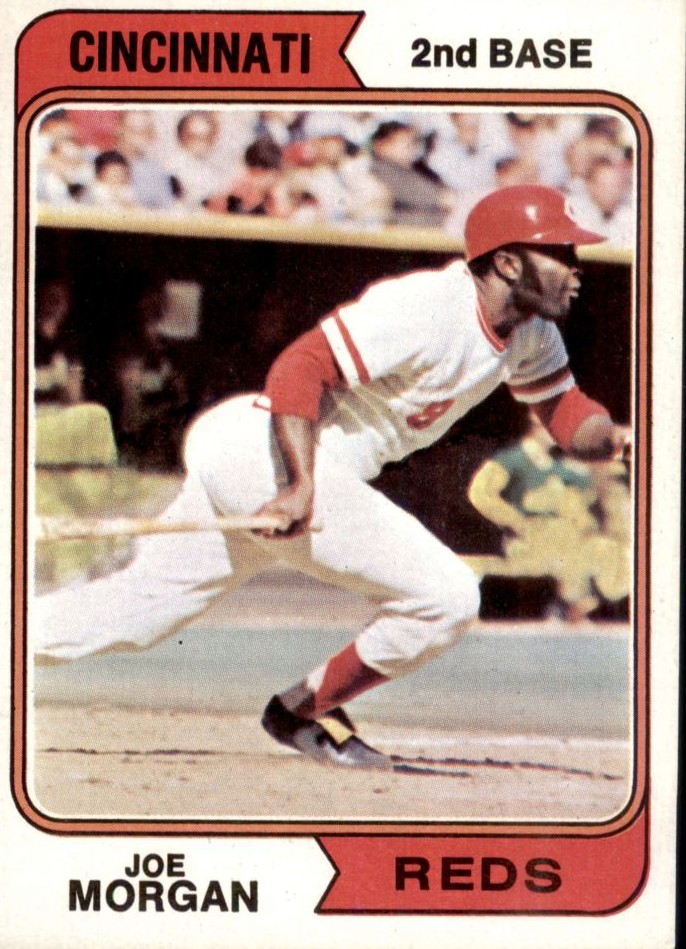
This 1972 card of Willie Davis is a perfect example of why these Kellogg’s cards are so cool. I was excited when I saw the card had his number 3 easily viewable right on the front (an opportunity to share a Kellogg’s card, sign me up!) In 1972, Davis was a Gold Glove winner with a .289 batting average, 19 home runs and 79 RBI’s, to go along with 20 stolen bases.

Davis was a two-time All-Star who won two World Series rings with the Dodgers in 1963 and 1965. He also won three Gold Gloves. He left baseball first in 1977 to play in Japan for two seasons with the Chunichi Dragons and Crown Lighter Lions. He would come back for one last season in 1979 and play forty-three games with the California Angels before retiring.

He is fourth all-time for games played in centerfield behind only Willie Mays, Tris Speaker and Steve Finley.  He has a career .279 batting average with 182 home runs, 1,053 RBI, 2,561 hits and 398 stolen bases. He is not in the Hall of Fame and has never been on a ballot, which I find to be surprising. Do you think Davis is deserving? His career WAR is 60.8 which is pretty darn good.

Davis passed away in 2012 at the age of 69.

Number 5:

Dale Murphy, 1981 Topps, #504

Another player who is not in the Hall of Fame, Dale Murphy, played eighteen years in the Majors from 1976 to 1993. He played catcher, first base and outfield for the Atlanta Braves for fourteen and a half seasons, with the Philadelphia Phillies for three seasons and the Colorado Rockies for his final season. He’s another player that I remember well growing up. For kids growing up in the ‘80s and ‘90s, Murphy was a popular player even outside of Atlanta.Murphy wore uniform number 3 for eighteen seasons and has a career WAR of 46.5.

1981 Topps was another great ‘80s design. I love the cap logo in the bottom corner. This Dale Murphy card is especially nice. The blue and green color scheme with that great photo of Murphy’s beautiful swing, his name and number visible on the old school Braves uniform. Too bad 1981 wasn’t the best year for Murphy. He was coming off an All-Star season, but only played in 104 games, had a .247 batting average and only 13 home runs and 50 RBIs. A far cry from the next season that would see him become the NL MVP.

Murphy would be the NL MVP two years in a row in 1982 and ’83 while leading the league in RBIs both seasons. He was a seven-time All-Star, a five-time Gold Glove recipient and a four-time Silver Slugger. He led the National League in home runs twice in 1984 and 1985 and in RBIs in 1982 and 1983. He was a member of the 30-30 club in his 1983 MVP season.

In 1993 after only 26 games with the Rockies, he decided to retire from baseball. He finished his career with 2,111 hits, 350 doubles, 398 home runs, 1,266 RBIs and a .265 batting average. He is a member of the Braves Hall of Fame.

Many people feel that Murphy deserves a place in the Hall of Fame. Outside of the steroid era, he and Roger Maris are the only two multiple MVP award winners not in the Hall. Murphy has a stellar reputation on and off the field, including a lot of humanitarian work, which has also led many to feel he is an ideal Hall of Famer. His reputation and charitable work has led to several awards including the Lou Gehrig Memorial Award (‘85), “Sportsman of the Year” (‘87), Roberto Clemente Award (‘88), Bart Giamatti Community Service Award (‘91) and the World Sports Humanitarian Hall of Fame (1991).

I think he deserves the Hall and would love to see him in. He is a great example of a baseball star both on and off the field. Do you, my readers, agree or disagree and why?

Murphy’s uniform number 3 was retired by the Braves in 1994.

Number 6:

Frankie Frisch, 1934 Diamond Stars, #17

I love this project! There are always amazing players who I’m not familiar with, like Frankie Frisch, who had an amazing career and stories. Frisch had a couple of awesome, DC Hero like nicknames, “the Fordham Flash” and “the Old Flash”. As you probably guessed, he was fast, leading the NL in stolen bases three separate years.

Frisch played in the MLB for nineteen years from 1919 to 1937. He played second base with the New York Giants until 1926. In 1926 he was traded from the New York Giants to the St. Louis Cardinals for the great Rogers Hornsby, and stayed with them from ‘27 to ’37, while also managing the Cardinals as a player/manager from ’33.

This card is awesome! I absolutely love it. It’s a 1934 Diamond Stars and I’m starting to think there are no cards in those old ‘30s sets that I don’t love. The colors, the picture, the background art are all wonderful. It might be one of my favorite Diamond Stars cards yet. In 1934 Frisch was an All-Star. He had a .305 batting average with 30 doubles and 75 RBI.

Frisch was a switch hitter who was an All-Star three times as the All-Star game just started toward the end of his career. He was part of four World Series winning teams, two with the New York Giants (’21 and ’22) and two with the St. Louis Cardinals (’31 and ’34). In 1934 he was also the Cardinals Manager. He was the NL MVP in 1931.

Frisch was the player/manager for the Cardinals from 1933 to 1937 when he would retire. He remained manager through 1938. He went on to manage the Pittsburgh Pirates from 1940 to 1946 and the Chicago Cubs from 1949 to 1951.

Frisch would end his career with a .316 batting average, the highest career batting average for a switch hitter in MLB history. He would end up with 2,880 hits, 466 doubles and 419 stolen bases. He is third in career World Series hits with 58, and tied with Reggie Jackson at eighth for career World Series total bases with 74, and tied for first with Yogi Berra for career World Series doubles with 10. His career managerial winning percentage is .514.

He is a member of the Cardinals Hall of Fame and was inducted into the National Baseball Hall of Fame in 1947. Like Bobo Newsome from the uniform number 00 post, and Babe Ruth, Frisch is mentioned in Ogden Nash’s 1949 poem “Line-Up for Yesterday” . I wonder if I will get every player from that poem in the lists.

Frisch passed away at the age of 75 in 1973.

Number 7:

Evan Longoria, 2014 Panini Classics Signatures, #44

Evan Longoria is the most current player to make this list. Longoria played for sixteen years in the majors from 2008 to 2023. Known as “Longo”, he was a third baseman for the Tampa Bay Rays, San Francisco Giants and Arizona Diamondbacks. Longoria wore number 3 for eleven seasons and has a career WAR of 58.9.

This 2014 panini auto was one of the only cards I could find with his number 3 displayed where he was on the Tampa Bay Rays. I found a couple on Arizona, but I really wanted his Rays jersey as he was a hero in Tampa. Though I’m not a fan of Panini baseball cards overall, this is a nice card with his signature, and I like that it’s a relic card. In 2014, Longo played in all 162 games, which is quite an accomplishment in today’s game. He had 22 home runs and 91 RBIs for the Rays.

Longoria is a three-time All-Star and a three-time Gold Glove award winner. He was AL Rookie of the Year in 2008 and won a Silver Slugger in 2009. He has been to two World Series (2008 and 2023) and although his team lost both, his fifteen years between the two are the longest gap for any player in MLB history (there’s a trivia question for you). He has hit a home run against all 30 current MLB teams (a bonus trivia question).

He owns several Tampa Bay records, and in 2025 Longoria signed a contract with the Rays to retire with the team that started it all. He would complete his career with a .264 batting average, 1930 hits, 431 doubles, 342 home runs and 1159 RBIs.

Final Score:

This is so much fun for me! My lists never go as expected and sometimes I must be flexible and change things around a bit (like adding the Legend spot for Ruth). Which brings me to this next little bonus.

There was a player who had the number 3 for twenty-two seasons from 1980 to 2001. He played DH and outfield for five teams, including the White Sox and Orioles three different times each. His career WAR was 38.8, just missing my criteria of 40. His name is Harold Baines. He was a six-time All-Star, a World Series champ in 2005 and won a Silver Slugger in 1989. His number 3 was retired by the White Sox in 1989, and he was inducted into the National Baseball Hall of Fame in 2019. I didn’t pick Baines, but he deserves a card just for having the number 3 so long. Would you have made him a top seven and in whose place? Here’s a 1983 Topps (another favorite design from the ‘80s) with the awesome White Sox ‘80s uniform and the number 3 on his leg!

Harold Baines, 1983 Topps, #684

Aside from the players I mentioned in the intro, I wanted to shout out a few other players who wore uniform number 3. Bobby Grinch (WAR 71.1) wore it for five years with the Orioles. Johnny Mize (WAR 70.6) and Carlos Beltran (WAR 70) for two seasons. Hall of Famers Bill Terry (WAR 56.6) and Mickey Cochran (WAR 49.8) both wore it for 4 seasons. Controversial players like Rafael Palmeiro (one season) and Gary Sheffield (two seasons) also wore it.

Another controversial player who met all my selection criteria was Alex Rodriguez. He wore number 3 for ten years (which is quite a long time) and his career WAR was well above 40 coming in at a whopping 117.4. He wasn’t controversial just because he was on my least favorite team, the Yankees, either, but I just do not like him as a player. That’s my personal preference, but I’m sure there are many who feel the same. It’s also not just the PED issues, or the 162-game suspension or the fact he has not been included in the Hall of Fame, though these would all be reasons to leave him off the list. While I have criteria, I also reserve the right to include, leave off or move players based on my own personal thoughts, and truth is, I just liked the players I chose more than him. Although I left him off, I still felt he was worth mentioning and for any Alex Rodriguez fans who are offended, here’s a card just to make amends.
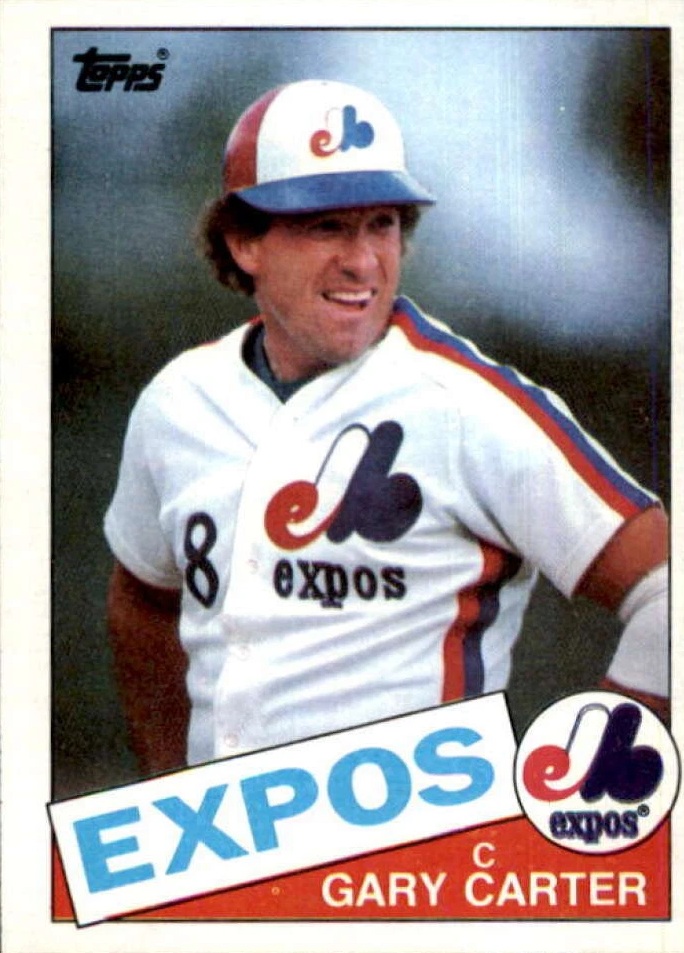
Alex Rodriguez, 1997 Topps, #4

There were many other players I could mention, but these posts would get ridiculous if I just started naming everyone, so I’ll leave it here. I hope you’re enjoying this series and come back for uniform number 4. Like uniform number 3,  I think it’s going to be another tough one that will pose more challenges to my criteria. Like the fact that three players had a career WAR over 100.

PLAYER NAMEYEARS WORNCAREER WARNUMBER RETIREDOTHER ACHIEVEMENTS
Jimmie Foxx1292.9No9x All-Star
3x AL MVP Triple Crown (33)
World Series Champ (29, 30) HOF (51)
Alan Trammell1970.6YES (Detroit Tigers 2018)6 x All-Star
4x Gold Glove
3x Silver Slugger World Series Champ (84)
HOF (18)
Harmen Killebrew1960.4YES (Minnesota Twins 1975)13x All Star
6x AL HR Leader AL MVP (69)
HOF (84)
Willie Davis1560.8No2x All-Star
World Series Champ (63, 65)
3 X Gold Glove
Dale Murphy1846.5YES (Atlanta Braves 1994)7x All-Star
2x NL MVP
5x Gold Glove
4x Silver Slugger
Frankie Frisch672No3x All-Star
NL MVP (31) World Series Champ (21,22, 31,34)
Evan Longoria 11 58.9 No3x All-Star
3x Gold Glove ROY (2008)
Silver Slugger

Sources:

https://www.baseball-almanac.com/

https://www.baseball-reference.com/

https://www.sabr.org

Lehman, 2017 “Kellogg’s baseball card set in 1970 started a 14-year run” Sports Collector’s Digest

Shout out to all the cool cards and creative commons for my pictures! Thanks Topps and Upper Deck and Fleer and Donruss and all the rest!

Baseball by the Numbers: 2

Read about the project

Checklist

2

Welcome back to Baseball by the Numbers. Today we are looking at uniform number 2. Like number 1 there were a lot of players in history to wear number two. My list has 664 total players. Out of that group ninety-five of those (14.3%) had the number for over five years, with eighteen of those having worn it for ten plus years. For career WAR, twenty-nine players who wore number 2 had a career WAR over 40. So, taking that big number 664 down to seven was much easier once I factored in all my criteria. What wasn’t easy was choosing the number one player. Not because he didn’t deserve it, but because of the team he played for. I’m sure many of you already guessed who that is…

Number 1:

Derek Jeter, Topps Now Turn Back the Clock, #80

Growing up, I despised Jeter. Booed him on TV and booed him at Fenway Park. Traded all of his cards (big regret). He was the enemy, and I was not having any of it. The funny thing is, as I was making this list, I was ready to find a way to not put him in the number one spot, but I just couldn’t. Derek Jeter was a stud, pure and simple. He was a star and a leader and I’m not that same kid anymore, so I can say it…even with a little trepidation.

Derek Jeter played shortstop for twenty years in the Majors, all of them with the Yankees. During those twenty years, he has always worn number 2.  From 1995 to 2014 “The Captain” was one of the best to play the game. He holds many Yankee records including hits (his 3,465 place him sixth all-time in MLB history), doubles (544) and stolen bases (358). He was a major part of the Yankees late ’90s dynasty, contributing to their World Series wins in ’96, ’98, ’99, ’00 and ’09.

The card I used is the Topps Now Turn Back the Clock. It’s a great card, in the style of the 1987 Topps set, one of my personal favorites (which I say all the time about so many sets lol). The wood borders, the logo in the corner, and most important his uniform number front and center. Great card for this series.

Jeter was ROY in 1996 after hitting .314 with a .370 OBP, 10 home runs, 25 doubles and 183 hits. He would continue his stellar play throughout his career, adding fourteen All-Star appearances, five Silver Sluggers and a World Series MVP award in 2000. He also played fantastic defense, with five Gold Gloves.

Jeter ended his career sixth all-time in the Majors with 3,465 hits. He had a career .310 batting average, 260 home runs (sixth all time at shortstop), 544 doubles (first all time at shortstop) and 1,311 RBIs (third all-time at shortstop).

He was also a clutch player in the playoffs. While working toward his 5 World Series rings, Jeter had a career .309 postseason batting average, holds MLB postseason records for hits (200), singles (143), doubles (32), triples (5), and runs scored (111) and is fourth in postseason home runs with 20 and RBIs with 61, fifth in walks (66) and sixth in stolen bases (18).

Jeter was elected to the Baseball Hall of Fame in 2020 with the second most votes in history at 99.7% on his first ballot.

His number 2 has been retired by the Yankees in 2017.

Number 2:

Charlie Gehringer, 1934 Diamond Stars, #77

 I love it when we get to these Golden Age players. Charlie Gehringer played second base for nineteen seasons from 1924 to 1942. Like Jeter, he spent his entire career with one team, the Detroit Tigers. He wore uniform number 2 for eleven seasons, which was most of his career. We must consider that most teams in the MLB didn’t wear uniform numbers until the late ‘20s early ‘30s. It looks like Detroit started around 1931.  

Gehringer has the highest career WAR for those with the number 2, coming in at 84.8. His nickname, “the Mechanical Man”, is very cool, almost futuristic. I honestly debated putting him at the number 1 spot but had to keep my Yankees hate in check. Not that Gehringer didn’t deserve it, but Jeter just edged him in a few places.

Gehringer was a quite player from a small town. A man of few words, Gehringer’s speech at a banquet in his honor was one sentence, “I’m known around baseball as saying very little, and I’m not going to spoil my reputation.” (Bak, 1991)

I love that quote, and it’s an example of why I love these Golden Age players. Baseball was raw, it was unfiltered, it was a Western, with silent heroes carrying bats and gloves instead of pistols. If Gehringer played today I could see an interview where they ask, “Tell us how you got on base so much. What’s the secret?” and him smiling in reply, “I hit the ball.” I just love that a skinny, small town, quiet kid could come to Detroit and become a standout star. Not showing off, not mouthing off, just playing the game he loves to the best of his ability.

I also love these old cards. It’s such a beautiful representation of the game and the player. The color and artwork is wonderful, and feels so, well, Golden Age.

He may have been the silent type, but he made his noise on the diamond. He was a key part of the Tiger’s World Series winning team in 1935. Gehringer had six All-Star selections. He was the AL MVP in 1937 when he led the league with a .371 batting average. He had over 200 hits in seven different seasons and was third all time in hits for a second baseman. For his career he had 2,839 hits, with a .320 career batting average and .404 career OBP. His 574 career doubles are second all time at second base, and twenty-fifth in MLB history.

 Gehringer was elected to the Baseball Hall of Fame in 1949. His number 2 was retired by the Detroit Tigers in 1983.

Charlie Gehringer passed away in 1993 at 89 years old.

Number 3:

Red Schoendienst, 1969 Topps, #462

Red Schoendienst had the right nickname. Cardinal’s baseball was a part of his DNA, his blood ran red, well I guess all our blood runs red, but his was Cardinal’s red. He was involved in baseball for seventy-six years as a player, a coach and a manager. Seventy-six years! That’s insane, but even more insane is that he had served sixty-seven of those with the Cardinals. As a player he wore uniform number 2 for fourteen of his nineteen years in the Majors. He also wore it while coaching and managing for a total of forty-five years! That might be a record, but I haven’t really looked at managing and coaching and probably won’t unless it’s relevant to the player (If you know this, let me know!) Either way, Red=2.

Even though it’s a manager card, I choose his 1969 Topps because his number 2 is so prominently displayed. I also thought it fitting since most of his time in the Majors was coaching, managing or administrative. It’s also a damn nice-looking card.

Schoendienst played second base for nineteen years in the Majors. He was with the Cardinals for the first twelve before being traded to the New York Giants in 1956. To say the trade was unpopular would be an understatement. He would only play one season with the Giants before being sent to the Milwaukee Braves. He eventually found his way back to the Cardinals from ’61 to ’63 as a player/coach.

Schoendienst was a ten-time All-Star. He led the NL in stolen bases in 1945 and was a staunch defender, leading NL second baseman in defense seven seasons straight, including going 320 consecutive chances without an error. He held the record for fielding percentage in a season at second for thirty years until Ryne Sandberg broke it. He won five World Series Rings. His first with the Cardinals in 1946 when they beat the Red Sox. The second was ’57 with the Braves, then again with the Cards in ’64 and as their manager in ’67, and coach in ’82.

Schoendienst would finish his career was a 44.8 WAR, .289 batting average with 2,449 hits. He was elected to the Baseball Hall of Fame in 1989. He is also a member of the Cardinals Hall of Fame and his number 2 was retired by the Cardinals in 1996.

Red Schoendienst passed away in June of 2018 at the age of 95 years.

Number 4:

Nellie Fox, 1960 Topps, #100

Nellie Fox had the vision of a hawk (or maybe a fox, Do they have good vision?). Regardless, he knew how to get the bat on the ball. This guy could not miss. For his career he struck out only 216 times in 10,351 plate appearances, good for 5th all time. In his nineteen seasons he never had more than 18 strikeouts in a season and once had more triples (12) than strikeouts (11). I’ve seen players today strike out eighteen times in a week. He was a pitcher’s worst nightmare.

Fox played for nineteen years in the Majors at second base from 1947 to 1965. He started his career with the Philadelphia Athletics but was traded in 1949 to the Chicago White Sox. He would stay with Chicago for fourteen seasons until 1964 when he signed with the Houston Colt .45s to finish his career as a mentor to youngster Joe Morgan. He wore number 2 for fourteen seasons.

I love the 1960 Topps cards with the two side-by-side pictures and that cool White Sox symbol with the wings (Did they drink Red Bull in 1960?). This Fox card was a pleasant surprise because his uniform number is so nicely displayed on his sleeve. Such a great card for the series.

Fox was not a big man. He was only five foot nine and was not a power guy, but as mentioned above, he made up for it in his batting skills and his defensive prowess. He led the league in hits four times, batted over .300 six times and led the league in singles seven years straight. He was an All-Star fifteen times, won three gold gloves and was the AL MVP in 1959.

Fox would finish his career with a 49.3 WAR, .288 career batting average and 2,663 hits. He was elected to the Baseball Hall of Fame in 1997 and his number 2 was retired by the White Sox in 1976

Fox lost his battle to cancer on December 1st, 1975, at only 47 years old.

Number 5:

Billy Herman, 1933 Goudey, #227

 It’s hard to find cards or pictures with uniform numbers showing for some of these old players. Still this 1933 Goudey card is awesome. Like all these Golden Age cards, the colors and pictures are great. Plus, I wanted to represent Billy Herman on the Cubs since that is the only time he wore number 2.

Billy Herman was a second baseman in the Majors for fifteen years. He played from 1931 to 1947, missing two seasons for military service during WWII. He played ten seasons for the Chicago Cubs, then played for the Brooklyn Dodgers, Boston Braves and the Pittsburgh Pirates. He wore number 2 for only five seasons with the Cubs from ’32 to ’36 but had a career WAR of 57.7 which helped him make the list.

Herman had over 200 hits in three seasons and batted over .300 nine times. He was a ten-time All-Star. He played for four World Series teams but never won a ring as a player. He did eventually win a ring with the 1955 Brooklyn Dodgers as a coach.

He ended his career with .304 batting average, 2,345 hits including 486 doubles. He is a member of the Chicago Cubs Hall of Fame and was elected to the Baseball Hall of Fame in 1975 through the veterans committee.

He would go on to coach and manage several teams including the Boston Red Sox where he coached from ’60 to ‘64 and managed ’65 and ’66. Not the best years for the Sox.

Herman passed away in 1992 at 83 years old.

Number 6:

Troy Tulowitzki, 2013 Topps Update, #US88a

I felt this 2013 Topps Update represented Tulowitzki as I always think of him. Wearing a Rockies uniform and making a strong defensive play. It had the added benefit of showing his uniform number as well.

Troy Tulowitzki is currently a coach for the Texas Longhorns college team. He played shortstop for thirteen years in the Majors. He wore uniform number 2 for eleven of those and chose the number due to Derek Jeter being his idol growing up.

He played for the Colorado Rockies from 2006 to 2015 when he was traded to the Toronto Blue Jays. Injuries forced him to miss the entire 2018 season, and he was released by the Blue Jays. He would sign with the Yankees for 2019, but played only five games before being injured again, which eventually led to his retirement.

Tulowitzki was a five-time All-Star, he had 2 Gold Gloves and 2 Silver Slugger awards. He came in second for ROY in 2007 losing to Ryan Braun. He would finish his career with a WAR of 44.8, .290 batting average, 1,391 hits, 225 home runs and 780 RBIs.

Number 7:

Brett Butler, 1987 Topps, #723

This card alone could have propelled Butler higher. I love the 1987 Topps design, and I know it’s not the best design out there, but it’s nostalgic for me. ’87 is the first year I really got into baseball and card collecting. I had some cards from ’85 and ’86, but by ’87 I was all in. I probably pulled this Brett Butler card dozens of times. It’s a nice card, his uniform number is displayed perfectly, and the photo is great. I’m happy to feature it.

Butler played seventeen years in the Majors as a center fielder. In fact, he is the only outfielder on this list. He played from 1981 to 1997 with the Atlanta Braves, Cleveland Indians, San Francisco Giants, Los Angeles Dodgers, New York Mets and again with the Dodgers. He wore number 2 with the Indians and the Giants.

Butler got his lone All-Star bid in 1991 as a member of the Dodgers. He led the league in runs and walks that season. He also led the league in triples four times in ’83, ’86, ’94 and ’95.

He would finish his career with a 49.7 WAR, .290 batting average, 2,375 hits, 277 doubles, 131 triples and is 25th all time for stolen bases with 558.

Butler would go on to coach in several organizations and would manage a couple of Minor league teams as well.

 Final Score:

This is so much fun for me. I hope that there are some folks out there reading these posts and getting just as much enjoyment out of them. I love learning about players, both popular (like Jeter) and not so popular (like Butler). As you can see, although it pains me to put a Yankee in the top spot, my love of baseball and the achievements of some of these players outweighs my Yankee hatred.

For uniform number 2 four of my seven had their numbers retired. Five are in the Hall of Fame. Six of the seven played infield, primarily second base and shortstop. Only Butler played the outfield. Only one (Tulowitzki) is a modern era player. Two played their whole career with one team (Jeter and Gehringer), and one Schoendienst spent a lifetime with the Cardinals.

This was a fun one, as I expect they all will be. A few honorable mentions: The great Jimmie Foxx wore number 2 one season as did Roberto Alomar, Graig Nettles, Darrell Evans, Chet Lemon and Jeff Kent. Mickey Cochrane wore it three years. Current player Xander Bogaerts has worn it twelve years and Alex Bregman ten. Red Sox great Jerry Remy also wore it for ten.

Please let me know if you have any thoughts on the picks. Would you add or replace anyone and why? I love hearing some great baseball discussions.

Make sure to check out the next post with uniform number 3. I don’t even know if I should put Ruth at number 1 or just talk about him since he is the most obvious choice there is. Maybe I’ll pick seven after Ruth. Thanks for joining me!

PLAYER NAMEYEARS WORNCAREER WARNUMBER RETIREDOTHER ACHIEVEMENTS
Derek Jeter2071.3Yes (Yankees)14x All-Star
World Series Champ (96, 98, 99, 00, 09)
ROY (96)
5x Gold Glove
5x Silver Slugger
HOF (20)
 Charlie Gehringer1184.8Yes (Tigers)6x All-Star
MVP (37)
HOF (49)
World Series Champ (35)
 Red Schoendienst14 (45 total including coach and manager) *44.8Yes (Cardinals)10x All-Star
World Series Champ (P46,57,64 C/M 67, 82)
HOF (89)
Nellie Fox1349.3Yes (White Sox)15x All-Star
AL MVP (59)
3x Gold Glove
HOF (97)
Billy Herman557.7no10x All-Star
World Series Champ (C 55)
HOF (75)
Troy Tulowitzki 1144.8no5x All-Star
2x Gold Glove
2x Silver Slugger
Brett Butler749.7no1x All-Star

Sources:

Bak, Richard (1991). Cobb Would Have Caught It. Wayne State University Press. pp. 190–207. ISBN 978-0814323564.

https://www.baseball-almanac.com/

https://www.baseball-reference.com/

https://www.sabr.org/

Shout out to all the cool cards and creative commons for my pictures! Thanks Topps and Upper Deck and Fleer and Donruss!